A Critical Turning Point for the New Party: The First Ordinary Congress and Restructuring Process
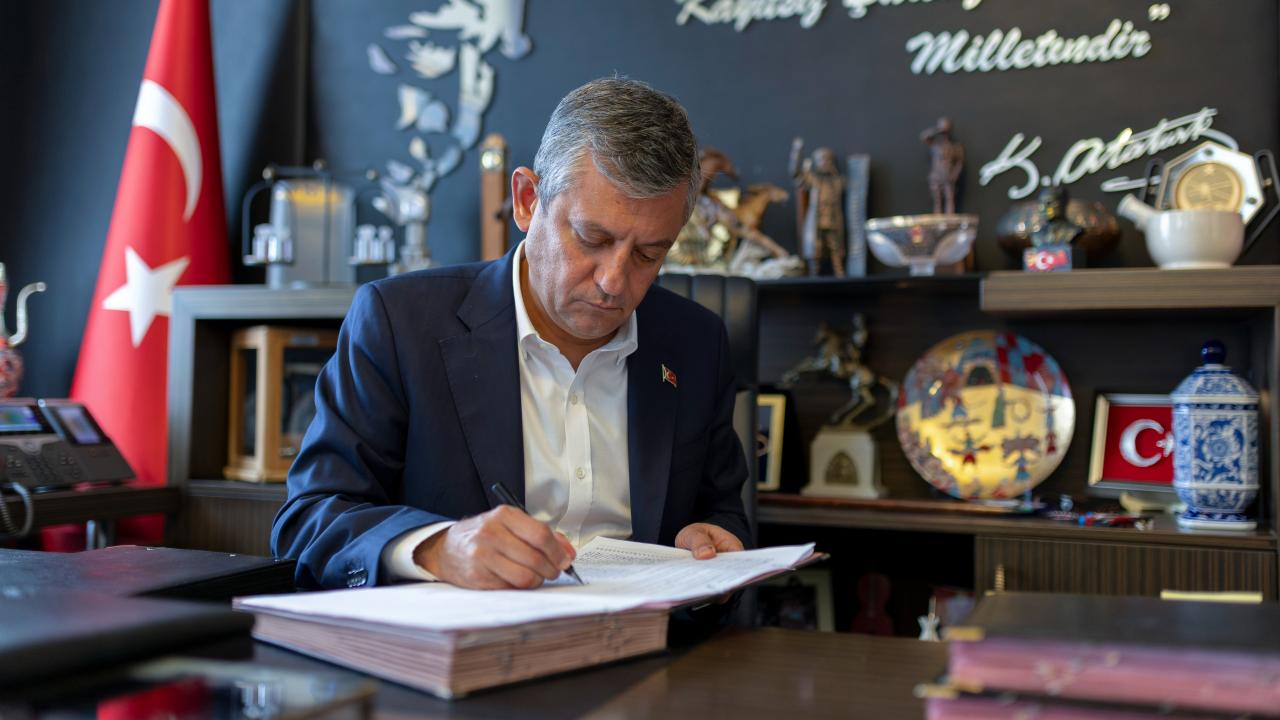
Setting out with the claim of being a fresh breath in the political arena, the New Party is preparing for its first major test following its establishment process. The First Ordinary Congress, to be held at the Ankara Sports Hall this weekend, is set to be a platform where the party will certify not only its administrative staff but also its ideological and organizational vision. This massive organization, which will be attended by approximately 1,200 delegates, is described as the most concrete step taken in the party's institutionalization process.
The Founders' Board, which met ahead of the congress, signed off on critical decisions that will directly affect the party's future management structure. The decision to increase the number of Party Assembly (PM) members from 80 to 150, limited to one term, reveals the party's goal of inclusivity. This expansion is evaluated not just as a numerical increase, but as part of a strategy to include different social segments, trade union representatives, and experts in their fields in the decision-making mechanisms.
Background of the Development
The establishment process of the New Party can be read as a reflection of the search for a new center in Turkish politics. The decisions taken by the Founders' Board reflect an effort to place the party's hierarchical structure on a more democratic and participatory ground. Learning from past political experiences, the management aims to institutionalize party discipline and transparency principles, particularly with the establishment of an Ethics Committee.
The Ankara Sports Hall, as a venue that has hosted many important turning points in Turkish political history, has symbolic importance for the New Party as well. The fact that four different songs have been composed for the congress preparations is an indication of the party's effort to establish an emotional bond with the electorate and create a corporate image. These preparations prove that the party is in the process of building a 'brand' rather than just a change in management.
Özgür Özel, who is shown as the sole candidate for the general presidency at the congress, is preparing to go through a radical revision in the party's central executive board (MYK). This is the clearest sign that the policies the party will follow in the coming period will be shaped by Özel's vision. The invitation of all political parties, except the CHP, is interpreted as a strategy to determine the New Party's position in the political spectrum and keep dialogue channels open.
Expert and Industry Insights
Political scientists define this congress of the New Party as a process of 'institutionalization and gaining legitimacy.' According to experts, increasing the number of PM members is a reflection of the party's desire to spread to the grassroots and incorporate different professional groups. Industry representatives emphasize that these moves are critical for the long-term sustainability of the party.
- Increasing the number of PM members to 150 will increase pluralism in decision-making mechanisms.
- The establishment of an Ethics Committee strengthens internal control mechanisms and increases trust.
- The representation of different professional groups allows the party to expand its social base.
- The single-candidate congress shows that internal party consensus has been achieved and the risk of fragmentation is low.
- Invitations to political parties strengthen the party's claim of 'constructive opposition' or 'centrist politics'.
Experts state that the inclusion of union representatives in the PM will be decisive in terms of the bond the party will establish with workers and laborers. While this situation gives clues about the party's economic policies, it can also redefine the influence of the trade union movement on politics.
Economic and Social Implications
This congress of the New Party brings with it not only political but also economic and social expectations. The changes the party will make in its administrative staff can be perceived by markets and the public as a 'new management approach.' In particular, a merit-based MYK structure could increase confidence in the party's economic vision.
From a social perspective, the party's use of an inclusive language and opening its doors to different segments strengthens its potential to be an 'alternative' in the eyes of the voters. However, whether this expansion will lead to chaos in the internal party hierarchy will be another topic to be watched closely in the coming period.
Future Projections and Outlook
The post-congress period can be defined as the 'action period' for the New Party. With the acceptance of the charter changes to be presented to the approval of the delegates, the party is expected to accelerate its organization efforts. The new MYK, which will be shaped under the leadership of Özgür Özel, will determine the party's strategies for local and general elections.
Among the risks is the possibility that the expanded PM structure will turn into a cumbersome structure. However, it is seen that the management aims to balance this risk with the Ethics Committee and other control mechanisms. The economic and social policy packages that the party will announce in the coming months will show how solid the foundations laid at the congress are.
In conclusion, the congress to be held this weekend is the most important stage of the New Party's effort to consolidate its place in Turkish political life. The decisions to be made by the delegates will be of a nature that will guide not only the present of the party but also the next decade.
💬 Yorumlar 0
Henüz yorum yapılmamış. İlk yorumu siz yazın!





