A Milestone at Akkuyu NPP: Hot-Cold Testing Phase Commences
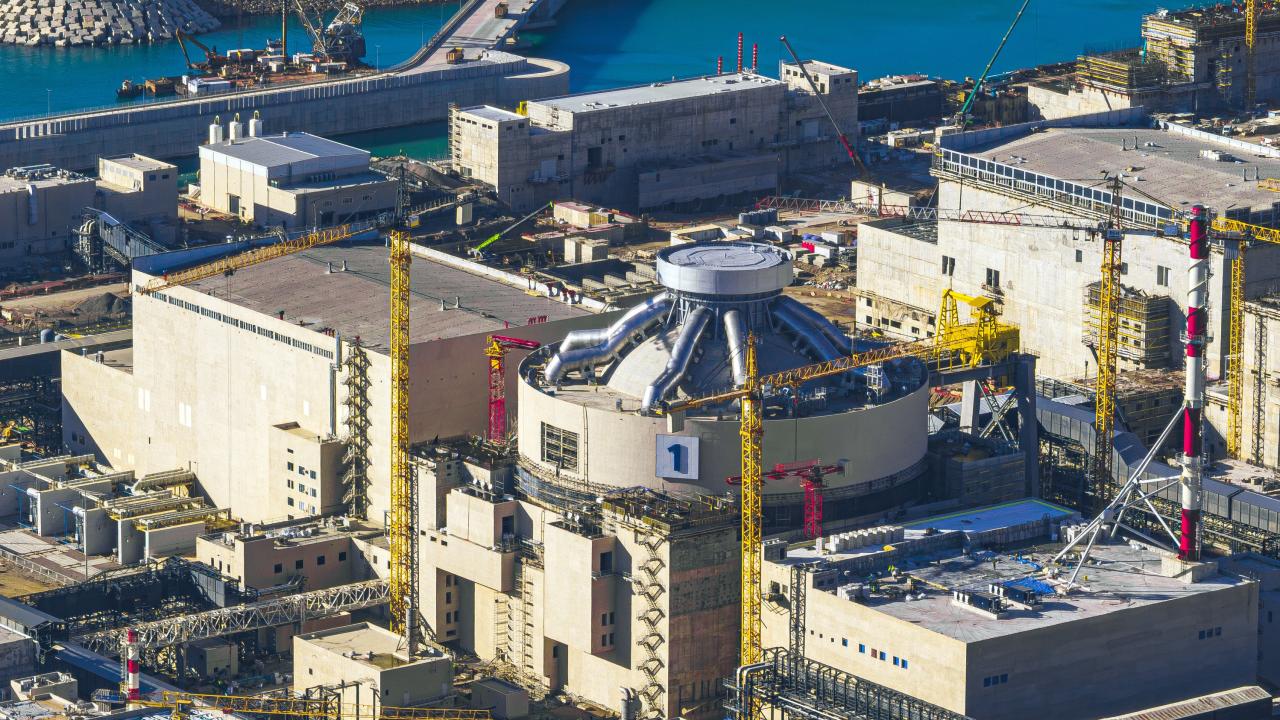
In a strategic turning point for Turkey's energy vision, the Akkuyu Nuclear Power Plant (NPP) project has reached a critical milestone in the commissioning of its first power unit. The hot-cold testing phase of the reactor facility, conducted by the Russian State Nuclear Energy Corporation Rosatom, has officially commenced. This operation is widely regarded as the final technical hurdle before the loading of nuclear fuel and the subsequent generation of the plant's first electricity. The tests are essential to verify the operational safety and compliance of all equipment with project standards.
The hot-cold testing process is designed to ensure the reactor facility's full compatibility with operational conditions. During this phase, all equipment in the primary and secondary circuits is tested under nominal operating parameters, reaching temperatures of 285°C and pressures of 16.5 MPa. This pressure level is equivalent to the force exerted by water at a depth of 1,650 meters, serving as a rigorous stress test for the system's integrity. Throughout these tests, fuel assembly simulators are used in the reactor core instead of actual nuclear fuel, allowing for a comprehensive evaluation of safety and control mechanisms without any radiological risk.
Background of the Development
The Akkuyu NPP is the result of an intergovernmental agreement signed between Turkey and Russia in 2010, marking Turkey's entry into the nuclear energy era. The project represents a monumental engineering endeavor that elevates Turkey's technological infrastructure. Following years of construction, licensing, and rigorous oversight, the first power unit is now approaching its final commissioning phase.
Historically, Turkey's pursuit of nuclear energy spans over half a century. Akkuyu is the tangible realization of this long-standing objective. Equipped with Rosatom’s VVER-1200 reactor technology, the plant falls under the 'Generation 3+' category, representing the highest global safety standards. This technology features passive safety systems capable of cooling the reactor in emergency scenarios without human intervention.
The hot-cold testing phase serves as the final technical rehearsal before the reactor reaches 'first criticality.' This process is not merely a mechanical test; it also functions as a real-world simulation for the plant's operating personnel. Data gathered during this phase regarding vibration characteristics, pipeline durability, and the response times of safety systems are vital for final certification.
Expert and Industry Insights
Energy sector experts characterize this development at Akkuyu NPP as a revolutionary step toward meeting Turkey's base-load energy demand. Nuclear energy, providing uninterrupted and carbon-free electricity, will play a pivotal role in helping Turkey achieve its 2053 net-zero emission targets.
Industry representatives and engineering authorities summarize the importance of this phase as follows:
- Validation of equipment integrity under high temperature and pressure conditions.
- Measurement of real-time response times for Reactor Control and Protection Systems (RCPS).
- Minimization of mechanical fatigue risks through detailed vibration analysis.
- Stability testing of electrical systems prior to grid integration.
- Data collection for the revision of all auxiliary systems prior to fuel loading.
Experts emphasize that the successful completion of these tests will enhance Turkey's international standing in nuclear energy operations and contribute significantly to the development of local engineering capacity. The technology transfer processes conducted in collaboration with Rosatom serve as a training ground for Turkey's future nuclear initiatives.
Economic and Social Implications
The commissioning of Akkuyu NPP is expected to have a direct impact on Turkey's energy import bill. By reducing dependence on fossil fuels such as natural gas and coal, the plant is projected to have a positive effect on Turkey's current account deficit. With an annual production capacity of approximately 35 billion kilowatt-hours, the plant will be capable of meeting about 10 percent of Turkey's total electricity demand on its own.
From a social perspective, the Akkuyu region is transforming into an energy hub. The project, which provides employment for thousands, has revitalized the local economy and social life. Furthermore, the transition to nuclear energy will facilitate access to affordable and sustainable electricity, which is essential for industrial production and will enhance Turkey's global competitiveness.
Future Projections and Outlook
Following the completion of the hot-cold testing, a detailed revision of the main and auxiliary equipment will be carried out. This revision will provide the final confirmation that all system components meet project requirements. Subsequently, the loading of nuclear fuel into the reactor and the transition to the 'first criticality' stage are expected to follow.
In the coming period, inspections and approvals by the Nuclear Regulatory Authority (NDK) will be decisive for the plant's entry into commercial operation. As Turkey prepares to join the league of nations utilizing nuclear energy, construction processes for the remaining power units at Akkuyu are proceeding simultaneously.
In conclusion, this final phase at Akkuyu NPP is one of the most concrete steps Turkey has taken toward energy independence. The meticulous execution of these technical preparations serves as a testament to the fact that the plant will not only generate energy but will also operate under the highest safety standards.
💬 Yorumlar 0
Henüz yorum yapılmamış. İlk yorumu siz yazın!



















