A New Era in Turkey-Qatar Strategic Partnership: Deepening Defense and Economic Ties
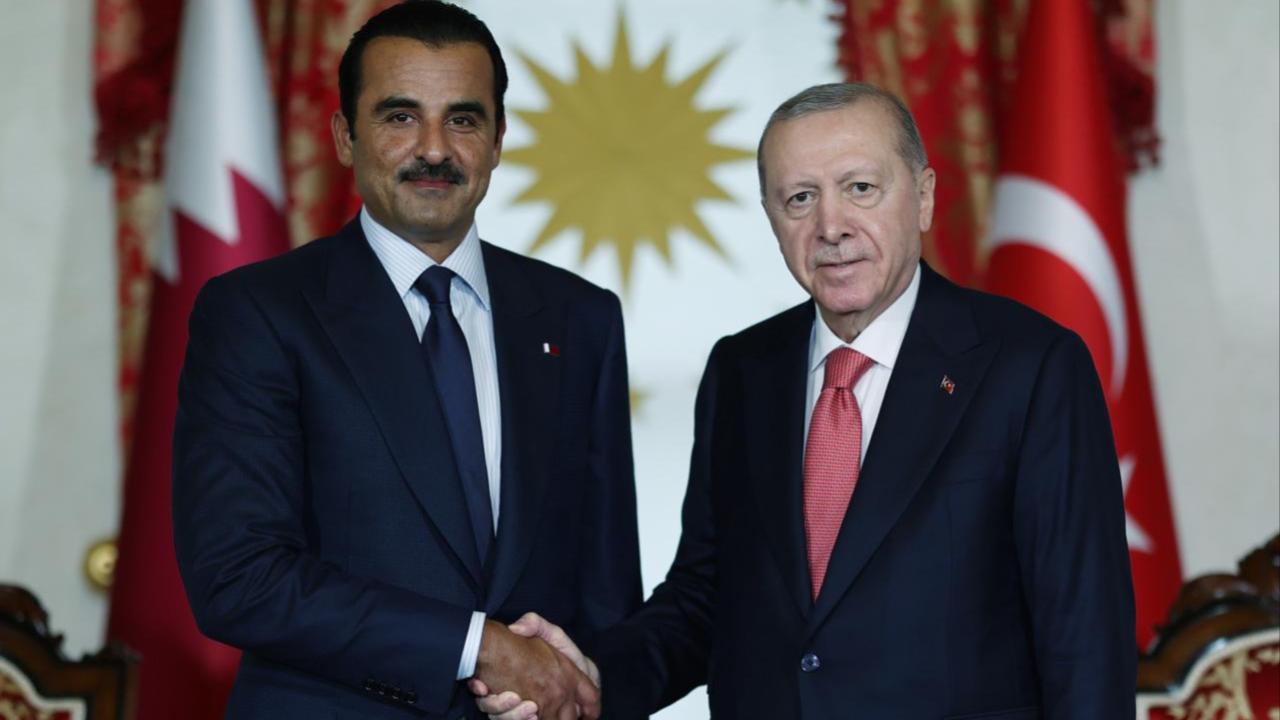
President Recep Tayyip Erdoğan welcomed the Emir of Qatar, Sheikh Tamim bin Hamad Al Thani, with an official ceremony at the Presidential Dolmabahçe Office in Istanbul. After introducing their respective delegations, the two leaders held a private meeting to discuss the critical issues that will shape the future of Turkey-Qatar relations. The high-level talks, which were also attended by Minister of Foreign Affairs Hakan Fidan and National Intelligence Organization (MIT) Chief İbrahim Kalın, confirmed that the strategic partnership between the two nations has entered a new phase focused on defense and the economy.
The most concrete outcome of the meeting was the signing of a Mutual Defense Agreement. President Erdoğan stated that this agreement would add a new dimension to the brotherhood between the two countries, while emphasizing that the Trade and Economic Partnership Agreement (TEPA), which entered into force last year, has brought the nations closer to their mutual trade volume targets. Energy diversification and defense industry cooperation formed the core pillars of the discussions.
Background of the Development
Relations between Turkey and Qatar have evolved into a strategic partnership over the past two decades. In particular, Turkey's diplomatic and logistical support for Qatar during the 2017 Gulf crisis laid an unshakable foundation for trust between the two countries. This process was not merely a political solidarity but also the beginning of institutional cooperation in defense industry and energy security.
Historically, the High Strategic Committee mechanism has served as the main engine for the institutionalization of these relations. While Qatar has become an important market for Turkey's defense industry products, Turkey has become a key partner in meeting Qatar's food security and logistical needs. This new defense agreement is seen as a more comprehensive and legally binding step built upon previous military cooperation protocols.
In the economic context, Qatar's direct investments in Turkey are concentrated in sectors such as finance, real estate, and energy. The Trade and Economic Partnership Agreement, which came into effect last year, provides a framework aimed at diversifying these investments and reaching targeted trade volumes. This summit in Dolmabahçe serves as a roadmap for how this legal infrastructure will be materialized on the ground.
Expert and Industry Insights
Foreign policy analysts view this meeting as a reflection of Turkey's role as a "balancing power" in the Gulf region. Experts state that the defense agreement strengthens not only the security of the two countries but also regional stability. Industry representatives express that cooperation in energy and the defense industry directly aligns with Turkey's vision of becoming a regional energy hub.
- Qatar is consolidating its position as one of Turkey's most important strategic partners in defense industry exports.
- Diversifying the partnership in the energy sector is a strategic move that will enhance Turkey's supply security.
- The Trade and Economic Partnership Agreement paves the way for the private sector with customs and tax advantages.
- Regional peace diplomacy is increasing Turkey's diplomatic weight in the Gulf.
- Intelligence and security cooperation ensure a unified stance against terrorism and regional threats.
Economists note that the entry of Qatari capital into technology and defense industry projects in Turkey will contribute to the scaling of domestic production. In particular, joint projects in the defense industry create a leverage effect that supports Turkey's export of high value-added products.
Economic and Social Implications
The economic implications of this meeting will manifest in the short term as an increase in trade volume and in the long term as joint technology development projects. The combination of Qatar's financial strength and Turkey's production capacity increases the competitiveness of both countries in global markets. Socially, the cultural and human ties between the two nations stand out as a factor that strengthens the social legitimacy of this strategic partnership.
In the markets, this rapprochement between Turkey and Qatar is perceived as a reassuring signal regarding the continuity of foreign direct investment (FDI) flows. Partnerships focused on energy projects, in particular, play a significant role in Turkey's strategy to manage its current account deficit. Among the public, the increase in the localization rate of the defense industry is welcomed with great satisfaction from a national security perspective.
Future Projections and Outlook
In the coming period, it is expected that the technical details of the signed agreements will be finalized and joint defense projects will be implemented. The "diplomacy-focused" approach pursued by Turkey and Qatar to reduce conflict risks in the Gulf region will become more visible in the coming months. The determination of both parties to resolve issues through dialogue is seen as a beacon of hope for the establishment of regional peace.
In the upcoming calendar, it is expected that High Strategic Committee meetings will be held at more frequent intervals and that the fruits of the economic partnership agreement will be reflected in trade data. Regarding risk management, the development of a joint crisis management mechanism by the two countries against regional geopolitical fluctuations stands out as one of the most important expectations for the future.
💬 Yorumlar 0
Henüz yorum yapılmamış. İlk yorumu siz yazın!





