Antalya Agreement Published to Accelerate Climate Action: A New Era for the Blue Planet
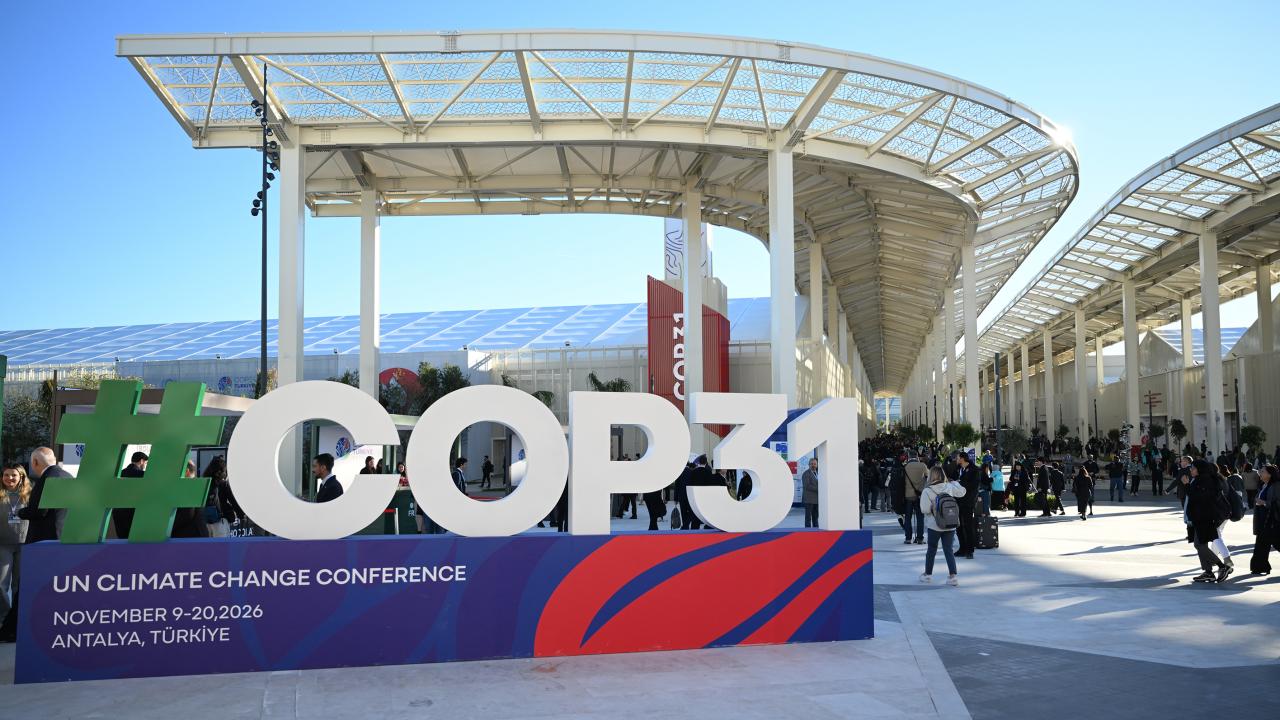
In a critical turning point for global climate action, the 31st Conference of the Parties (COP31) to the United Nations Framework Convention on Climate Change (UNFCCC) has taken center stage with the theme "Ocean, Seas, Nature, and Land Use — The Rio Synergy." The "Antalya Ocean and Seas Agreement," announced by the Ministry of Environment, Urbanization and Climate Change, has been recorded as a historic document aiming to support ocean-based climate actions through stronger partnerships and financial mechanisms. This agreement is not merely a declaration of intent but a concrete roadmap to protect the climate-regulating role of the oceans.
At the core of the agreement lies the collective wisdom gathered from a series of strategic meetings, including the Istanbul Ocean and Seas Workshop, the Trabzon High-Level Event, and the Ocean Solutions Dialogue held during the UN General Assembly. Integrated with the Pacific Pre-COP meetings and the "Blue Network" initiative, this text places the reality that oceans are our greatest allies in solving the climate crisis at the heart of international law and politics.
Background of the Development
The Antalya Agreement leverages the strategic advantage of COP31 being held on the Mediterranean coast, bringing the region's vulnerability to climate change onto a global platform. The Mediterranean has become the epicenter of extreme weather events such as heatwaves, forest fires, and droughts. In this context, the agreement defines the Climate Change Regional Activity Centre (CC/RAC), planned to be established in Istanbul under Turkey's leadership, as a cornerstone of regional cooperation, building upon the UNEP Mediterranean Action Plan (UNEP/MAP) and the Barcelona Convention system.
Historically, the ocean-climate nexus was often treated as a secondary issue in previous COP processes. However, the Antalya Agreement changes this by making issues such as ocean warming, acidification, and sea-level rise an integral part of climate action. The synergy established through negotiations with Australia and the Pacific Partnership has enabled this text to create a universal protective shield that encompasses not only the Mediterranean but also Small Island Developing States (SIDS).
Behind the agreement lies the necessity of protecting the carbon sequestration capacity of the oceans. The critical role of ecosystems such as mangrove forests, seagrasses, and coral reefs in mitigating the impacts of climate change has entered international literature through this comprehensive political commitment for the first time. This is not just environmental protection but a strategic move to safeguard the livelihoods and food security of coastal communities.
Expert and Industry Insights
Experts state that the Antalya Agreement's emphasis on finance and technology transfer is a turning point for developing nations. Industry representatives predict that the implementation of offshore renewable energy activities and sustainable fisheries, in line with the agreement's "30x30" target (protecting 30% of marine areas by 2030), will trigger a new wave of "Blue Economy" in the markets.
Sectoral assessments converge on the following key points:
- Increasing funding for ocean-based climate solutions will encourage private sector investment in this field.
- Expanding Marine Protected Areas (MPAs) will contribute to the recovery of fish stocks as well as the protection of biodiversity.
- Electrification and emission reductions in coastal activities will lower the carbon footprint of port cities.
- Technology transfer is vital for enhancing the climate resilience of developing island states.
- Regional seas conventions are the most effective mechanisms for implementing global goals at the local level.
These insights reveal that the agreement is not just a piece of paper but an implementation guide supported by scientific data. In particular, the support for carbon storage capacity holds the potential to create a new valuation area for carbon markets.
Economic and Social Implications
The economic implications of the Antalya Agreement will be concentrated on coastal economies. While sea-level rise poses an existential threat to millions living in low-lying coastal areas, the resilience strategies offered by the agreement serve as a beacon of hope for these communities. Sustainable fisheries and aquaculture stand out as a fundamental pillar in ensuring food security.
From a social perspective, the agreement's emphasis on "equitable management" mandates the participation of local communities and indigenous peoples in decision-making processes. This will ensure that climate action becomes a process owned not only by central governments but also by local stakeholders. Enhancing coastal resilience also means minimizing risks in sectors such as tourism and transportation.
In terms of market balances, the standards introduced by the agreement will initiate a new regulatory era in maritime and coastal industries. Obligations for emission reductions will force companies to invest in greener technologies, triggering a transformation that will increase operational efficiency in the long run.
Future Projections and Outlook
In the coming period, it is expected that the provisions of the Antalya Agreement will be integrated into Nationally Determined Contributions (NDCs) and National Adaptation Plans (NAPs). How quickly the parties can reflect the goals in the agreement into their own national legislation will be one of the key criteria determining the success of COP31. Transparent operation of monitoring and reporting mechanisms is of critical importance on the path to 2030 targets.
Risks include potential disruptions in financial flows and the failure of developed countries to fulfill their commitments. However, the multilateral structure of the agreement aims to overcome these risks through collective responsibility. In the future, it is expected that the ocean-climate nexus will be supported by further scientific research and that this data will be continuously flowed to policymakers.
In conclusion, the Antalya Agreement, as a historic step that turns the course of global climate action toward the oceans, demonstrates a determined stance in the goal of leaving a more livable blue planet for future generations. This agreement is not just a document, but a covenant that redefines humanity's relationship with the seas.
💬 Yorumlar 0
Henüz yorum yapılmamış. İlk yorumu siz yazın!



















