Devlet Bahçeli on Foreign Policy: Seeking Balance at the Center of Global Crises
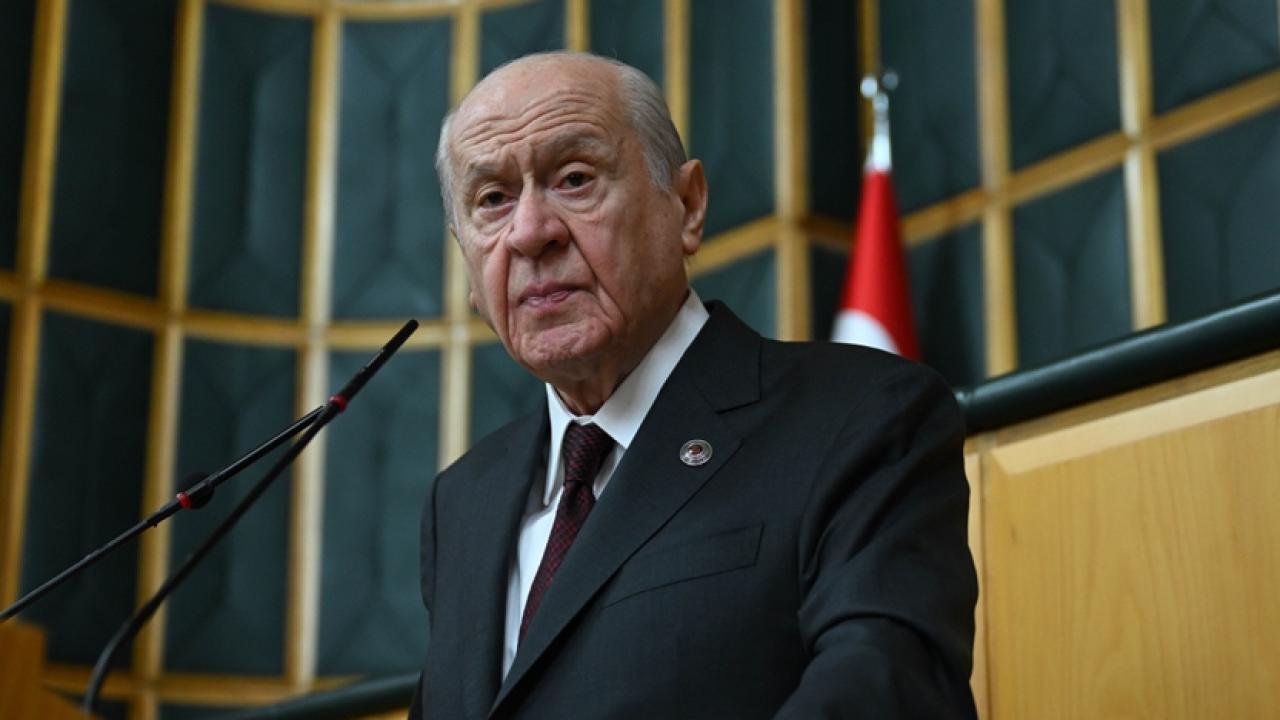
Nationalist Movement Party (MHP) Chairman Devlet Bahçeli has made critical remarks regarding Turkey's foreign policy vision. Bahçeli stated that Turkey's strategic position in the triangle of the Middle East, the Caucasus, and Eastern Europe places the country at the very center of global crises. Expressing that this geopolitical reality compels Ankara to pursue a proactive and balanced foreign policy, Bahçeli outlined the main contours of the diplomatic roadmap that Turkey must follow in its transition from a regional power to a global actor.
Bahçeli's statements come at a time when geopolitical tensions are escalating worldwide and traditional alliances are being redefined. The fact that Turkey is both a NATO member and shares deep historical and cultural ties with its regional neighbors makes the concept of 'balance' in foreign policy not just a preference, but a matter of national survival. The MHP leader emphasized that Turkey must position itself as a 'balancing element' in this sensitive geography, considering not only its own interests but also regional stability.
Background of the Development
Although Turkey's foreign policy has been shaped around the principle of 'Peace at home, peace in the world' since the founding of the Republic, global changes over the last two decades have moved this approach to a more dynamic ground. Specifically, the instabilities in the Middle East since the 2010s, Azerbaijan's process of securing its territorial integrity in the Caucasus, and the Russia-Ukraine war in Eastern Europe have multiplied the importance of Turkey's geopolitics.
Historically, Turkey has served as a bridge between East and West, but recently this bridge role has evolved into that of a 'game-maker' actor. The triangle highlighted by MHP Chairman Bahçeli covers the most critical regions of the world in terms of energy corridors, migration routes, and security architecture. Turkey's location right in the middle of this triangle necessitates a multi-dimensional diplomacy that minimizes the margin of error in foreign policy.
Looking from the past to the present, while Turkey's search for this 'balance' in foreign policy has occasionally led to friction with Western allies, it has ensured an uncompromising stance in protecting national interests. Bahçeli's statements, as a reflection of this historical continuity, are read as part of Turkey's effort to establish its own axis.
Expert and Industry Insights
Foreign policy experts characterize Bahçeli's emphasis on 'balance' as Turkey's effort to adapt to a multipolar world order. Industry representatives and academics state that Turkey's successes in the defense industry and energy diplomacy are made possible by this balanced foreign policy.
- Turkey's strategic autonomy plays a key role in resolving regional crises.
- Energy security is used as a lever in Turkey's foreign policy.
- The export of defense industry products increases diplomatic influence.
- Multilateral diplomacy strengthens Turkey's mediation capacity in global crises.
- Economic stability directly affects the room for maneuver in foreign policy.
Experts state that this rhetoric, which supports Turkey's vision of being not just a 'transit country' but also a 'hub country,' strengthens Turkey's hand in the international arena. In particular, the increase in the localization rate in the defense industry allows for more independent decisions in foreign policy.
Economic and Social Implications
Stability in foreign policy directly affects the economic environment of trust. Turkey's promotion of peace in crisis regions around it increases investor confidence and ensures that trade routes remain open. In particular, the passage of energy lines through Turkey has made the country an indispensable player in global energy markets.
From a social perspective, the acceptance of Turkey as a regional power reinforces the sense of social belonging and national self-confidence. The foreign policy approach emphasized by Bahçeli conveys the message that Turkey has assumed the responsibility of protecting not only its own borders but also regional peace.
Future Projections and Outlook
In the coming period, Turkey is expected to take a more active role in resolving global crises. In particular, increasing mediation activities and strengthening regional cooperation mechanisms will be the main agenda items of foreign policy.
Risks include the intensification of global power competition and the potential for regional conflicts to spread. However, Turkey's vision of a 'balanced foreign policy' is seen as the most powerful tool to manage these risks. In the upcoming process, Turkey is expected to combine its diplomatic and economic capacity to play a pioneering role for a fairer system in the global order.
💬 Yorumlar 0
Henüz yorum yapılmamış. İlk yorumu siz yazın!



















