Emine Erdoğan Emphasizes Children's Rights: Future Architects at the Presidential Complex
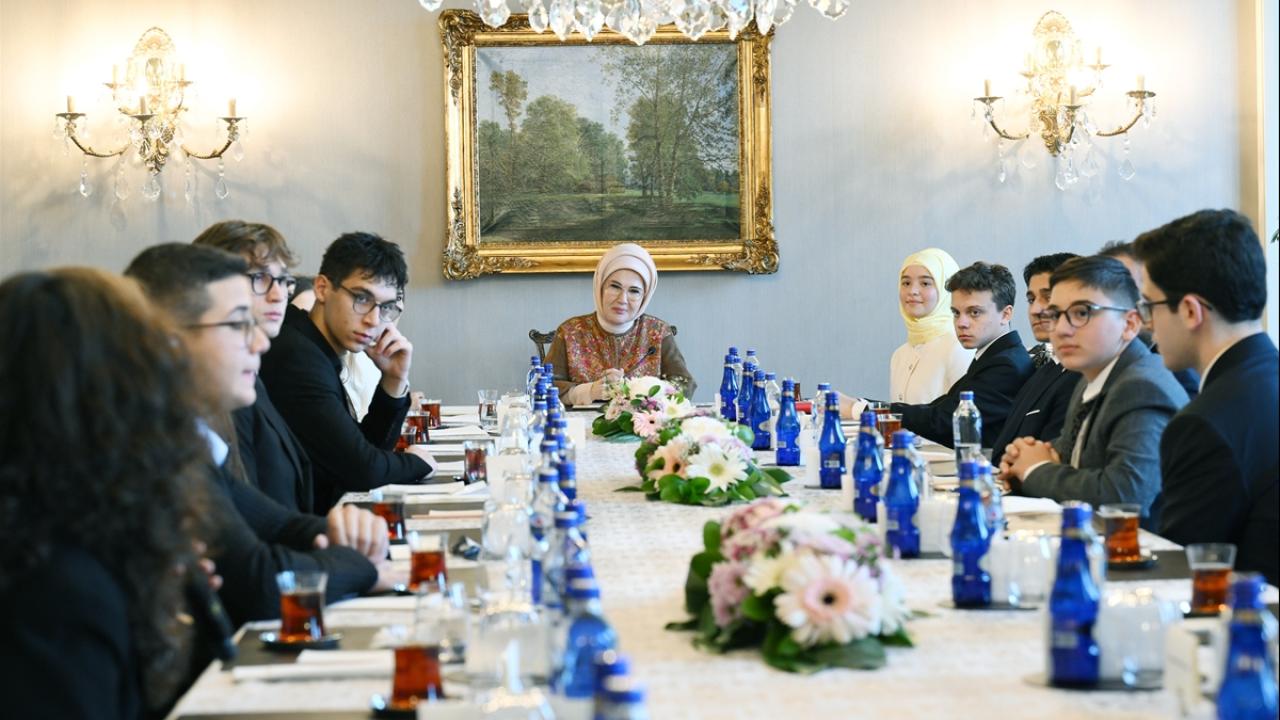
November 20, World Children's Day, hosted a significant and strategic meeting in Turkey this year. Emine Erdoğan, spouse of President Recep Tayyip Erdoğan, welcomed 20 children from the Turkish Children's Rights Advisory Board at the Presidential Complex, listening directly to their concerns and proposals. Accompanied by Minister of Family and Social Services Mahinur Özdemir Göktaş, this reception highlighted once again the importance of children's participation in decision-making processes.
During the reception, Rukiye Rumeysa Yeniyıldız, Coordinator of the Turkish Children's Rights Advisory Board, presented the 20-point declaration prepared following the 27th International Children's Forum held in Antalya on November 13. The message that children are not merely 'individuals to be protected' but active stakeholders in solving global issues like the climate crisis took center stage.
Background of the Development
Since becoming a party to the UN Convention on the Rights of the Child, Turkey has implemented comprehensive legal and administrative regulations. In recent years, the Children's Rights Advisory Boards established under the Ministry of Family and Social Services have functioned as a democratic mechanism, enabling children to have a say in their own rights. These boards encourage children's participation in policy-making processes at local and national levels.
The 27th International Children's Forum, held this year in Antalya under the theme 'Climate Change and Children's Rights,' focused on children's environmental awareness with a perspective aligned with COP31. This forum is part of a vision aimed at raising children as conscious global citizens capable of facing not just local, but global crises. These ongoing efforts aim to strengthen a social contract where children are recognized as 'subjects' of rights.
Protecting children in a digitalizing world is an integral part of this process. As Ahmet Yiğit Başoğlu emphasized, legal restrictions on social media platforms and digital guidance tools like the 'Children are Safe' (Çocuklar Güvende) platform reflect the state's determination to protect children from digital risks. Such steps are fundamental building blocks that strengthen Turkey's track record in children's rights.
Expert and Industry Insights
Experts state that children's participation in decision-making processes is not just a right, but a necessity for a sustainable society. Child rights advocates and social service experts express that such meetings boost children's self-confidence and reinforce their sense of social belonging.
Key points emerging from industry assessments include:
- The necessity for children's participation to evolve from a 'consultative' mechanism to a 'decision-making' one in policy processes.
- Greater integration of children into educational curricula regarding global issues like climate change.
- Making digital literacy training mandatory to ensure children's safety in the online world.
- Increasing international cooperation to protect the rights of children living under war and poverty.
- Ensuring children's voices are considered at every level, from local municipalities to the central government.
Experts emphasize that legal regulations regarding digital safety must be supported by raising parental awareness. The guidance activities of the Ministry of Family and Social Services in this field are considered a proactive approach to minimizing the risks brought by the digital age.
Economic and Social Implications
Investments in children's rights are essentially the greatest investments in a country's future human capital. Growing up in a healthy, safe, and educated environment directly impacts long-term social welfare. Social media regulations and digital safety measures not only provide individual protection but also contribute to creating a secure ecosystem in the digital economy.
At the social level, children becoming advocates for their own rights spreads the culture of democratic participation to the grassroots. As Sahra Dila Özbey expressed, raising one's voice for children living under war and poverty increases social empathy and global responsibility. This also supports Turkey's adoption of a child-focused approach in its humanitarian diplomacy.
From an economic perspective, protecting children in the digital world reduces the psychological and economic costs caused by cyberbullying and similar risks. Families using digital tools correctly is a factor that strengthens social peace and family communication.
Future Projections and Outlook
In the coming period, it is expected that the 20-point declaration adopted at the 27th International Children's Forum will be transformed into an action plan by relevant ministries and institutions. Specifically, there is a goal to integrate children's proposals into environmental policies for combating climate change.
The official process points to a structure where children are not just 'listened to' but are architects of 'implemented' policies. As Pirbey Mirvan Çelik stated, giving children a voice for 'a common life and consensus' will continue to be a cornerstone of Turkey's vision for children's rights. Risks include the rapidly changing nature of the digital world and the deepening impact of global crises on children.
In conclusion, this meeting between Emine Erdoğan and the children is a strategic step that refreshes Turkey's determination regarding children's rights and sends a message to future generations that 'your ideas are valuable to us.' This process is not limited to November 20 but reinforces a child-focused management approach that extends throughout every day of the year.
💬 Yorumlar 0
Henüz yorum yapılmamış. İlk yorumu siz yazın!



















