FM Fidan Emphasizes Regional Stability: A New Era in Cooperation with Syria
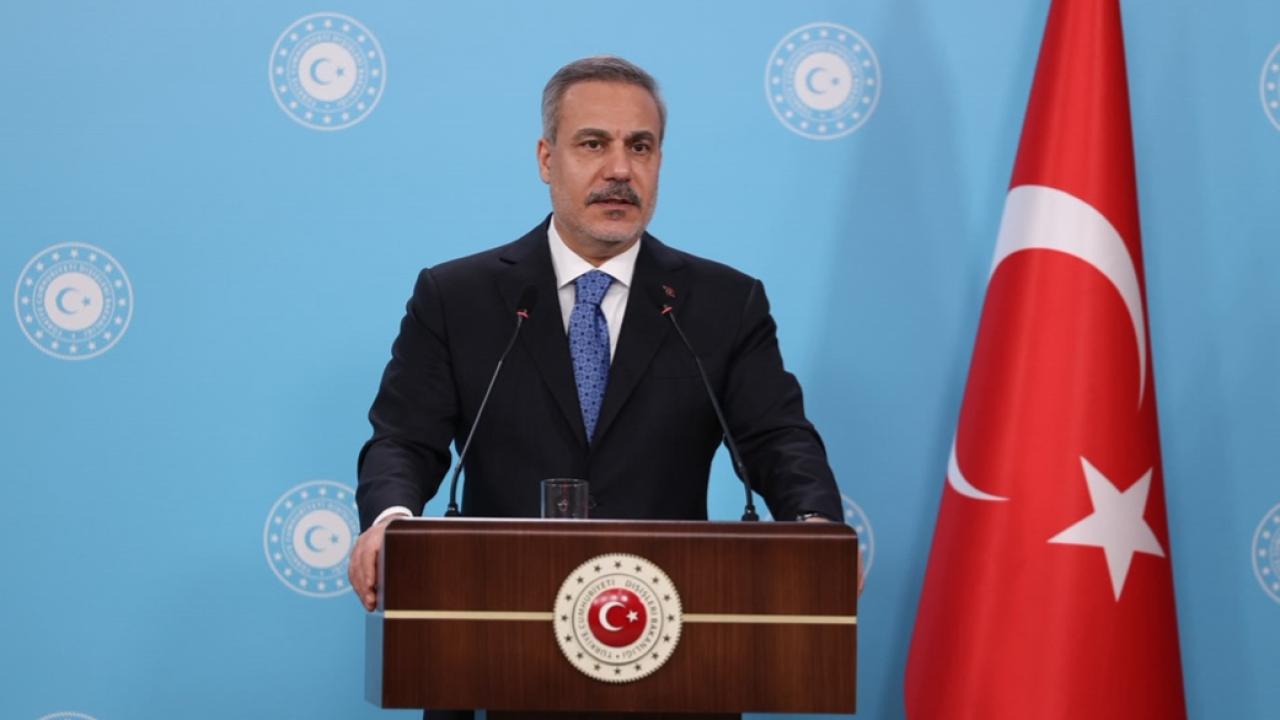
Foreign Minister Hakan Fidan delivered significant messages in Ankara following high-level meetings attended by Syrian Foreign Minister Assad Hassan al-Shaibani, Minister of National Defense Yaşar Güler, and Syrian Minister of Defense Major General Murhef Abu Kasra. Fidan emphasized that the relationship between the two countries has transcended the diplomatic level, establishing a concrete foundation of cooperation through health, education, and infrastructure projects. The focus of the meetings was on the reconstruction of the regional security architecture and integration processes that would reinforce Syria's territorial integrity.
Minister Fidan noted that the commissioning of the Damascus Heart Hospital, the start of education at the Damascus International Recep Tayyip Erdoğan Turkish School, and the agreement to establish the Turkey-Syria University are strategic steps that strengthen the bonds between the two peoples. Furthermore, the modernization of navigation safety systems at Damascus and Aleppo airports contributes to increasing Syria's international air transport capacity, supporting the region's potential to become a logistics hub.
Background of the Development
This new era in Turkish-Syrian relations is shaped by the search for stability, replacing the long-standing conflict environment in the region. Past tensions are being replaced by shared security concerns and economic development goals. The Mecca Defense Alliance stands out as one of the most concrete institutional outcomes of this new period. The alliance is designed not only as a military pact but also as a product of the concept of regional ownership.
Historically, the region's vulnerability to external interference has been a primary factor triggering instability. The new approach led by Turkey is based on the principle that regional problems should be solved by regional countries themselves. Protecting Syria's territorial integrity is accepted as an indispensable prerequisite for Turkey's border security and regional peace.
Israel's activities in the region, particularly its attacks on southern Syria, violate the 1974 Agreement on Disengagement of Forces. Minister Fidan stated that these attacks pose a threat not only to Syria but also to the general security and connectivity architecture of the region, emphasizing that Israel's policy of building its security on the instability of its neighbors is unsustainable.
Expert and Industry Insights
Regional security experts state that this rapprochement between Turkey and Syria could fundamentally change the balance of power in the Middle East. Industry representatives express that infrastructure projects will directly contribute to economic revitalization in the region.
- Regional Security: The Mecca Defense Alliance has the potential to create a deterrent shield against external interference.
- Economic Integration: Airport and education projects lay the foundation for long-term commercial relations.
- Diplomatic Strategy: Turkey's vision of 'regional ownership' serves as a model for other neighboring countries.
- Legal Basis: The call for a return to the 1974 Agreement symbolizes a search for a solution based on international law.
- Sustainability: Education and health investments are critical for making social peace permanent.
Experts predict that Israel's aggressive stance in the region is pushing regional countries toward tighter defense cooperation, which could lead to Israel's isolation in the long run. The emphasis on Syria's sovereign rights is also finding resonance within the international community.
Economic and Social Implications
This cooperation between the two countries promises a direct increase in prosperity for the Syrian people. Institutions such as the hospital and university established in Damascus play a key role in repairing the social fabric destroyed by the war. Economically, the improvement of airport systems facilitates Syria's reintegration into international trade networks.
At the social level, cooperation in education builds a cultural bridge between the youth of both countries. These opportunities offered by Turkey contribute to the training of the qualified human resources needed in the reconstruction process of Syria. This may also help migration movements in the region to settle on a more controlled and sustainable ground.
Market actors anticipate that with the reduction of security risks in the region, direct investments in Syria could increase. In particular, the presence of Turkish firms in the logistics and construction sectors is expected to grow.
Future Projections and Outlook
In the coming period, the institutionalization process of the Mecca Defense Alliance is expected to be completed. Minister Fidan's invitation shows that other countries in the region that desire peace and respect international law can also be included in this structure. This indicates that the alliance could expand and transform into a regional security umbrella.
Managing the tension with Israel is seen as one of the biggest risks of the process. Turkey's call for a security arrangement based on the 1974 Agreement offers a clear roadmap for a diplomatic solution. How much support this call receives in the international arena will determine the permanence of peace in the region.
In conclusion, this strategic cooperation between Turkey and Syria is a harbinger of a transformation that will affect not only the two countries but the entire region. These steps, taken in a wide range of areas from education to health, and from defense to transportation, prove that the future of the region will be shaped by 'regional ownership'.
💬 Yorumlar 0
Henüz yorum yapılmamış. İlk yorumu siz yazın!



















