Foreign Minister Fidan and EU Commissioner Fitto Meet in Ankara: Seeking a New Era in Turkey-EU Relations
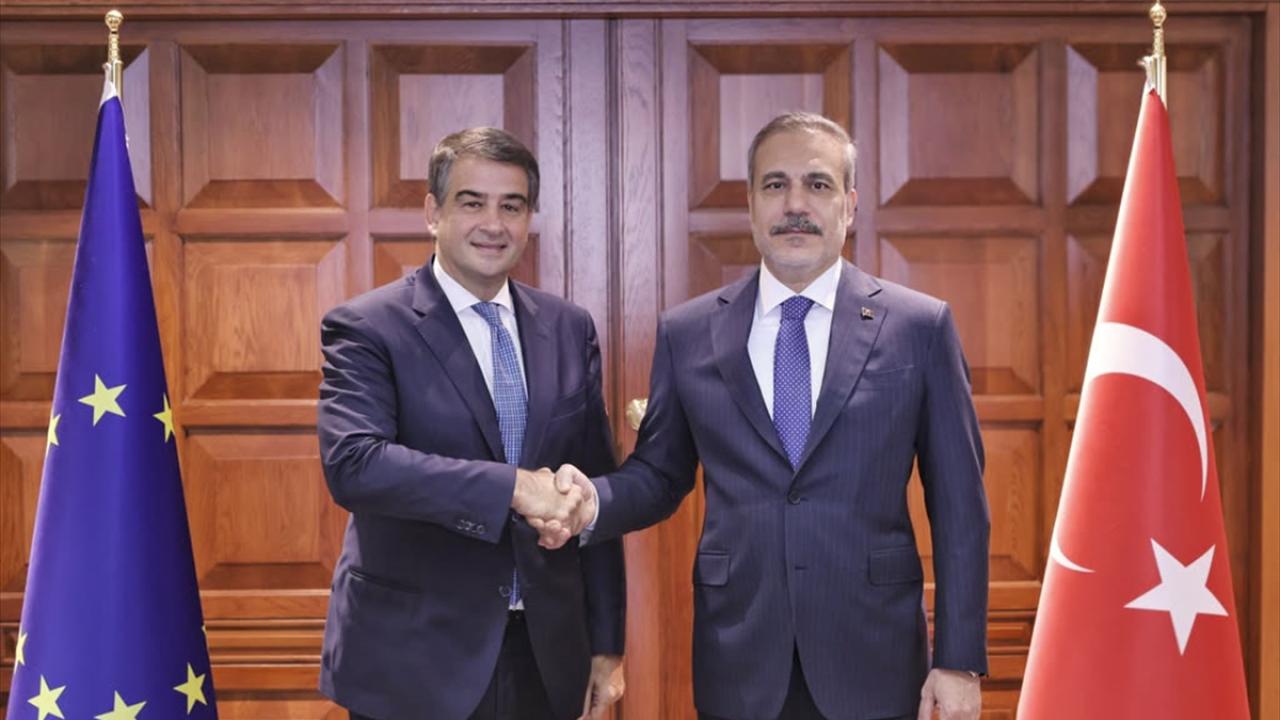
Turkish Foreign Minister Hakan Fidan hosted European Commission Vice President Raffaele Fitto in Ankara for a high-level meeting. This encounter comes at a pivotal moment as both Turkey and the European Union (EU) seek to revitalize their strained relations. During the meeting, Minister Fidan expressed appreciation for Fitto's constructive role and efforts to strengthen cooperation between Turkey and the EU, reaffirming Turkey's commitment to its strategic partnership with the bloc.
A central theme of the discussions was the current bottlenecks in Turkey-EU relations and the necessary steps to overcome them. Minister Fidan emphasized that Turkey possesses significant potential for a much stronger partnership with the EU based on common interests. However, he underscored that a major obstacle to realizing this potential is the tendency to trap these relations within narrow, unilateral political agendas.
Background of the Development
The history of Turkey-EU relations has been characterized by fluctuations. While the process began with the 1963 Ankara Agreement and reached a new milestone with the formalization of Turkey's candidacy at the 1999 Helsinki Summit, it has entered a period of stagnation in recent years, primarily due to the Cyprus issue and tensions in the Eastern Mediterranean. The EU's enlargement policy and Turkey's full membership goal have long been stalled by political deadlocks.
Ankara has long criticized the Greek Cypriot Administration (GCA) for using its EU membership as a leverage to block Turkey's accession process and its broader relations with the bloc. Minister Fidan's remarks regarding the "taking hostage" of Turkey-EU relations reflect Turkey's firm stance on this issue. Ankara maintains that the internal political dynamics of the EU should no longer be allowed to poison the relationship with a strategic partner like Turkey.
The modernization of the Customs Union, which has been in effect since 1995, is another critical issue. The current agreement, which lacks provisions for digitalization, the Green Deal, and the services sector, creates economic bottlenecks for both Turkey and the EU. Turkey demands that this technical issue be decoupled from political disputes and resolved as soon as possible.
Expert and Industry Insights
Foreign policy experts view the Fidan-Fitto meeting as part of the EU's "constructive engagement" policy toward Turkey. Industry representatives agree that updating the Customs Union would be mutually beneficial.
- Modernizing the Customs Union will enhance the competitiveness of Turkish industry in the EU market.
- Removing political barriers could accelerate the flow of foreign direct investment into Turkey.
- Developments in humanitarian areas, such as visa liberalization, would positively influence public perception.
- Decoupling the Cyprus issue from bilateral relations would increase the EU's capacity to ensure regional stability.
- Turkey's role in energy and logistics corridors is indispensable for the EU's strategic autonomy.
Experts note that the European Commission is inclined to establish a more pragmatic relationship with Turkey in the new term, and Fitto's role can be described as that of a "bridge-builder." It is emphasized that technical-level talks must be supported by political will.
Economic and Social Implications
Economic ties between Turkey and the EU account for approximately half of Turkey's total foreign trade. Therefore, any improvement in relations has a direct positive impact on the Turkish economy. Modernizing the Customs Union will not only increase trade volume but also facilitate Turkey's integration into the EU's green transition process.
From a social perspective, difficulties in visa processes and the EU's perception of Turkey have created a sense of fatigue at the societal level. As Minister Fidan emphasized, ending the "hostage" situation of the relations could contribute to restoring trust in the EU among the Turkish public. This is also a factor that would positively affect the integration processes of the Turkish diaspora living in Europe.
Future Projections and Outlook
In the coming period, technical delegations from Turkey and the EU are expected to meet more frequently. Ankara's primary expectation is that negotiations on updating the Customs Union will be decoupled from political obstacles and tied to a concrete timeline. The reports to be prepared by the European Commission regarding Turkey and the steps it takes will determine the course of the relationship.
Risks include the anti-Turkey stance of certain political groups in the European Parliament and the vetoes of the GCA. However, Turkey aims to overcome these obstacles through "strategic patience" and "active diplomacy." High-level visits scheduled for the coming months are expected to determine whether a new chapter will be opened in these relations.
💬 Yorumlar 0
Henüz yorum yapılmamış. İlk yorumu siz yazın!



















