Foreign Minister Fidan’s Brussels Contacts: A New Era in European Security and Regional Connectivity
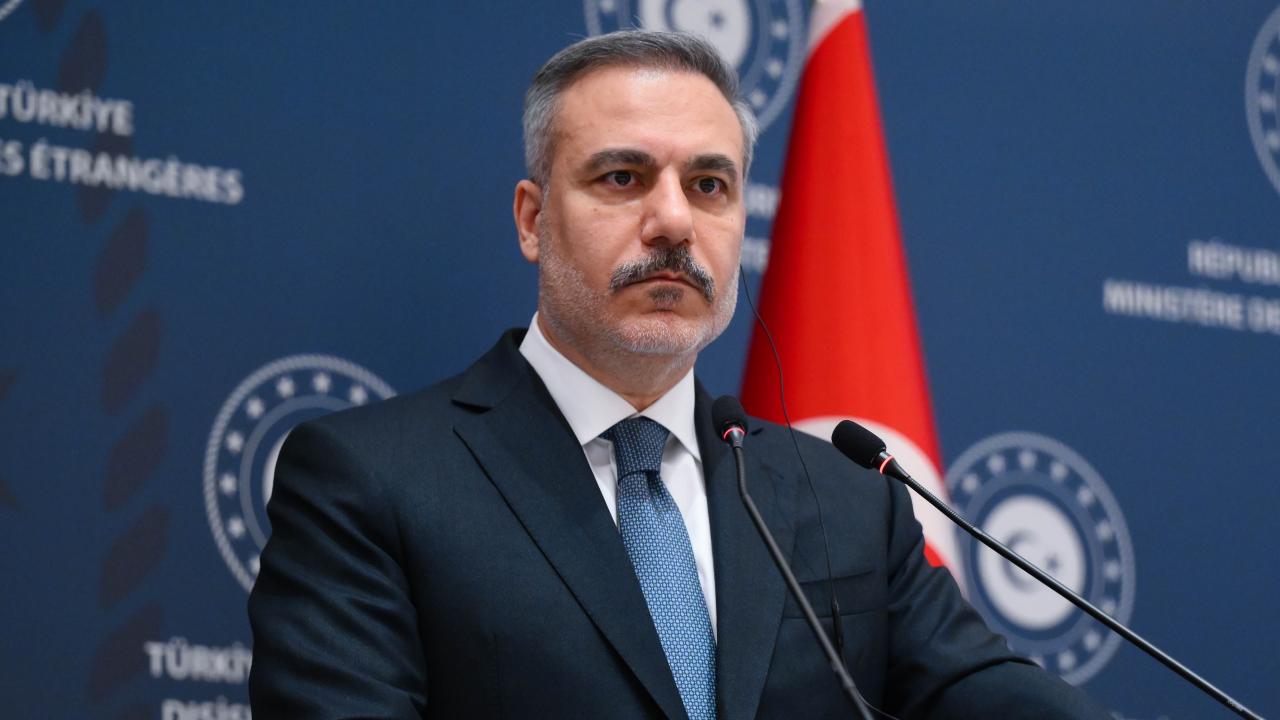
Foreign Minister Hakan Fidan is conducting a critical visit to Brussels to participate in high-level meetings hosted by the European Union. According to information provided by the Ministry of Foreign Affairs, Minister Fidan's agenda covers issues at the heart of Europe's current geopolitical landscape, particularly the security of the Black Sea and interregional connectivity. This visit reaffirms Turkey's indispensable role as a regional actor within the European security architecture.
During his contacts in Brussels, Minister Fidan will share Turkey's strategic vision in sessions titled “Interregional Connectivity” and “Advancing Security Commitments for the Black Sea Region.” The preservation of stability in the Black Sea and the security of energy corridors are among Turkey's top foreign policy priorities. Fidan's messages in these sessions are particularly significant as they coincide with a period in which the European Union is seeking to deepen its cooperation with Turkey.
Background of the Development
Relations between Turkey and the European Union have gained new momentum recently due to the impact of regional crises. With the onset of the Russia-Ukraine war, the security of the Black Sea has become not just a regional but a global security issue. Turkey maintains its position as the key actor balancing tension in the region by meticulously implementing the Montreux Convention. This meeting in Brussels provides a platform for Turkey's balancing role to be recognized once again by the EU and for concrete security commitments to be discussed.
Historically, Turkey has been the EU's most important strategic partner in areas such as energy supply security and migration management. However, political bottlenecks in recent years have necessitated placing relations on a more pragmatic footing. Minister Fidan's visit to Brussels can be read as a reflection of this pragmatism. Beyond long-term issues like the enlargement process and membership negotiations, the security and logistical connectivity currently on the table represent the strongest points where the interests of both sides intersect.
The European Commission's enlargement perspective and the reshaping of the security architecture in the region strengthen Turkey's place on the foreign policy agenda. Fidan's contacts aim to clarify not only bilateral relations but also Turkey's position within the EU's enlargement strategy. This visit is considered a critical opportunity to transform long-standing diplomatic traffic into concrete areas of cooperation.
Expert and Industry Insights
International relations experts state that Minister Fidan's contacts could open a new chapter in Turkey's relations with the EU. Turkey's experience in Black Sea security, in particular, is seen as a vital data source for Europe's defense strategies. Industry representatives and diplomatic observers summarize the results of this visit with the following points:
- Institutionalization of security cooperation in the Black Sea and Turkey's leadership in this process.
- Integration of interregional connectivity projects (energy and logistics) with EU funds and strategies.
- Redefining Turkey's strategic position in the enlargement process.
- Bilateral meetings providing momentum for technical issues such as visa liberalization and the modernization of the Customs Union.
- Positioning Turkey as an indispensable partner in Europe's defense industry and security architecture.
Experts emphasize that Minister Fidan's meeting with Marta Kos, the European Commissioner for Enlargement, will serve as a litmus test for the future of Turkey's EU membership perspective. Furthermore, meetings with representatives from Germany, Romania, Malta, and Moldova are evaluated as a demonstration of Turkey's multi-dimensional approach to diplomacy.
Economic and Social Implications
The economic implications of these contacts in Brussels will be felt particularly in the logistics and energy sectors. The “Interregional Connectivity” session could encourage the further integration of Turkey's Middle Corridor project with European logistics networks. While this strengthens Turkey's vision of becoming a logistics hub, it will also enhance supply chain security for EU countries.
On a social level, the thaw in Turkey-EU relations creates positive expectations among the public. Facilitating visa processes and reducing trade barriers are demands that resonate directly with both the business world and citizens. Minister Fidan's contacts aim to establish the necessary environment of trust to resolve these technical issues with political will.
Market actors view such high-level diplomatic visits as a deepening of Turkey's integration with European markets. Strengthening the link between security and the economy could also pave the way for increased foreign direct investment in Turkey.
Future Projections and Outlook
Following Minister Fidan's visit to Brussels, the issues discussed are expected to be transferred to technical working groups. Commitments regarding Black Sea security are projected to be solidified through joint projects within NATO and the EU. It is likely that preparations for a high-level Turkey-EU summit will begin in the coming months as a result of these contacts.
Risks include the persistence of domestic political dynamics in Europe and the reservations some member states hold toward Turkey. However, Minister Fidan's pragmatic and results-oriented diplomatic style will play a key role in overcoming these obstacles. Turkey will continue to insist on a model that contributes to Europe's security and prosperity while protecting its own national interests.
In summary, these contacts in Brussels once again prove that Turkey is a key player in Europe's future. In the coming period, it is expected that cooperation between Turkey and the EU will evolve into a more institutional and sustainable structure across a wide spectrum, ranging from security to the economy.
💬 Yorumlar 0
Henüz yorum yapılmamış. İlk yorumu siz yazın!



















