Marmara Lake Ecosystem Revives: The Return of Flamingos Offers Hope
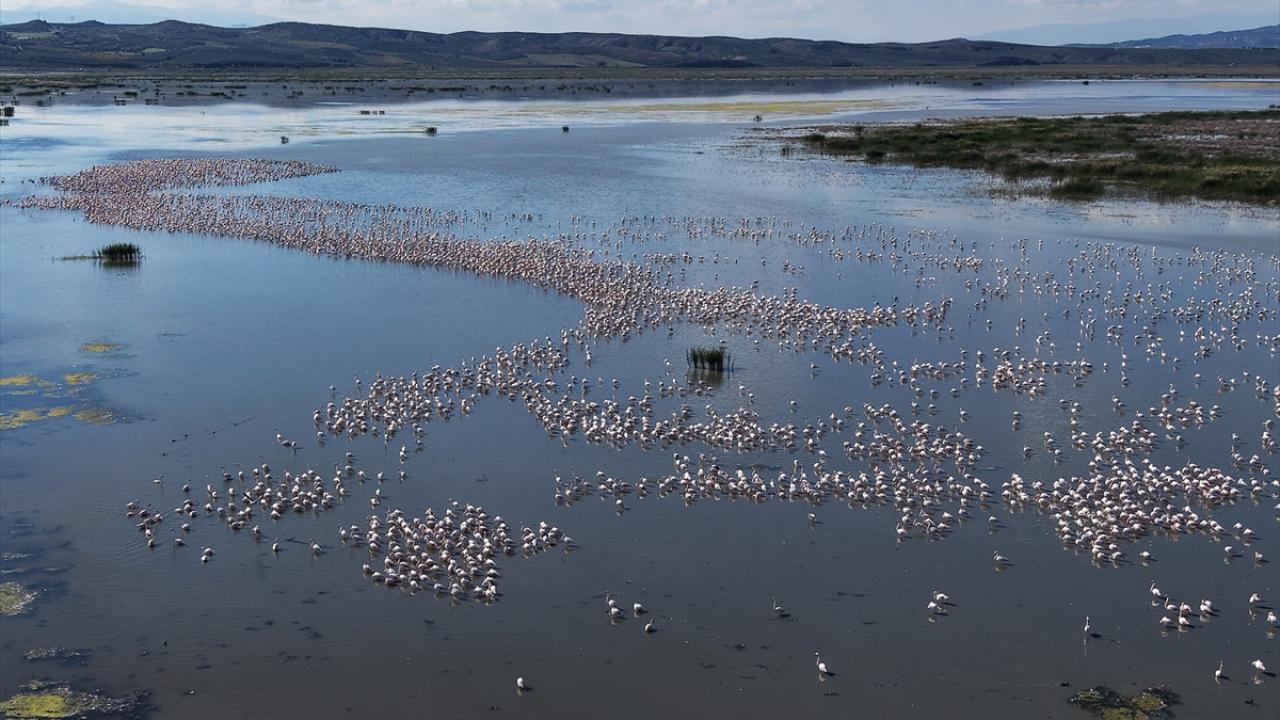
Located at the intersection of the Gölmarmara, Salihli, and Saruhanlı districts of Manisa, Marmara Lake covers a vast basin of 24,893 hectares and holds strategic importance for Turkey's wetland ecosystem. About five years ago, severe drought, coupled with poor water management and uncontrolled illegal irrigation, caused the lake to dry up completely, leaving behind a desert-like landscape that deeply concerned both nature enthusiasts and the local population. However, the abundant rainfall at the beginning of this year has allowed the lake bed to retain water once again, effectively bringing the ecosystem back to life. Today, the lake is showing the first tangible signs of returning to its former vitality as it welcomes back its old guests: the flamingos.
The refilling of the lake is not merely a visual spectacle; it is a vital development for the protection of regional biodiversity. The return of the flamingos is seen as a testament to the ecosystem's capacity for self-repair. However, experts emphasize that sustainable water policies are essential to ensure that this recovery is permanent.
Background of the Development
Historically, Marmara Lake has been one of the most significant water sources in the Gediz Basin. It held international importance as a wetland, serving both as a vital source for agricultural irrigation and as a key stopover on the migration routes of migratory birds. However, starting in the mid-2010s, the impacts of climate change and excessive water extraction across the basin caused the lake's water levels to drop dramatically. By 2019-2020, the surface area of the lake had nearly vanished, the lake bed was being encroached upon for agricultural use, and endemic species in the region were on the verge of extinction.
The drying process was not just a loss of water; it also led to the degradation of the region's microclimate and crippled the local agricultural economy. As the lake dried up, bird populations altered their migration routes, and local fishing activities ceased entirely. This period remains a painful lesson that highlighted the vulnerabilities in Turkey's wetland management practices.
Recently, the increased sensitivity of state and local authorities toward protecting water resources, combined with increased seasonal rainfall, has enabled the lake to revive. In particular, the implementation of basin-based water management projects has increased the lake's capacity to retain water. The arrival of the flamingos is considered the first major success of this restoration process.
Expert and Industry Insights
Environmental experts and biologists describe this improvement in Marmara Lake as the 'resilience of nature.' However, experts agree that radical measures must be taken to prevent the lake from drying up again. The common views of industry representatives and scientists can be summarized as follows:
- Illegal drilling and unregulated irrigation activities must be strictly prohibited.
- The flow rates of water sources feeding the lake (such as the Gediz River) should be re-regulated according to the lake's ecological needs.
- The agricultural crop pattern in the region should shift toward less water-intensive crops.
- The wetland's protected status must be strengthened with legal sanctions to end the occupation of the lake bed.
- Afforestation and projects supporting biodiversity should be increased to restore the habitat around the lake.
Experts state that the flamingos' preference for the lake once again is the clearest evidence that water quality and the food chain are beginning to reform. This proves that the lake is not just a body of water, but a living organism.
Economic and Social Implications
The revival of the lake is a new beacon of hope for the regional economy. The existence of the lake is a strategic safeguard for local farmers in meeting the water needs of agricultural production. Furthermore, the lake's potential for birdwatching and ecotourism could create new income streams for the local population. The arrival of the flamingos has already begun to increase the region's tourist appeal, bringing smiles to the faces of local tradespeople.
From a social perspective, the drying of the lake had damaged the sense of belonging among the local people. Now, the refilling of the lake has become a source of social morale. The strengthening of nature conservation awareness among the local population stands out as one of the most significant social achievements of this process.
Future Projections and Outlook
In the coming period, it is expected that the 'Sustainable Wetland Management Plan' will be implemented with determination to restore Marmara Lake to its former glory. It is anticipated that the State Hydraulic Works (DSİ) and relevant ministries will focus on cleaning the channels that feed the lake and improving the efficiency of water transmission lines.
Risks remain; in particular, the irregular rainfall regimes brought about by climate change continue to threaten the lake's water levels. Therefore, the efficient use of water and the creation of a basin-based water budget will be the primary agenda items for the next 5-10 years. The flamingos' visit this year is just a beginning; if the right steps are taken, Marmara Lake will regain its status as one of Turkey's most important bird paradises.
💬 Yorumlar 0
Henüz yorum yapılmamış. İlk yorumu siz yazın!



















