Minister Fidan Meets Greek Counterpart Gerapetritis in Brussels: Strategic Dialogue and Regional Connectivity
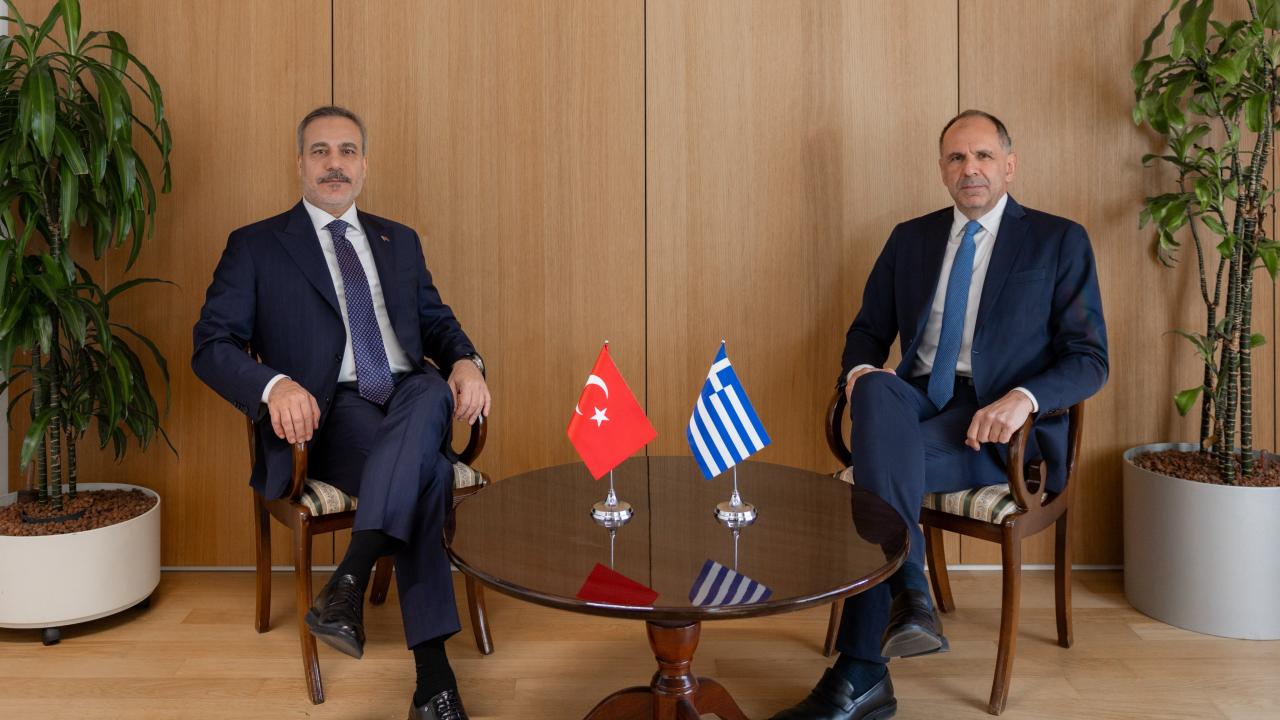
Turkish Foreign Minister Hakan Fidan continues his high-level diplomatic engagements in Brussels, the capital of Belgium. Operating on the sidelines of the "Second Interregional Security and Connectivity Ministerial Meeting" organized within the framework of the European Union (EU) Foreign Affairs Council, Minister Fidan held a bilateral meeting with his Greek counterpart Giorgos Gerapetritis.
During this bilateral reception on the multilateral diplomatic platform in Brussels, the current state of bilateral relations between Turkey and Greece, the regional security architecture, and concrete steps to strengthen good-neighborly relations were comprehensively reviewed. At a time when global and regional challenges are escalating, the gathering of the foreign ministers of both nations reaffirmed that direct dialogue channels between Ankara and Athens remain fully active and effective.
Interregional connectivity and security, which formed a primary pillar of the meeting's agenda, carry critical significance for the stability of both the European continent and the Eastern Mediterranean basin. Minister Fidan and his counterpart Gerapetritis evaluated joint initiatives in multilateral forums as well as bilateral cooperation domains, reiterating their mutual commitment to preserving regional peace.
Background of the Development
In recent years, Turkey and Greece have embarked on a constructive diplomatic trajectory, adopting a strategy to address long-standing bilateral matters through structured dialogue. Initiated under the leadership of both nations, this positive agenda process has gained institutional stability through regular consultations at the foreign ministry level. The meeting between Minister Fidan and Minister Gerapetritis in Brussels represents a natural continuation of this institutionalized dialogue schedule.
The Interregional Security and Connectivity Meeting held under the auspices of the EU Foreign Affairs Council serves as a strategic platform highlighting Turkey's indispensable role in the European security architecture and global supply chain networks. Aiming for regional integration, this series of ministerial meetings addresses vital issues such as the security of East-West corridors, the sustainability of energy transmission routes, and the integration of logistics infrastructure.
Considering the historical background of Turkish-Greek diplomatic relations, this encounter on the margins of a security- and connectivity-oriented summit underlines the mutual determination to converge around common interests. Since assuming office, Foreign Minister Hakan Fidan has pursued an active and results-oriented diplomacy aimed at de-escalating tensions in the Aegean and Eastern Mediterranean while building confidence through tangible joint projects.
Expert and Industry Insights
International relations and security analysts view the Fidan-Gerapetritis meeting in Brussels as a positive manifestation of institutionalized progress in Turkish-Greek ties. Foreign policy experts note that connectivity discussions conducted within EU parameters offer unique opportunities for both neighboring countries to synthesize their economic and logistical capabilities.
Representatives from transport, energy, and trade sectors also emphasize that consensus between Ankara and Athens plays a vital role in executing infrastructure projects across the Eastern Mediterranean and Balkan routes. Aligning Turkey's central trade corridors with Greece's maritime port and logistics infrastructure holds immense potential to generate high added value for both economies.
Based on insights from diplomatic sources and industry experts, key highlight points include:
- Continuity of High-Level Dialogue: Frequent communications among senior officials ensure potential friction points are resolved through diplomacy before escalating into crises.
- Regional Connectivity Projects: Upgrading energy pipelines, port interconnectivity, and road networks provides strong momentum for cross-border trade.
- Security and Stability Approach: Safeguarding the security balance across the Black Sea, Aegean, and Eastern Mediterranean forms the bedrock of mutual economic interests.
- Positive Agenda Strategy: Deepening collaboration in trade, tourism, and environmental protection while political and legal matters remain subject to ongoing talks.
- Role of the EU and Multilateral Platforms: Engagements on EU platforms reinforce Turkey's crucial position within the European security and logistics framework.
Economic and Social Implications
The softening of Turkish-Greek relations and sustained ministerial dialogue yield direct benefits for bilateral trade volume. To reach target trade goals, modernizing border crossings, facilitating logistical processes, and accelerating customs operations remain priority operational steps.
Tourism and cultural exchanges stand out as areas benefiting directly from this constructive diplomatic atmosphere. Visa facilitation programs across Aegean islands and expanded ferry services not only boost local economies but also reinforce social and humanitarian connections between the peoples of both nations.
Furthermore, coordinated action between Turkey and Greece regarding regional energy security enhances the stability of Eastern Mediterranean and Southeastern European energy markets. Strategic initiatives in renewable energy integration, natural gas transit routes, and power grid interconnections serve as primary drivers of regional economic growth.
Future Projections and Outlook
In the upcoming period, high-level diplomatic contacts between Turkey and Greece are expected to maintain their momentum. The consultations conducted by both foreign ministers in Brussels lay essential groundwork for upcoming High-Level Cooperation Council (HLCC) meetings and prospective leadership summits. The shared political will to sustain a positive agenda provides a reliable foundation for signing formal bilateral agreements.
Looking ahead, regional security and connectivity frameworks will increasingly occupy center stage. Especially in an era where global supply chains are being restructured, leveraging the geographical advantages of Turkey and Greece into joint infrastructure projects is regarded as a strategic necessity by Ankara, Athens, and Brussels alike.
In conclusion, the meeting between Minister Hakan Fidan and his Greek counterpart Giorgos Gerapetritis in Brussels reflects the constructive and outcome-oriented posture of Turkish diplomacy. The steadfast commitment of both nations to operating bilateral dialogue mechanisms strengthens expectations for transforming the Aegean and Eastern Mediterranean into a zone of lasting peace, stability, and prosperity.
💬 Yorumlar 0
Henüz yorum yapılmamış. İlk yorumu siz yazın!



















