Minister Fidan's Brussels Contacts: Strategic Security and Connectivity Agenda in Turkey-EU Relations
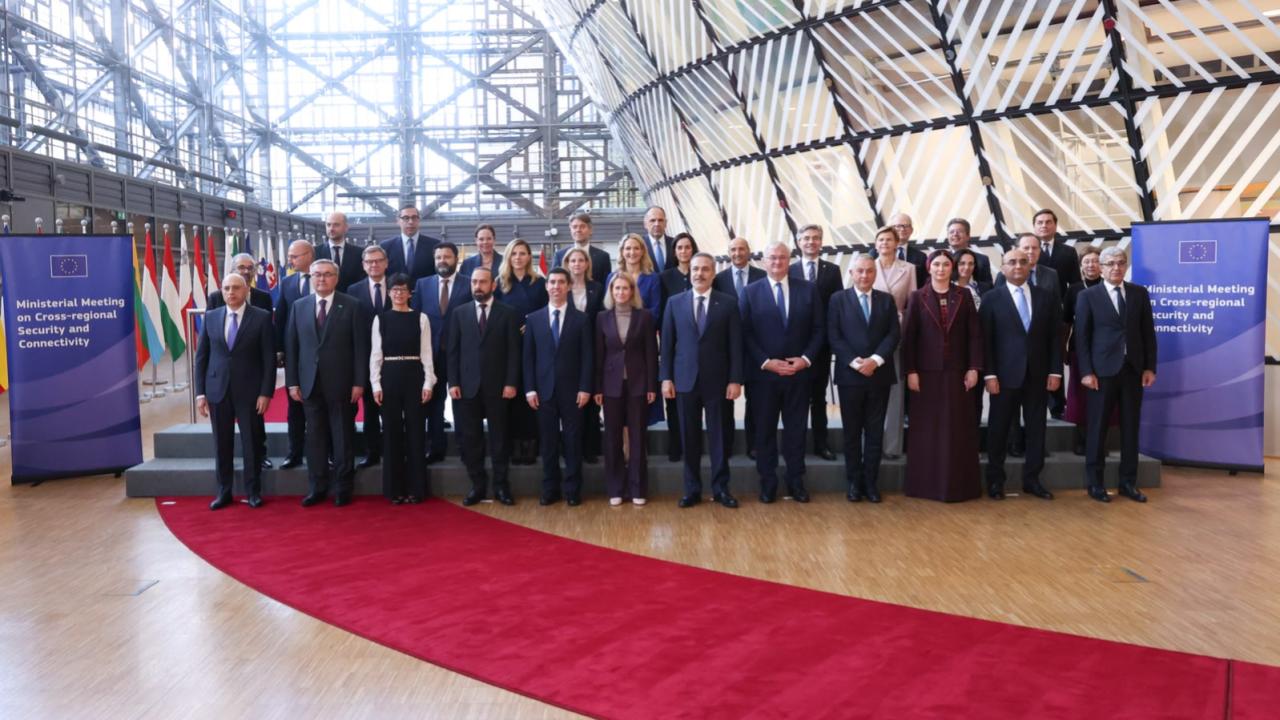
Foreign Minister Hakan Fidan participated in the 'Second Ministerial Meeting on Interregional Security and Connectivity' held under the auspices of the EU Foreign Affairs Council in Brussels. This visit, which reinforces Turkey's key role in regional stability and global supply chains, holds significant importance as it takes place during a period when the security architecture of the Black Sea basin is being reshaped.
Minister Fidan took part in the session titled 'Advancing Security Commitments for the Black Sea Region,' where he shared a series of assessments highlighting Turkey's peaceful stance in the region and the balancing elements provided by the Montreux Straits Convention. Furthermore, within the framework of bilateral contacts, Fidan met with Romanian Foreign Minister Dan Neculaescu to discuss the strategic partnership and regional cooperation mechanisms between the two nations.
Background of the Development
Relations between Turkey and the European Union have entered a new phase in recent years, centered on geopolitical ruptures and security concerns. The meeting in Brussels provided a critical platform to discuss the connectivity potential between the EU's 'Global Gateway' strategy and Turkey's 'Middle Corridor' initiative. Given that the Black Sea is at the heart of issues concerning both energy supply security and global food security, such as the grain corridor, Turkey's presence at this meeting is vital for the feasibility of the EU's security commitments to the region.
Historically, Turkey has been the main guarantor of stability in the Black Sea as the strongest ally on NATO's southeastern flank. Since the beginning of the Russia-Ukraine war, security balances in the region have entered a sensitive process. The meeting attended by Minister Fidan reflects Turkey's vision of keeping security cooperation channels with the EU open and acting as a 'key actor' in resolving regional crises.
This diplomatic process is not merely a security meeting but also part of efforts to revitalize institutional dialogue mechanisms between Turkey and the EU. Unlike the bottlenecks of the past, common interests in security and the defense industry are bringing Ankara and Brussels together on a more pragmatic ground today.
Expert and Industry Insights
Foreign policy analysts define Minister Fidan's Brussels contacts as a 'security-oriented normalization' process in Turkey's relations with the EU. Experts state that aligning Turkey's military and diplomatic weight in the Black Sea with the EU's security policies is a strategic gain for both sides.
- Turkey's status as an indispensable partner in the regional security architecture has been reaffirmed.
- Maintaining stability in the Black Sea is a critical prerequisite for the EU's energy security.
- Connectivity projects increase Turkey's capacity to serve as a logistics hub.
- Bilateral contacts with Romania are strategic for strengthening NATO's eastern flank.
- Keeping diplomatic channels open acts as a buffer against the escalation of potential crises.
Industry representatives emphasize that the issue of connectivity has an economic dimension beyond the military. Ensuring the security of trade routes extending from the Black Sea to Europe directly affects Turkey's competitiveness in the logistics sector. Minister Fidan's active participation in this meeting signals a safer and more predictable environment for the Turkish business world in accessing European markets.
Economic and Social Implications
Cooperation on security and connectivity is an element that directly supports economic stability. Advancing security commitments in the Black Sea means protecting and increasing the volume of trade in the region. Turkey's leadership in this process strengthens the perception of Turkey as a 'safe haven' in the eyes of foreign investors.
At the social level, such high-level contacts create a positive public perception regarding the reduction of tensions in Turkey-EU relations and the achievement of a unity of vision. Citizens expect this active and constructive stance in foreign policy to contribute to economic prosperity and regional peace.
Market actors interpret the strengthening of Turkey's integration with Europe as a positive signal for long-term economic growth and foreign trade balance. In particular, the security of energy and logistics lines cements Turkey's position in the global supply chain.
Future Projections and Outlook
In the coming period, it is expected that the decisions taken at this meeting in Brussels will be transformed into concrete projects. It is envisioned that the security dialogue between Turkey and the EU will be expanded to cover not only the Black Sea but also the Eastern Mediterranean and the Middle East.
In the official process, the establishment of technical working groups and the development of new cooperation models with the EU regarding the financing of connectivity projects are on the agenda. In this process, Turkey aims to consolidate its position not only as a transit country but also as a founding part of the security architecture.
Risks include the deepening of regional conflicts and differing political approaches within the EU. However, the proactive diplomacy conducted by Minister Fidan shows that these risks are manageable and that Turkey is determined to build regional peace.
💬 Yorumlar 0
Henüz yorum yapılmamış. İlk yorumu siz yazın!



















