Minister Kacır: Launching the AI-Powered Clean Technology Initiative at COP31
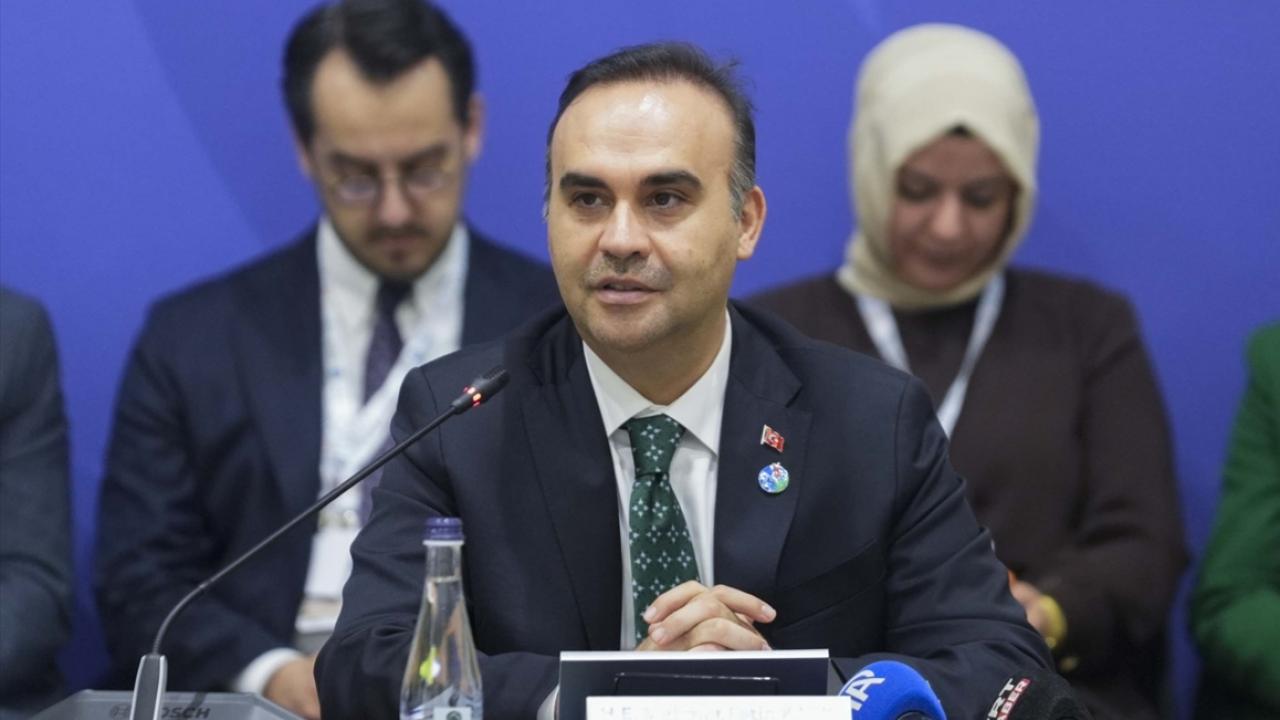
Minister of Industry and Technology Mehmet Fatih Kacır has officially launched the 'AI-Powered Clean Technologies Initiative' during the 31st Conference of the Parties (COP31) to the United Nations Framework Convention on Climate Change, held in Antalya. In his keynote address, Minister Kacır underscored that the fight against climate change is not merely an environmental policy but a technological imperative. He highlighted that beyond scientific breakthroughs, the widespread adoption of efficient and cost-effective clean technologies is essential for reducing global greenhouse gas emissions, noting that artificial intelligence serves as a primary catalyst in this transition.
Kacır explained that artificial intelligence is far more than just software; it is a transformative force across industrial processes, ranging from the discovery of advanced materials for next-generation batteries to enhancing the efficiency of solar cell technologies. By accelerating experimental and development processes, AI saves significant time and resources. The Minister pointed out that AI-driven grid management and related digital technologies could unlock up to 175 gigawatts of additional transmission capacity without the need for constructing new power lines. He noted that the widespread adoption of current AI applications could reduce annual carbon dioxide emissions by approximately 1.4 billion tons by 2035.
Background of the Development
The fight against climate change has moved to the center of the global economy over the past decade. The COP series of conferences has become a critical platform for coordinating the steps countries take toward achieving carbon-neutral goals. In this process, Turkey has adopted a vision of integrating its industrial capacity with green transformation, increasing its investments particularly in strategic areas such as renewable energy and artificial intelligence.
While energy efficiency and emission reduction were previously addressed primarily through traditional engineering solutions, digitalization and artificial intelligence have now become the core elements of this equation. Turkey's 2030 Artificial Intelligence Action Plan is not just a technology strategy in this context, but also an effort to redefine the country's industrial revolution on a green axis. Unlike past industrial moves, this new era combines digital competencies with sustainability principles.
On a global scale, clean technology investments are critical to balancing energy security and climate goals. With the initiative launched at COP31, Turkey is reinforcing its claim to be a hub among developing nations that produces technology and integrates it into its industry. This step is a clear indicator of how aligned Turkey's long-term industrial strategies are with the global climate agenda.
Expert and Industry Insights
Industry representatives and technology experts describe the initiative announced by Minister Kacır as a 'game changer' for Turkey's industrial competitiveness. According to experts, the integration of AI into industry increases efficiency while minimizing the carbon footprint, all while reducing costs in energy-intensive sectors.
Technology analysts state that this initiative will be transformative in the following areas:
- Minimizing energy losses through AI-powered grid management.
- Accelerating R&D processes in next-generation battery technologies.
- Expanding automation in low-carbon industrial processes.
- Achieving savings in industrial facilities through data-driven energy consumption models.
- Strengthening human capital by training advanced AI experts.
Industry stakeholders express that the mobilization of public resources for this field is a major source of motivation for the private sector. Investors anticipate that ventures at the intersection of AI and clean technology will be among the areas with the highest growth potential in global markets in the coming years.
Economic and Social Implications
This initiative places digital and green transformation at the heart of Turkey's economic development model. The target of training 10,000 advanced AI experts and 100,000 application professionals under the 2030 Artificial Intelligence Action Plan will ensure an increase in qualified employment in Turkey's labor market. This will bring about productivity gains across all sectors, from automotive to textiles, and from energy to agriculture.
From a social perspective, the proliferation of clean technologies means a cleaner environment and more sustainable living spaces. Economically, Turkey's emergence as an exporter of these technologies could have a positive impact on the current account deficit. The integration of domestic and national AI solutions into industry promotes value-added production while reducing foreign dependency.
Public-private sector cooperation is the most critical pillar for the financing and implementation of this transformation. As Minister Kacır stated, mobilizing public resources to encourage private sector investment in strategic technologies will also revitalize the venture capital ecosystem.
Future Projections and Outlook
In the coming period, there is great anticipation regarding how Turkey will carry this initiative to international markets. The steps to be taken to reach the 2030 goals will involve not only a technical process but also intense diplomacy and cooperation. In particular, the interest of international investors in this initiative will test the maturity of Turkey's technology ecosystem.
Risks include rapid changes in the global technology race and the need to retain talented human resources. However, Turkey's determined stance and strategic planning show that these risks are manageable. As the share of AI-powered clean technologies in Turkey's industrial production increases in the coming years, the country's weight in the global climate fight is expected to grow further.
In conclusion, this step taken at COP31 confirms that Turkey is not just a follower, but also a solution partner and technology developer. The unification of the public, industrial, and academic worlds around this vision will be Turkey's greatest assurance in achieving its goals for 2030 and beyond.
💬 Yorumlar 0
Henüz yorum yapılmamış. İlk yorumu siz yazın!



















