Minister Kurum’s COP31 Message: Climate Diplomacy Must Move from Halls to the Field
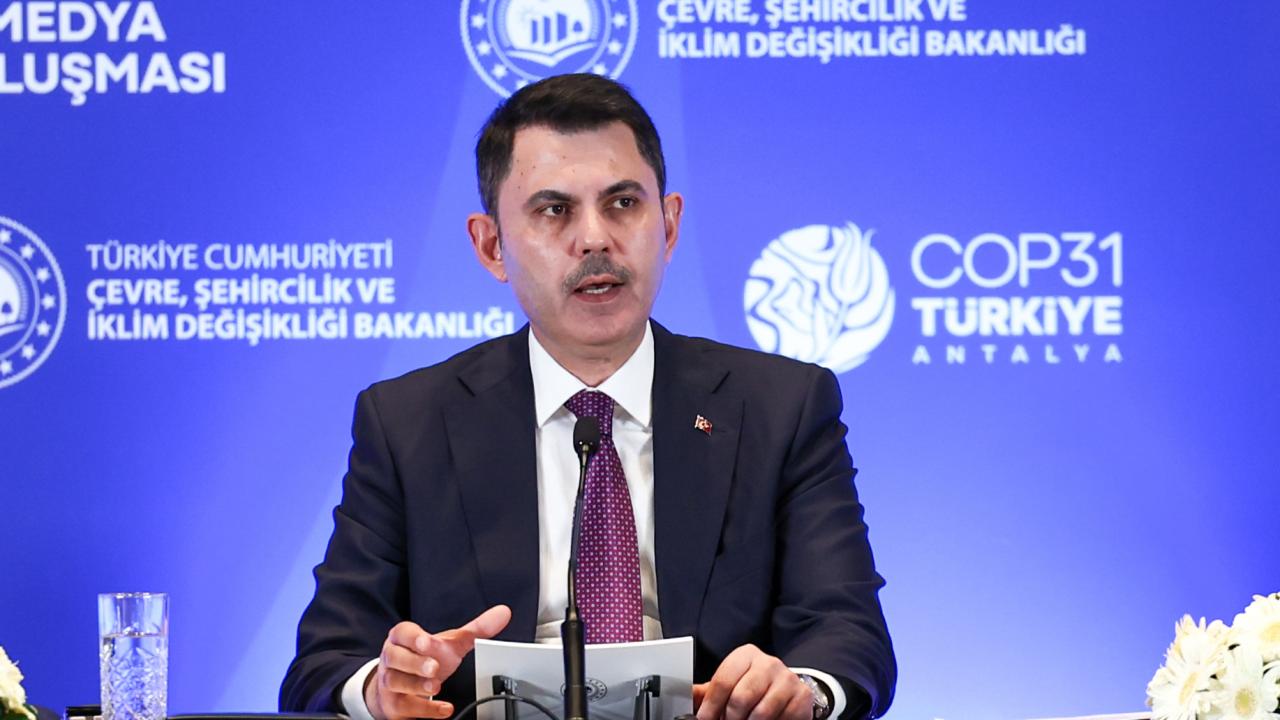
Minister of Environment, Urbanization and Climate Change and COP31 President Murat Kurum made critical remarks regarding the future of global climate diplomacy at the 'Parliamentary Meeting on Climate Change' held in Antalya. Stating that they have left behind the first week of COP31 with intense diplomatic traffic, Kurum noted that they have brought together a wide range of stakeholders, from heads of state to scientists, youth, and civil society organizations. Minister Kurum emphasized that the fight against climate change should not remain merely a discourse, stating that real success can be seen in the laws enacted by countries, the budgets allocated, and the concrete investments made.
Kurum stated that the discussions held in Antalya should not remain within the conference halls, noting that parliamentarians are the most important partners to translate this will into a legal framework in their own countries. Stating that climate goals must come to life in strengthened cities and resilient infrastructure, the Minister underlined Turkey's determined stance in this process.
Background of the Development
The COP31 process represents a new era in the fight against global climate change. Conducted under the presidency of Minister Murat Kurum, this process is built on three main pillars: dialogue, consensus, and action. The issue of 'feasibility of decisions,' which has been one of the biggest problems in past COP summits, is placed at the center of this summit. By ratifying the Paris Agreement in 2021, Turkey ensured its full integration into the global climate regime and has played an active role in climate diplomacy since that date.
Historically, the fight against climate change has often been limited to high-level diplomatic meetings and has not been sufficiently integrated into the legislative processes of local parliaments. However, as Minister Kurum emphasized, the approval of the Turkish Grand National Assembly in 2021 was a legal turning point in the country's fight against climate change. This step ensured that climate goals became not just a statement of intent, but a binding state policy.
The meeting in Antalya aims to take this historical process a step further by bringing together parliamentarians from different countries to create a global 'legislative cooperation' model. The gaps between countries' development levels, energy systems, and access to finance are seen as one of the biggest obstacles to building a common future in the fight against climate change.
Expert and Industry Insights
Climate economy experts state that Minister Kurum's emphasis on 'parliamentary will' is critical for directing global financial flows. Industry representatives agree that the fight against climate change is not just an environmental issue, but also a matter of economic and industrial transformation. According to experts, the involvement of parliaments is the fundamental element that will increase the private sector's confidence in green investments.
- Harmonizing legislative processes with climate goals reduces investor risk.
- Increasing the share allocated to the fight against climate change in budget allocations accelerates concrete actions.
- Dialogue between the parliaments of different countries facilitates technology transfer and knowledge sharing.
- Aligning local legislation with international standards increases the effectiveness of carbon markets.
- Parliamentary oversight mechanisms ensure transparent monitoring of climate commitments.
Industry representatives state that establishing a legal framework, especially for energy efficiency and zero-waste projects, will enable the transition to a low-carbon economy while maintaining the competitiveness of the industry. In this context, the meeting in Antalya serves not only as a diplomatic gathering but also as an 'implementation guide.'
Economic and Social Implications
The economic implications of the fight against climate change are a major test, especially for developing countries. As Minister Kurum pointed out, countries' development journeys and climate risks differ from each other. An approach that ignores these differences can lead to social unrest and economic imbalances. Therefore, access to finance and technology transfer are among the most important agenda items of climate diplomacy.
From a social perspective, the fight against climate change is of vital importance for the future of the younger generation. Minister Kurum's inclusion of youth and civil society in this process ensures that the fight against climate change spreads to the grassroots. The concepts of social justice and climate justice stand out as two complementary elements in this process.
In terms of market balances, although the cost of green transformation is high, it is predicted that countries that do not carry out this transformation will face greater economic losses in the medium and long term. Turkey's steps show that this transformation should be seen as an opportunity, not a cost.
Future Projections and Outlook
In the post-COP31 period, it is expected that the foundations laid in Antalya will turn into concrete legal regulations. The main factor that will determine the success of the summit will be the parliamentarians moving the fight against climate change to the top of their national agendas when they return to their countries. Risks include global economic uncertainties limiting resources allocated to climate finance and political polarization between countries weakening cooperation.
In the coming period, countries are expected to update their own 'Nationally Determined Contributions' (NDCs) within the scope of the fight against climate change and pass these goals through their parliaments. In this process, Turkey will continue to both strengthen its internal legislation and maintain its 'dialogue and consensus'-oriented leadership in international platforms.
In conclusion, the meeting in Antalya has declared to the whole world that the fight against climate change is not only a state policy but also a parliamentary responsibility. This process will continue to be one of the fundamental dynamics that will determine the speed and depth of global climate action in the coming years.
💬 Yorumlar 0
Henüz yorum yapılmamış. İlk yorumu siz yazın!



















