Minister Kurum's Historic Call at COP31: Emphasizing 'Common Future' in Global Climate Diplomacy
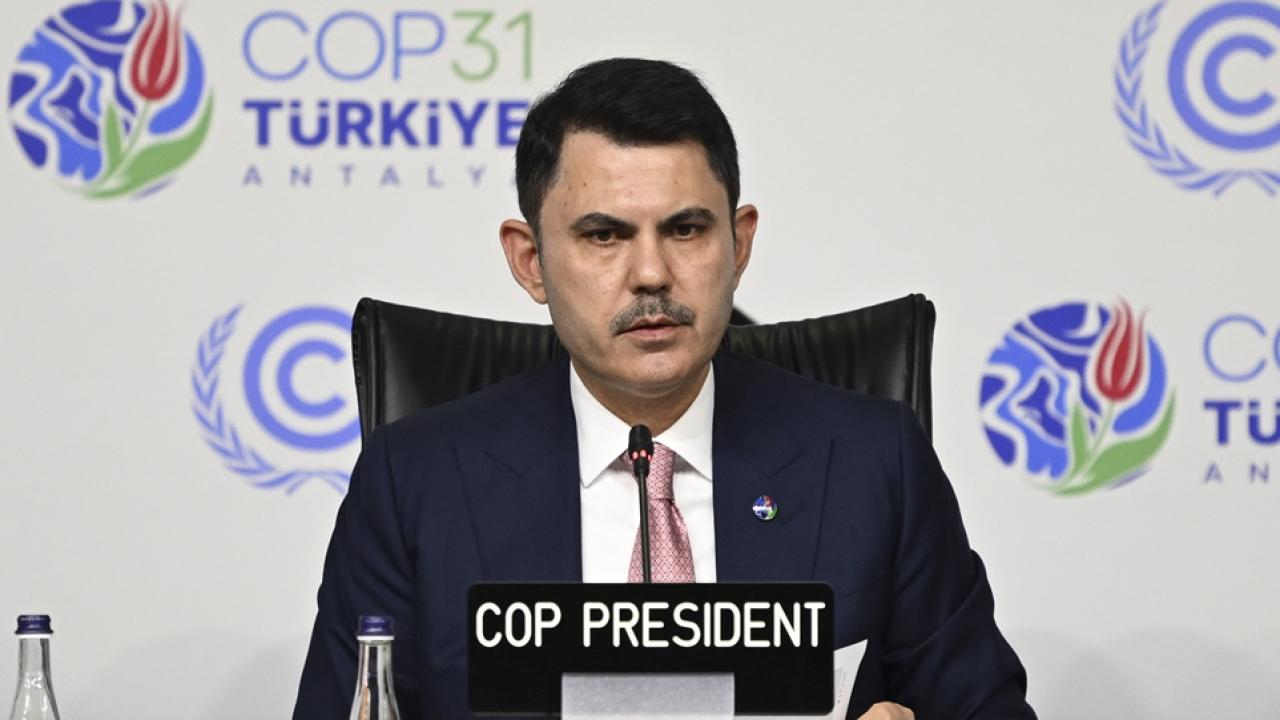
Minister of Environment, Urbanization and Climate Change Murat Kurum delivered a pivotal speech at the COP31 General Assembly Closing Session, shaping the future of global climate diplomacy. Speaking after two weeks of intense negotiations, Minister Kurum emphasized that the world must display a collective will that transcends national interests in the face of the climate crisis. With the firm statement, "It is impossible for us to accept any perspective that does not consider the benefit of the world," Kurum established an ethical framework to overcome the stalemates in the negotiation process.
Reminding the audience that the negotiations were conducted with thousands of hours of effort, Minister Kurum stressed that data from scientists, the future anxieties of the youth, and the field experiences of local communities must now be transformed into concrete decisions. Kurum's intervention is being characterized as a turning point for global climate action at a time when the final texts of COP31 are being determined.
Background of the Development
The COP31 process has become one of the most intense platforms for seeking a global consensus on combating climate change. Since the process began two weeks ago, countries with varying levels of economic development have come to the table with their own energy systems and development priorities. However, this process is not merely a technical negotiation; it is a test of humanity's commitment to a common future.
Historically, climate summits have been shaped by debates over the "sharing of responsibility" between developed and developing nations. As Minister Kurum highlighted, the delegations gathered in Antalya face different vulnerabilities. On one side are the existential concerns of small island states, and on the other are the needs of developing economies striving to transform their industries. This complex landscape explains why climate diplomacy is such a challenging and long-term endeavor.
Lessons from past COP summits have shown that not only binding texts but also the feasibility of these texts is critical. Minister Kurum's triad of "dialogue, consensus, and action" serves as a summary of this historical process. In a world where the effects of climate change—floods, droughts, extreme heat—no longer recognize borders, aligning national sensitivities with global realities has become a necessity.
Expert and Industry Insights
Climate change experts and industry representatives state that Minister Kurum's emphasis on a "common future" is a strategic move to break the deadlock in negotiations. According to experts, obstacles in areas such as climate finance and technology transfer can only be overcome through such declarations of political will.
- The equitable distribution of climate finance will accelerate the green transition of developing countries.
- Bringing countries with different energy systems together under a common carbon reduction target necessitates technological cooperation.
- Including civil society and youth in the process increases the legitimacy of climate policies.
- The participation of local communities in climate action is critical for the success of adaptation processes.
- Global climate diplomacy must encompass not only emission reductions but also climate justice.
Industry representatives express that Minister Kurum's approach of "not eliminating differences, but sharing the responsibility for a common future" could improve the investment environment necessary for industrial transformation. Investors operating in energy-intensive sectors, in particular, believe that a clear and decisive global climate policy reduces risks.
Economic and Social Implications
The economic cost of combating climate change places significant pressure on national budgets. However, as Minister Kurum noted, the cost of inaction is far higher than the cost of transformation. From a social perspective, climate change disproportionately affects disadvantaged groups; therefore, the concept of a "just transition" is vital for maintaining social peace.
In the markets, interest in green bonds and sustainable investment instruments is directly linked to the decisions emerging from COP31. Investors are waiting for countries to translate their climate commitments into legal frameworks. Minister Kurum's call could find a positive resonance in the markets as a "political commitment" that responds to these expectations.
At the societal level, climate change is no longer perceived merely as an environmental issue but as a matter of security and prosperity. The emphasis on "our children's future" reminds us that this is not just an issue of today, but one that concerns future generations as well.
Future Projections and Outlook
With the conclusion of COP31, countries are expected to update their Nationally Determined Contributions (NDCs) and translate these into concrete action plans. In the period ahead, how climate finance mechanisms will function and under what conditions technology transfer will occur will determine the pace of climate action.
Risks include geopolitical tensions overshadowing climate cooperation and the insufficiency of financial resources. However, the emphasis on "consensus" presented under Minister Kurum's leadership shows that these risks are manageable. In the coming months, the regulations that countries implement in their domestic laws will validate the success of COP31.
In conclusion, Minister Kurum's call may herald a new era in global climate diplomacy. Every step taken for the common future of humanity will not only be an environmental success but also the foundation for an economic and social transformation.
💬 Yorumlar 0
Henüz yorum yapılmamış. İlk yorumu siz yazın!



















