President Erdoğan's Vatican Diplomacy: Parolin Meeting and the Search for a New Era
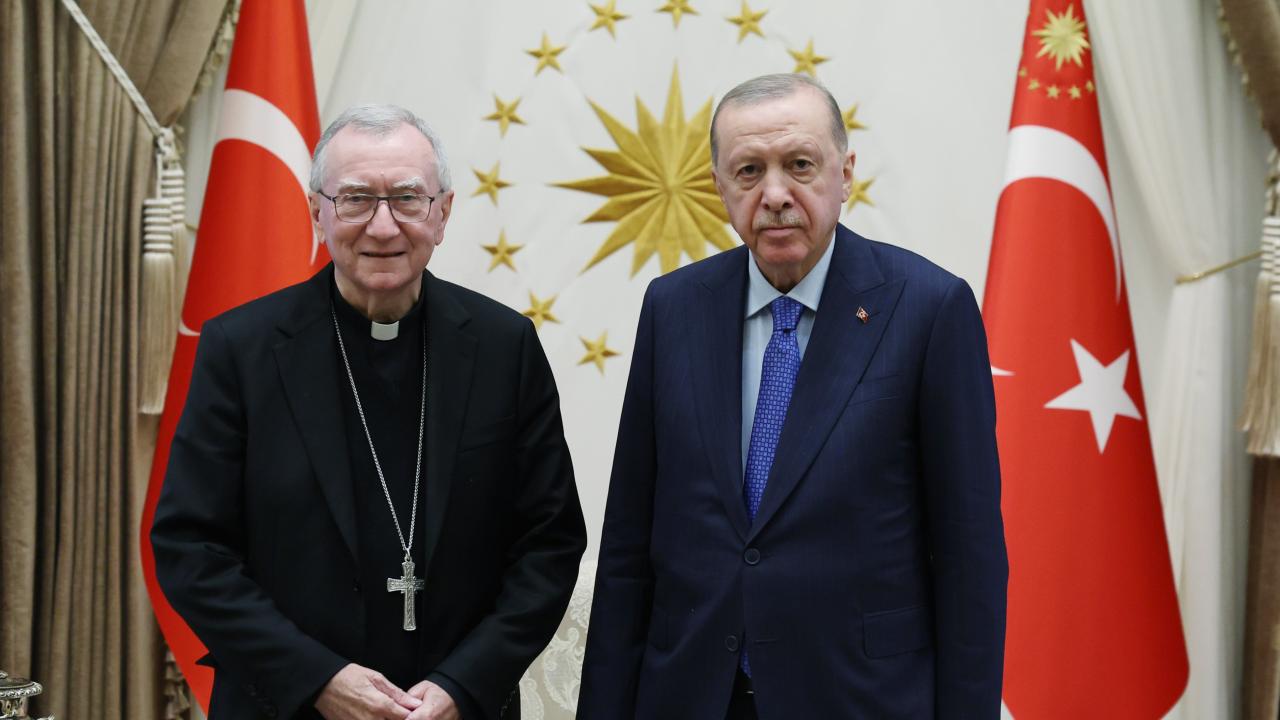
President Recep Tayyip Erdoğan received Vatican Secretary of State Cardinal Pietro Parolin in Ankara, sending a strong message regarding the maintenance of diplomatic relations at the highest level between the two sides. This meeting, held at the Presidential Complex behind closed doors, is considered a critical turning point for both bilateral relations and the establishment of global peace. While official details regarding the content of the meeting remain limited, the dialogue established by Turkey as a regional actor with the Vatican carries great significance, particularly regarding humanitarian crises in the Middle East and themes of interfaith peace.
Diplomatic ties between Turkey and the Vatican have a deep historical background and strategic importance. In recent years, Turkey's role as a mediator in regional conflicts and its humanitarian aid activities have been topics closely followed by the Vatican. Cardinal Parolin's visit is not merely a courtesy call but an indication that Turkey's geopolitical position is viewed by the Vatican as a potential strategic partnership in resolving global issues.
Background of the Development
Diplomatic relations between Turkey and the Vatican were institutionalized in the modern era starting from the 1960s and entered a more active process in the 21st century. Pope Francis's visit to Turkey in 2014 was one of the most significant milestones where these relations gained momentum. Since then, communication channels between the two sides have been kept open to preserve regional peace and promote interfaith dialogue.
As one of the most authorized figures managing the Vatican's foreign policy, Cardinal Pietro Parolin closely monitors Turkey's stance, particularly on the Palestine-Israel issue and its leading role in humanitarian aid. Turkey's diplomatic efforts for a peaceful resolution in conflict zones align with the Vatican's vision for global peace. This reception should be read as a reflection of the desire to transform this historical foundation of cooperation into more concrete steps.
Furthermore, the culture of coexistence among different faith groups hosted by Turkey has always served as a model for the Vatican. Turkey's pluralistic structure throughout history parallels the Vatican's sensitivities regarding the protection of Christian communities in the Middle East and the safeguarding of religious freedoms in the region. In this context, Parolin's visit is a continuation of a deep-rooted diplomatic tradition.
Expert and Industry Insights
Foreign policy experts emphasize that this meeting is a strategic move for Turkey's image in European and global public opinion. According to experts, such high-level contacts with a global soft power center like the Vatican reinforce Turkey's identity as an 'international mediator.'
Industry representatives and diplomatic analysts summarize the main outcomes of the meeting as follows:
- Validation of Turkey's 'constructive actor' role in regional crises by the Vatican.
- The use of interfaith dialogue processes as a tool for establishing global peace.
- Formation of a common discourse between Turkey and the Vatican in resolving humanitarian crises in the Middle East.
- Evaluation of cooperation opportunities regarding the protection of cultural and religious heritage.
- Conducting joint humanitarian diplomacy on issues such as global migration and refugee problems.
Analysts state that this meeting is not only a political but also a cultural diplomatic move, increasing Turkey's 'soft power' capacity. It is anticipated that the trust the Vatican places in Turkey's stabilizing power in the region could evolve into more concrete cooperation projects in the coming period.
Economic and Social Implications
Strengthening diplomatic relations also indirectly increases social and cultural interaction. Turkey's dialogue with the Vatican could have positive reflections in areas such as tourism and the protection of cultural heritage. Specifically, it is aimed to introduce Turkey's potential in religious tourism to wider audiences through closer relations with the Vatican.
From an economic perspective, stable foreign policy is a prerequisite for direct foreign investment and the security of regional trade. This diplomatic bridge Turkey has built with a global actor like the Vatican contributes to the preservation of long-term economic stability by strengthening Turkey's image as a 'safe harbor.' On a social level, such high-level meetings help break down prejudices between societies and promote a culture of peaceful coexistence.
Future Projections and Outlook
In the coming period, it is expected that diplomatic traffic between Turkey and the Vatican will increase. Especially in a conjuncture where regional conflicts are intensifying, the Vatican's support for Turkey's peaceful solution proposals will strengthen Turkey's hand on international platforms. It is anticipated that official processes will continue with meetings between technical delegations following this encounter.
In terms of risks, the unpredictability of conflicts in the region stands out as the greatest challenge. However, Turkey's determined stance and this strategic channel established with the Vatican could serve as a safety valve in managing potential crises. Expectations are that this meeting will not remain just a 'contact' but will evolve into a concrete 'peace initiative.'
In conclusion, President Erdoğan's reception of Cardinal Parolin is a reflection of Turkey's vision to contribute to global peace as part of its multidimensional foreign policy. With such steps, Turkey once again proves that it is a 'balancing element' on both regional and global scales.
💬 Yorumlar 0
Henüz yorum yapılmamış. İlk yorumu siz yazın!



















