Strong Performance in Turkey's Foreign Trade: Export Growth in 53 Provinces
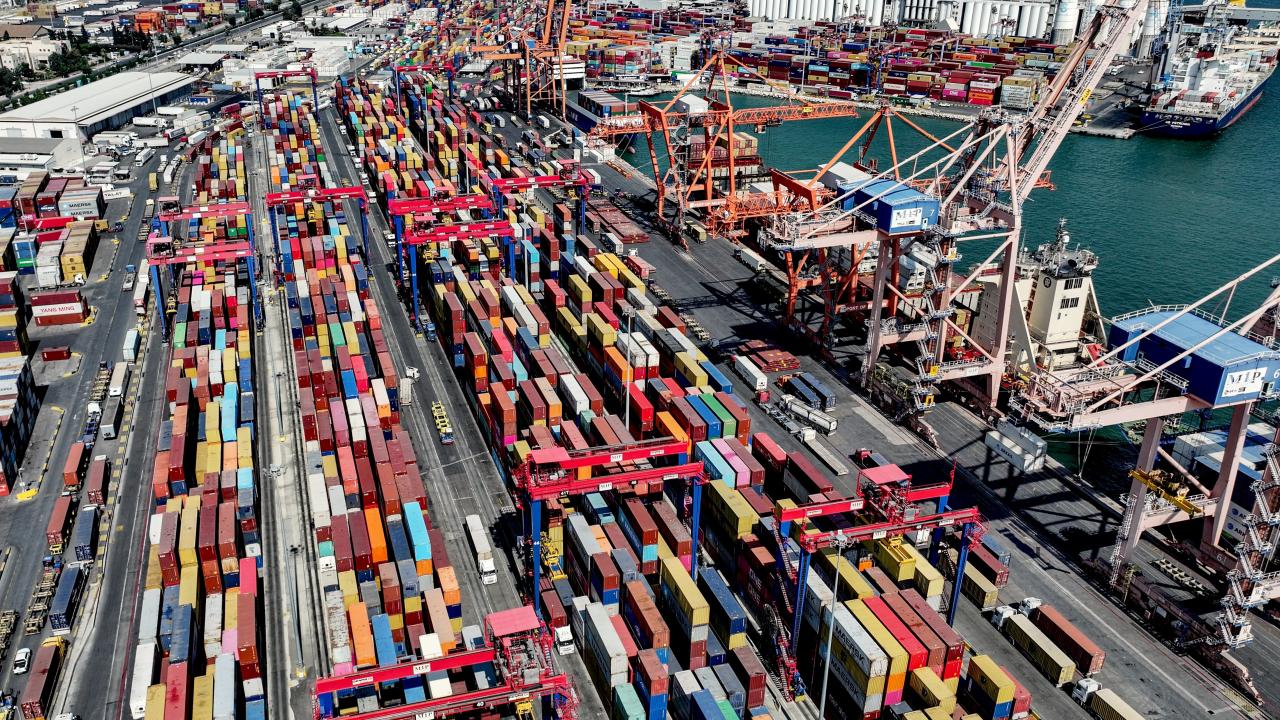
The foreign trade performance of the Turkish economy in October and the first 10 months of the year demonstrates that the export-oriented growth strategy is yielding results. Recent data shared by the Ministry of Trade reveals that 53 provinces across Turkey have increased their export figures. Istanbul leads the list with an export volume of 5 billion 279 million dollars, marking a 9.4 percent increase compared to the same period last year. This success is followed by Kocaeli with 3 billion 773 million dollars and Bursa with 1 billion 955 million dollars.
Export data not only highlights general figures but also reveals the sectoral distribution of Turkey's production capacity. While precious stones and knitwear sectors stand out in Istanbul, motor vehicle production continues to form the backbone of exports in industrial hubs like Kocaeli and Bursa. These figures confirm that Turkey maintains its strategic position in the global supply chain and remains committed to exporting high value-added products.
Background of the Development
Turkey's export strategy has been shaped in recent years around the axes of 'diversification in foreign trade' and 'high value-added production.' The fact that 53 provinces have increased their exports is an indicator that not only major metropolitan areas but also production centers in Anatolia are integrated into global markets. Production capacity, which was once concentrated in specific regions, has now spread across Turkey, supporting a balanced growth model.
The success of provinces like Kocaeli and Bursa in the automotive sector is a historical result of Turkey becoming a production hub for global automotive giants. The high figures in the motor vehicles category, in particular, prove the depth of Turkey's industrial infrastructure. Meanwhile, Istanbul's diversified export portfolio in areas such as finance, fashion, and jewelry is one of the key factors enhancing the city's economic resilience.
The Ministry of Trade's data also shows that Turkey's exports to strategic markets such as the USA, Egypt, and the UK, in addition to traditional European Union markets, remain vibrant. This can be interpreted as a successful reflection of Turkey's efforts to turn its geopolitical position into an economic advantage.
Expert and Industry Insights
Economists and industry representatives state that the increase in 53 provinces is a significant signal that Turkey's export base is expanding. Experts emphasize that Turkey's ability to increase exports despite a global demand contraction stems from the flexible production capacity of domestic manufacturers.
- The spread of exports to 53 provinces is fully aligned with regional development goals.
- Strong performance in the automotive sector provides a sustainable growth environment for the supply chain.
- Growth in markets like the USA and Egypt demonstrates the success of Turkey's market diversification strategy.
- Specialization in sectors like precious stones and ready-to-wear increases Turkey's brand value.
- Logistics infrastructure investments have become a critical factor directly affecting the export capacity of provinces.
Industry representatives state that the data obtained in areas such as motor vehicles and machinery manufacturing accelerates Turkey's transition to 'medium-high technology' exports. This shows that Turkey is strengthening its position not just as an assembly hub, but as a center for design and production.
Economic and Social Implications
This increase in exports has positive effects on employment and the current account balance. The expansion of exports to the grassroots level contributes to the revitalization of local economies and helps reduce regional development disparities. In industrial cities like Kocaeli and Bursa, the increase in exports provides new job opportunities for thousands of people while enabling local SMEs to participate in global competition.
From a social perspective, increased exports support foreign currency inflows, helping to maintain macroeconomic stability. In the markets, these figures are evaluated as a concrete result of the steps taken toward the goal of closing Turkey's foreign trade deficit. Stakeholders argue that R&D and innovation investments must be increased for this growth to be sustainable.
Future Projections and Outlook
In the coming period, digitalization and green transformation are expected to be at the forefront of Turkey's export strategy. The efforts of exporters to reduce their carbon footprint will play a critical role, especially in accessing European markets. The Ministry of Trade's support programs serve as an important lever to accelerate this transformation.
Experts predict that exports will continue to gain momentum until the end of 2024. Entering new markets and increasing market share in existing ones will be decisive in achieving Turkey's foreign trade targets. Although global inflation and energy costs remain risk factors, Turkey's production diversity has the potential to minimize these risks.
In conclusion, the export growth of 53 provinces is a testament to Turkey's economic resilience and production power. In the upcoming period, increasing the share of value-added products and strengthening logistics networks will move Turkey to higher ranks in global trade.
💬 Yorumlar 0
Henüz yorum yapılmamış. İlk yorumu siz yazın!



















