Turkey Climate School: Addressing Climate Change Through Education and Global Cooperation
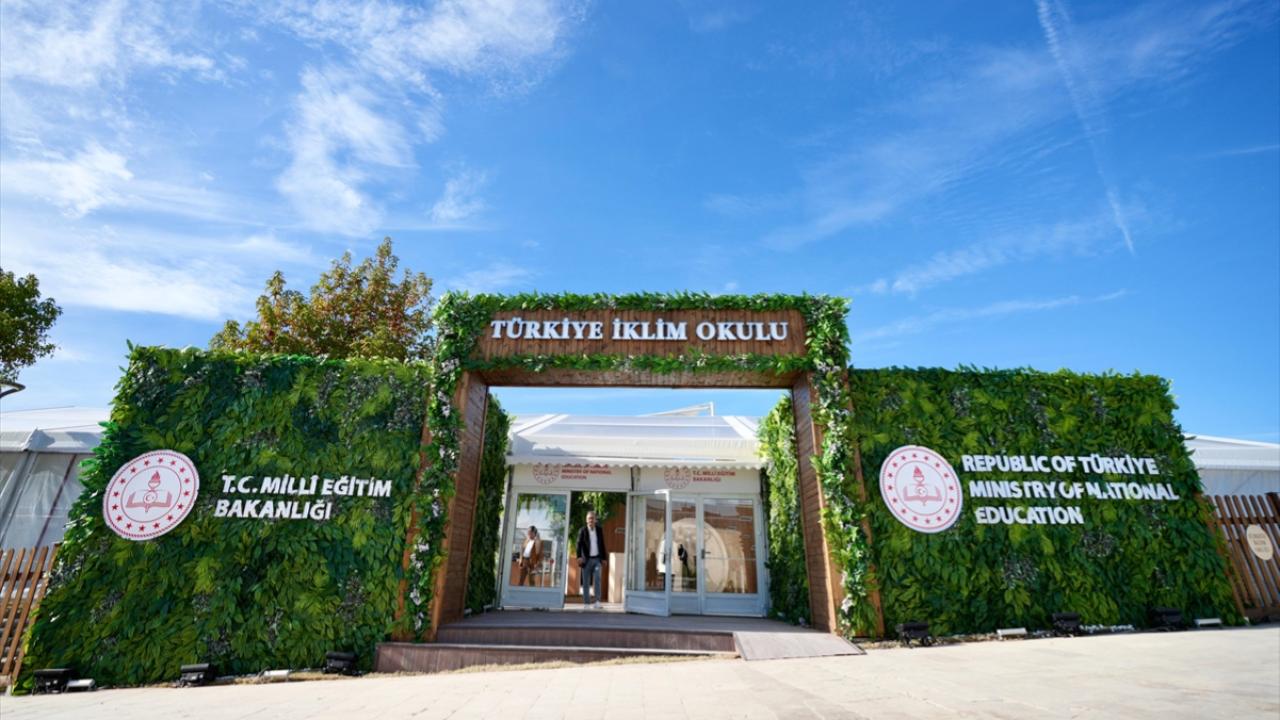
The COP31 summit held in Antalya has transformed into a critical platform that centers on the transformative power of education in the fight against climate change. The Turkey Climate School, established by the Ministry of National Education (MEB), conducted an in-depth examination of the role of education in mitigating disaster risks associated with climate change, with the participation of international experts, academics, and institutional representatives. During the panels, not only theoretical knowledge but also concrete models for disaster-resilient societies were discussed through the experiences of countries such as Turkey, Japan, and China.
In particular, the panel titled "From Awareness to Action: Integrated Approaches to Education in Reducing Disaster Risks Related to Climate Change" emphasized that the climate crisis is not just an environmental issue but also a socioeconomic threat. The sessions, which included key figures such as the Head of the AFAD Education and Awareness Department of the Ministry of Interior and the Head of the JICA Turkey Office, once again confirmed the strategic position of education in disaster management strategies.
Background of the Development
Climate change has dramatically increased the frequency and intensity of disasters such as extreme weather events, forest fires, floods, and landslides in recent years. This situation has begun to directly threaten not only physical infrastructure but also the right to uninterrupted education, which is one of the most fundamental rights of societies. Having learned lessons from the forest fires and floods experienced in previous years, Turkey is taking decisive steps to integrate disaster risk reduction strategies into its educational policies.
In this context, the Turkey Climate School has emerged as a visionary initiative of the MEB. The institution treats the fight against climate change not merely as an environmental policy, but as a matter of education and awareness. Approaches that were previously focused on post-disaster response have now evolved into "preventive education" and the construction of a "disaster-resilient society." This transformation has paved the way for Turkey to create its own unique model by comparing it with Japan's deep-rooted experience in disaster education and China's large-scale sustainability projects.
The theme of "Green Skills for All," discussed during the summit, revealed that education should not be limited to school-age children and that supporting lifelong learning processes with climate literacy is of vital importance. This approach is in full alignment with Turkey's sustainable development goals.
Expert and Industry Insights
Panelists stated that education is not just a tool but a necessity in the fight against climate change. Experts noted that making education systems resilient to disasters directly increases the overall resilience of society. The common views of industry representatives and academics are gathered under the following headings:
- The necessity of updating the educational curriculum to include disaster risk reduction and local risk factors.
- Making disaster education a lifelong reflex, starting from preschool, as seen in the Japanese model.
- Integrating green skills, such as energy efficiency and zero waste, into vocational training processes.
- The critical importance of international cooperation in terms of technology transfer and sharing best practices.
- The continuity of public awareness campaigns against the socioeconomic impacts of climate change.
Experts emphasized that the concept of "green skills" will shape the workforce of the future and be the cornerstone of economic transformation. There was a consensus that a society with climate literacy would react faster and more accurately in times of crisis, thereby minimizing loss of life and property.
Economic and Social Implications
Education-based approaches to climate change carry the potential for significant economic savings in the long run. A conscious and prepared society can repair the destruction caused by disasters faster and protect the right to uninterrupted education. This means protecting the country's human capital, which is directly related to economic stability.
From a social perspective, the activities of the Turkey Climate School develop individuals' sense of responsibility toward the environment and encourage habits such as "zero waste" to become a way of life. Including all segments of society in this process creates a spirit of "social mobilization" in the fight against climate change. This also paves the way for a sustainable economy by increasing the demand for green products and services in the markets.
Stakeholders argue that such educational events should not remain just panels but should form a roadmap for policymakers. This initiative by the MEB also serves as a model for local governments and non-governmental organizations.
Future Projections and Outlook
In the coming period, the Turkey Climate School is expected to lead more profound changes in the educational curriculum. Specifically, the goal is to disseminate climate literacy through digital education platforms and transform local disaster risk maps into educational materials. It is anticipated that joint projects to be carried out with international organizations in this process will strengthen Turkey's hand in global climate diplomacy.
Among the risks is the possibility that the speed of climate change may exceed the adaptation speed of the education system. Therefore, adopting a flexible and dynamic education model is essential. Accelerating official processes with the support of civil society and the private sector will be the fundamental factor that determines Turkey's success in the fight against climate change.
In conclusion, this gathering in Antalya has proven that Turkey is not just an observer but an actor producing solutions in the fight against climate change. Education will continue to be positioned as the most powerful weapon in this struggle.
💬 Yorumlar 0
Henüz yorum yapılmamış. İlk yorumu siz yazın!



















