Turkey-Uzbekistan Economic Bridge: A New Era for the $10 Billion Trade Target
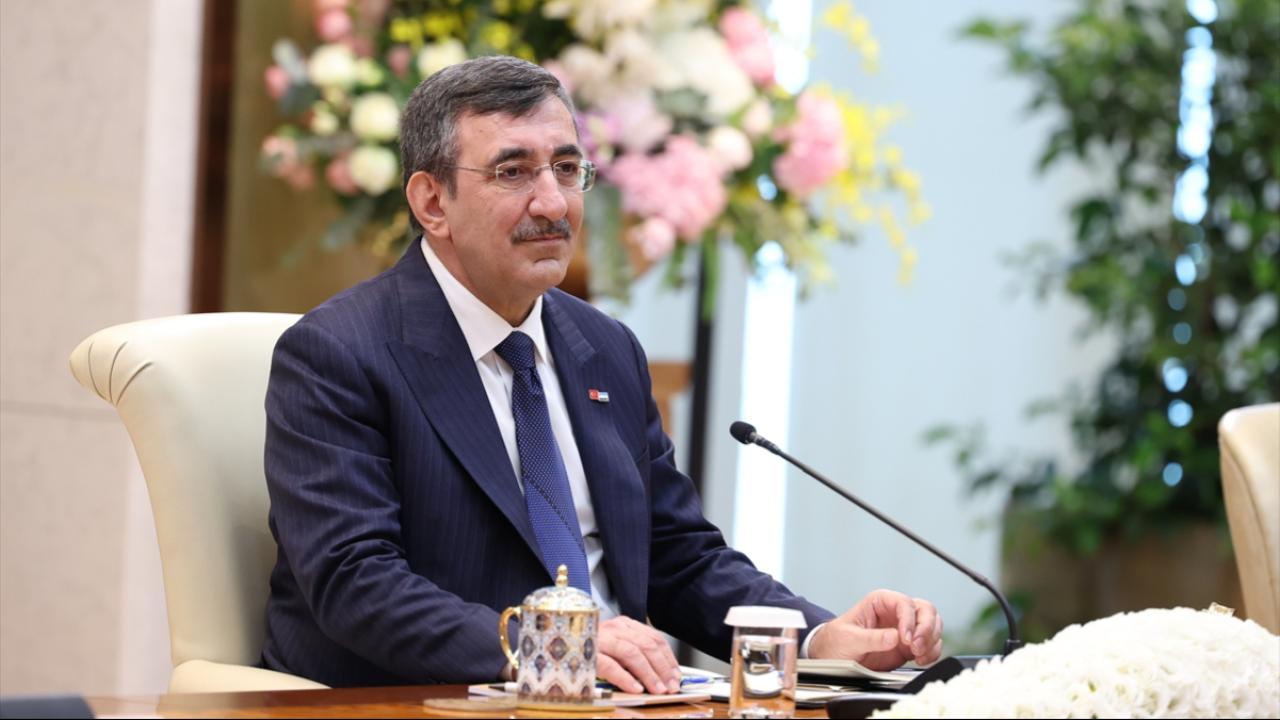
Vice President Cevdet Yılmaz participated in the inaugural High-Level Council Meeting on Supporting the Business World between Turkey and Uzbekistan, held in Tashkent, announcing a new phase in economic relations between the two nations. The meeting, attended by Uzbekistan President Shavkat Mirziyoyev and Head of the Presidential Administration Saida Mirziyoyeva, is considered a historic step toward institutionalizing the strategic partnership. The event was also attended by Minister of Industry and Technology Mehmet Fatih Kacır, Minister of Transport and Infrastructure Abdulkadir Uraloğlu, and representatives from the Union of Chambers and Commodity Exchanges of Turkey (TOBB) and the Foreign Economic Relations Board (DEİK).
In his address, Yılmaz highlighted the challenging period the global economy is navigating, noting that geopolitical tensions and energy security concerns are compelling countries to seek closer cooperation. Emphasizing that relations between Turkey and Uzbekistan have become a strategic necessity beyond historical and cultural ties, Yılmaz stated that the council, established by an agreement signed in Ankara last month, would accelerate the goal of reaching a bilateral trade volume of $5 billion in the short term and $10 billion in the medium term.
Background of the Development
Relations between Turkey and Uzbekistan have reached the level of a 'Comprehensive Strategic Partnership' in recent years. Uzbekistan's policies of opening up to the world and Turkey's vision of strengthening ties with Central Asia have found concrete reflections in economic data. The agreement signed between the two presidents in Ankara last month transformed this cooperation from political rhetoric into a concrete mechanism.
Nearly 2,400 Turkish-capital companies currently operating in the Uzbek market play a critical role in the country's economic development. The fact that the total value of approximately 350 projects undertaken by Turkish contracting firms has reached $9.5 billion proves the weight of the Turkish engineering and construction sector in the region. These projects include not only infrastructure but also housing and industrial facilities that support the country's modernization process.
This economic bridge with Uzbekistan, defined as the 'ancestral homeland,' constitutes one of the most important pillars of Turkey's 'Middle Corridor' strategy. Located at the intersection of logistics and energy lines, Uzbekistan is not just a market for Turkey, but also a gateway to Asia. Therefore, the high-level council serves as an 'accelerator' aimed at overcoming bureaucratic obstacles and improving the investment climate for both nations.
Expert and Industry Insights
Economic experts evaluate this new era between Turkey and Uzbekistan as part of regional integration. Industry representatives state that joint investments, particularly in industry, technology, and agriculture, will create added value for both countries. Key expert insights include:
- Reducing logistics costs and digitizing customs processes are critical to reaching the $10 billion trade volume target.
- Increased involvement of Turkish contracting firms in large-scale development projects in Uzbekistan will bring technology transfer.
- Cooperation in energy and food security will make both countries more resilient against global supply chain crises.
- Increasing the presence of Uzbek-capital companies in Turkey will strengthen mutual trust and make capital flow bidirectional.
- Joint branding efforts in the textile and service sectors will increase competitiveness in global markets.
Industry representatives emphasize that steps such as the joint management of industrial zones or the harmonization of incentive systems will increase investor appetite. The combination of Turkey's industrialization experience and Uzbekistan's potential in raw materials and young population offers a 'win-win' formula for the region.
Economic and Social Implications
This economic cooperation aims to have a direct impact on social welfare, not just limited to numbers. The increase in Turkish investments contributes to rising employment in Uzbekistan and improves the quality of life for the local population. Similarly, the increase in the number of Uzbek-capital companies in Turkey represents direct foreign investment into the Turkish economy.
In terms of market equilibrium, the rise of total Turkish investments to $8.2 billion reaching double digits will also create a positive perception in financial markets. The council seeks to meet investors' expectations for legal security and an efficient business environment. This could positively affect the investment risk premiums of both countries.
Socially, the reinforcement of cultural closeness between the two peoples with economic partnership strengthens regional stability. The frequent contacts of business representatives pave the way not only for trade but also for social capital accumulation, such as education and technology transfer.
Future Projections and Outlook
In the coming period, concrete projects are expected to be implemented within the framework of the calendar set by the council. The increased involvement of Turkish firms in infrastructure, housing, health, and technology aligns directly with Uzbekistan's development goals. It is expected that steps taken at the government level will minimize bureaucratic hurdles and establish facilitating mechanisms such as 'one-stop shops' for investors.
Regarding risk management, the goal is to monitor regional geopolitical fluctuations and create a joint shield against volatility in financial markets. The $10 billion trade volume target is accepted not just as a figure, but as an indicator of the economic vision of both countries.
In conclusion, by institutionalizing economic cooperation through this council, Turkey and Uzbekistan are creating a strategic anchor for each other during a period of rising global uncertainty. In the coming years, this partnership is expected to evolve into a power center that shapes the general economic architecture of Central Asia, rather than being limited to bilateral trade.
💬 Yorumlar 0
Henüz yorum yapılmamış. İlk yorumu siz yazın!



















