Vice President Yılmaz Emphasizes Economy and Structural Reforms on TRT Haber: Commitment to Disinflation and Sustainable Growth
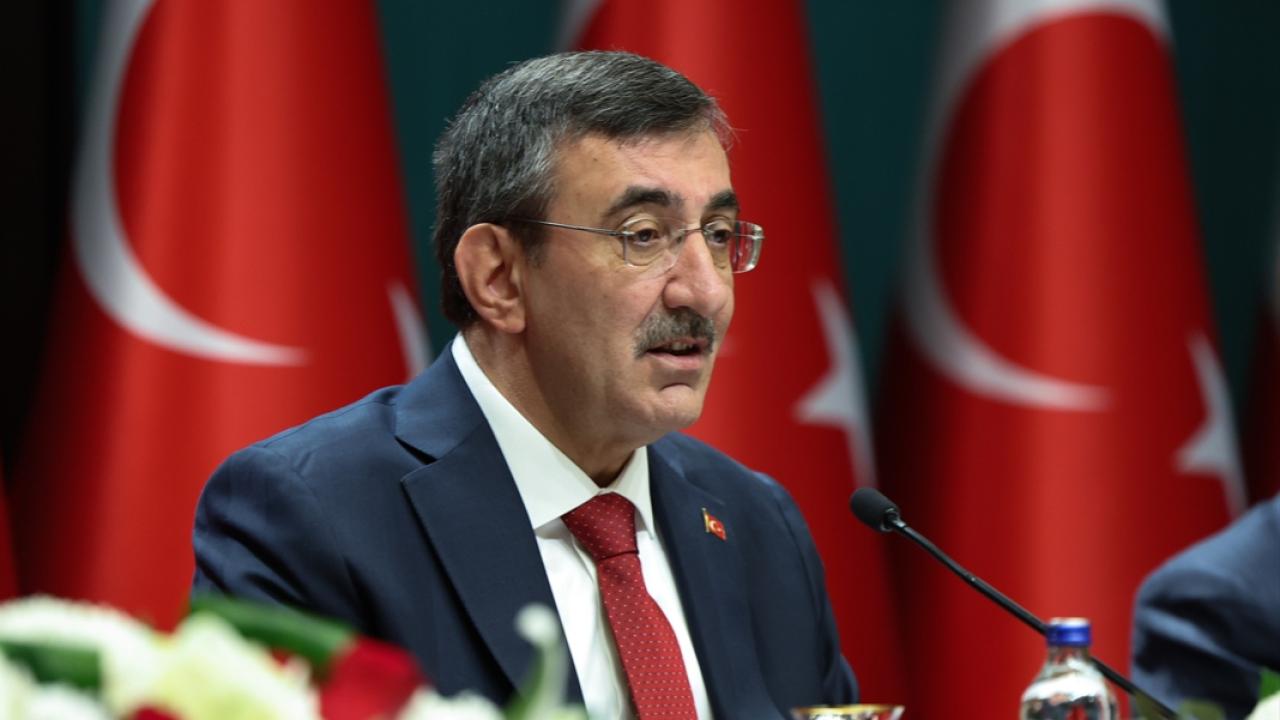
Turkish Vice President Cevdet Yılmaz answered questions on current affairs during a live broadcast on TRT Haber, making crucial statements regarding Turkey's economic policies, the disinflation process, fiscal discipline, and structural reform targets. Emphasizing that the economic administration has begun to reap the positive results of the Medium-Term Program (MTP) implemented with determination, Yılmaz stated that the primary objective is to permanently reduce inflation to single digits and sustainably elevate the welfare level of citizens.
Drawing attention to the improvement in macroeconomic indicators during the live broadcast, Cevdet Yılmaz noted that coordination between monetary policy and fiscal policy has been reinforced. Highlighting that Turkey's access to international financing has broadened and confidence indices in global markets have entered an upward trend, Yılmaz underscored that price stability is an indispensable prerequisite for sustainable economic growth.
Covering a broad spectrum of topics ranging from public savings measures to budget balances, and from employment figures to reducing the current account deficit, the Vice President affirmed that future steps will continue to be executed within a clear, structured blueprint.
Background of the Development
Since the second half of 2023, the Turkish economy has entered a comprehensive process of rationalization and rebalancing. The Medium-Term Program (MTP) announced within this scope was implemented to secure macroeconomic stability, curb inflation, and establish fiscal discipline in the public sector. Vice President Cevdet Yılmaz's statements on the TRT Haber platform mark a critical timing for evaluating the first-year outcomes of this program and clarifying the roadmap for the upcoming period.
Over the past one-year period, the Central Bank of the Republic of Turkey's (CBRT) monetary tightening steps, the Ministry of Treasury and Finance's efforts to maintain budget discipline, and public savings directives have been executed in an integrated manner. During this timeframe, Turkey's credit default swap (CDS) risk premium dropped significantly, net international reserves reached historical highs, and global credit rating agencies sequentially upgraded Turkey's credit rating. As Yılmaz emphasized, this positive macroeconomic transformation is not coincidental but a direct outcome of decisively pursued coordinated policies.
Examining the historical and institutional context, Turkey's experience in managing the disinflation process without forfeiting its growth momentum holds immense importance. The core logic of the MTP is to transition away from the high-growth/high-inflation spiral of past periods into a high-quality growth model focused on production and exports, supported by price stability. Yılmaz highlighted that this historical transition is being successfully executed through public and private sector cooperation.
Expert and Industry Insights
Economic analysts and industry representatives regard Cevdet Yılmaz's declarations on TRT Haber as robust messages that enhance macroeconomic predictability and instill confidence in financial markets. Experts point out that supporting monetary tightening with fiscal policies is the most critical element in anchoring inflation expectations. Market analysts state that the government's commitment to keeping the budget deficit at reasonable levels relative to national income fosters a safe-haven perception for foreign direct investments.
Industry representatives, on the other hand, stress the vital importance of keeping financing channels open for exporters and manufacturers during the internal demand rebalancing phase. Rediscount credits, Investment Commitment Advance Credits (YTAK), and selective credit practices highlighted by Yılmaz stand out as strategic mechanisms that allow the real sector to preserve its production capacity.
The technical components of the economic program and key assessment points highlighted by industry experts include:
- Disinflation Trajectory: Beyond base effects, full coordination of monetary and fiscal policies is ensured to achieve lasting price stability.
- Current Account Balance and External Financing: Reduced energy import reliance and expanded tourism/service revenues have brought the current account deficit to sustainable levels.
- Reserve Accumulation and Risk Premium: Substantial build-up in Central Bank gross and net reserves has significantly lowered the sovereign risk premium (CDS) and external borrowing costs.
- Fiscal Discipline and Savings: Public austerity packages and expenditure prioritization mechanisms safeguard budget balances.
- Employment-Focused Structural Reforms: Enhancing labor market flexibility while accelerating green and digital transformations in manufacturing industries.
Economic and Social Implications
The societal and economic ramifications of the implemented economic program focus on protecting the purchasing power of broad segments of society and re-establishing market equilibrium. Yılmaz noted that while the disinflation process may require certain short-term growth trade-offs, it constitutes the sole pathway to permanent, long-term welfare gains. He explained that social transfers and minimum wage adjustments are handled holistically to mitigate the distortive impacts of high inflation on income distribution.
From the perspective of market dynamics, the moderation in consumer credit growth and the increase in savings propensity contribute to bringing domestic demand to rational levels. This environment allows the artificial price foam in goods and services to dissipate. On the business front, establishing financial stability offers predictable balance sheet management and long-term investment planning capabilities.
In social policies, the principle of safeguarding low- and middle-income groups remains paramount. Measures such as boosting housing supply, securing food supply chains, and combating the informal economy represent strategic moves expected to directly impact citizens' daily lives positively.
Future Projections and Outlook
Evaluating upcoming expectations and the official timeline reveals that the economy is entering a phase where the disinflation process will accelerate further. According to projections by the economic management, the downward trend in inflation will gain momentum, successfully reaching the year-end targets outlined in the MTP. Throughout this phase, structural reform legislation is anticipated to be submitted to the Grand National Assembly of Turkey (TBMM) without compromising fiscal discipline.
Another prominent highlight in the future roadmap is the priority assigned to green and digital transformation investments. In line with updating Turkey's Customs Union agreement and complying with the European Union's Carbon Border Adjustment Mechanism (CBAM), the goal is to leverage international green financing resources more effectively to transform industrial infrastructure.
In conclusion, Vice President Cevdet Yılmaz's detailed statements on TRT Haber confirm that the Turkish economy is advancing decisively on a rational foundation. The strategic steps to be taken in the coming months promise to complete macroeconomic rebalancing, opening the door to a period of sustainable, high-quality, and inclusive growth.
💬 Yorumlar 0
Henüz yorum yapılmamış. İlk yorumu siz yazın!