Yılmaz: Along with 75,000 innocent people, Gaza's cultural heritage has also been massacred
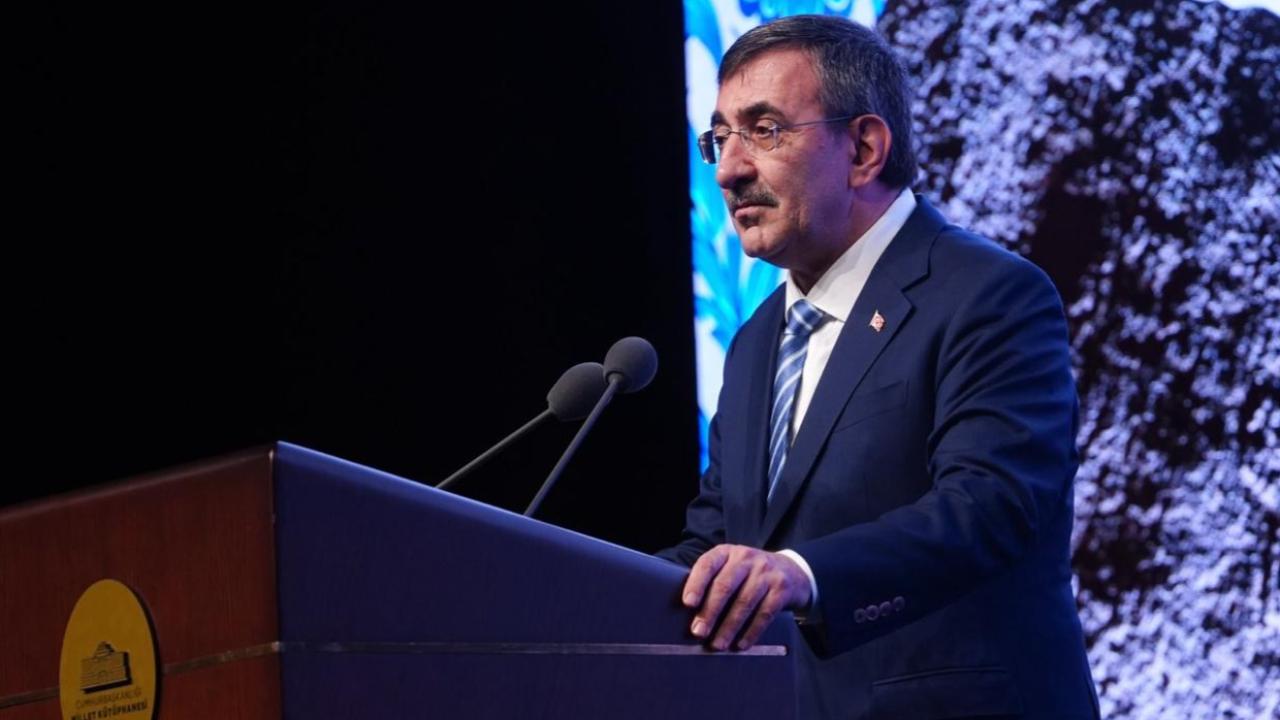
Vice President Cevdet Yılmaz, speaking at a congress, emphasized that the modern understanding of museology is not merely about exhibiting artifacts, but also about protecting the collective memory of societies. Yılmaz centered his speech on the humanitarian tragedy in Gaza, noting that in a region where 75,000 innocent people have lost their lives, the traces of civilization are also being systematically targeted. This situation serves as a powerful warning that it is not just a region, but the collective memory of humanity that is being erased.
Background of the Development
Turkey is recognized as one of the world's richest cultural geographies, with a civilization accumulation spanning thousands of years across Anatolia. From Göbeklitepe to Ephesus, from Hattusa to Ani, this vast spectrum encompasses all phases of human history. Vice President Yılmaz stated that the preservation of this heritage is not only a state policy but also a responsibility toward future generations. Recalling the 'in-situ preservation' principle of Halil Ethem Bey, a pioneer of modern Turkish museology, Yılmaz noted that this approach remains their fundamental guide today.
The reference to the 'history of the people' approach of Halil İnalcık, known as the 'pole of historians,' on the 10th anniversary of his passing, demonstrates that the state's cultural vision is designed to encompass all layers of social life, rather than being limited to an elitist perspective. İnalcık's approach, which centers on social and economic life, forms the core philosophy of Turkey's current museum activities.
The remarks regarding Gaza reveal that the preservation of cultural heritage is not just a physical act but a struggle for existence. Erasing a society's memory means severing its connection to the future. As Yılmaz emphasized, when not only people but also the traces of the civilization they built are targeted, this is recorded as a global cultural destruction.
Expert and Industry Insights
Representatives of the culture and tourism sector describe Yılmaz's statements as the harbinger of a new era in museology. Experts argue that in a digitalizing world, museums should become living centers of education and interaction rather than static exhibition spaces. In this process, it is stated that the following strategic steps should be taken to preserve cultural heritage:
- Widespread adoption of digital archiving and AI-supported restoration techniques in museology.
- Strengthening the sense of belonging by increasing local community participation in museum processes.
- Implementing international legal mechanisms to protect cultural heritage in conflict zones.
- More effective integration of history and archaeology awareness into the education curriculum through tangible artifacts.
- Sustainable integration of cultural heritage with tourism.
Industry experts argue that the destruction in regions like Gaza requires UNESCO and other international organizations to address the concept of 'cultural genocide' more seriously. The destruction of an artifact should be viewed not just as the loss of a stone or manuscript, but as the depletion of a piece of that society's identity.
Economic and Social Implications
The preservation of cultural heritage is not just an aesthetic or historical issue, but also an economic value. The share of archaeological sites and museums in Turkey's tourism revenues is increasing every year. As Yılmaz stated, the preservation and proper promotion of these artifacts are among the most important elements that enhance the country's soft power. On a social level, a society that is at peace with its past and knows its history can build its national identity more strongly.
However, the cultural dimension of humanitarian crises, such as those in Gaza, creates a deep trauma on societies. Yılmaz's emphasis on 75,000 innocent people proves that cultural destruction cannot be considered independently of humanitarian destruction. Economically, the destruction of cultural heritage also hinders the region's tourism potential and future development dynamics in the long run.
The state's investments in this field are not limited to physical restoration but also support cultural diplomacy. Turkey's defense of the heritage within its own borders, while also advocating for it on international platforms, shows that it has assumed a leadership role in protecting cultural heritage in the region.
Future Projections and Outlook
In the coming period, it is expected that Turkey will follow a more inclusive and technology-oriented roadmap in the field of museology. It is anticipated that the investments made in recent years under the leadership of President Erdoğan will be further enriched with digital museology and interactive exhibition techniques. This will facilitate access to cultural heritage for both domestic visitors and international tourists.
Regarding risks, the international community needs to be more proactive in protecting cultural heritage, especially in conflict zones. It is expected that Turkey will take a leading role in this regard, bringing the protection of cultural heritage to the international agenda as a 'humanitarian duty.' Transferring historical accumulation to future generations is possible not only by protecting buildings but also by protecting the spirit and knowledge that live within them.
In conclusion, Cevdet Yılmaz's message reminds us that history does not remain in the past, but is the most fundamental element shaping our present and future. The cultural dimension of the tragedy in Gaza once again reveals how vital it is to safeguard the common heritage of humanity.
💬 Yorumlar 0
Henüz yorum yapılmamış. İlk yorumu siz yazın!



















