Zero Waste Museum: The New Hub of Global Climate Diplomacy
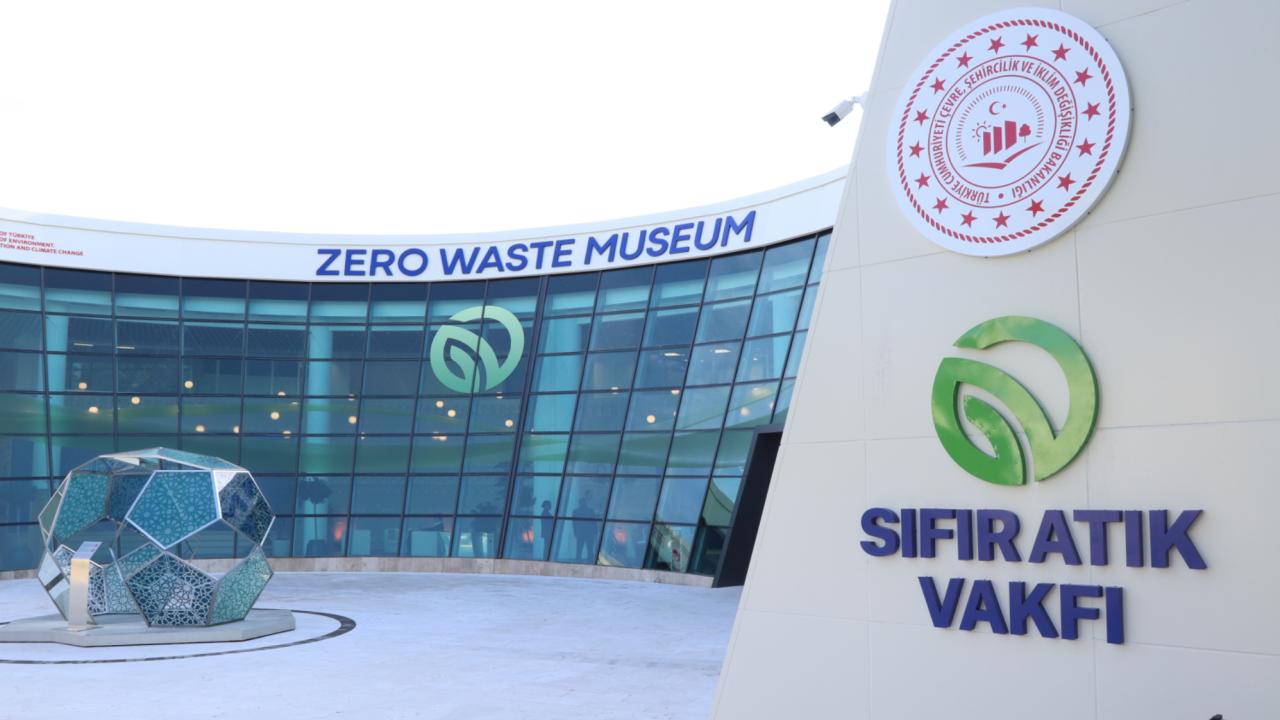
The 31st Conference of the Parties (COP31) to the United Nations Framework Convention on Climate Change, hosted by Turkey in Antalya, has become the heart of global environmental diplomacy at a critical juncture in the fight against climate change. While intense negotiations continue in the Blue Zone on the 12th day of the summit, sustainable development goals are being discussed in the Green Zone under the theme of "Finance and Incentives Day." One of the most striking highlights of this massive organization is the Zero Waste Museum, realized under the auspices of Emine Erdoğan, Honorary President of the Zero Waste Foundation and Chair of the UN Advisory Board of Eminent Persons on Zero Waste, and coordinated by the Ministry of Environment, Urbanization and Climate Change.
Opened on November 11 and spanning an area of 3,700 square meters, the museum symbolizes nature and sustainability with its five-leaf architectural design. Welcoming delegates from 196 countries throughout the summit, the museum is not just an exhibition space but a concrete manifesto of the global environmental movement that Turkey has been leading since 2017. The museum offers visitors an interactive experience, demonstrating that waste management is not merely a technical process but a culture of living.
Background of the Development
When the Zero Waste project was launched in Turkey on September 27, 2017, it was seen as a local waste management initiative, but it quickly evolved into a global environmental movement. Led by Emine Erdoğan, this process has become one of the main agenda items in high-level meetings with UN Secretary-General Antonio Guterres. Turkey has presented this project to the world not only within its own borders but as a global roadmap for "waste and methane reduction."
Included in the 10-Point Action Agenda of the COP31 Presidency, Zero Waste represents an ambitious vision aimed at halving global waste production by 2035. The establishment of the museum is part of the awareness-raising efforts carried out by Turkey under the slogan "Together for the World from 0 to COP31." Emphasizing the environmental impacts of waste, recycling technologies, and the importance of protecting natural resources throughout history, the museum carries Turkey's nine-year accumulation in this field to the global stage.
Fatih Turan, General Manager of Environmental Management at the Ministry of Environment, Urbanization and Climate Change, emphasizes the importance of the museum, stating that the project is the most significant environmental vision Turkey has gifted to the world. According to Turan, the museum is a success story that showcases how far Turkey has come in waste management.
Expert and Industry Insights
International environmental experts and industry representatives evaluate the inclusion of the Zero Waste Museum in a massive platform like COP31 as a strategic move in terms of "soft power" and "environmental diplomacy." According to experts, the museum functions not only as an exhibition but also as an educational hub for policymakers.
- Waste management is recognized as one of the most critical factors in reducing methane emissions.
- Circular economy models have become the main focus of COP31's financing discussions.
- The museum appeals to younger generations by combining digitalization with traditional recycling methods.
- Zero Waste practices offer a low-cost and high-impact model for developing countries.
- The 2035 goals promise not only environmental but also economic efficiency gains.
Industry representatives note that symbolic areas in the museum, such as the "2035 Message Wall" and the olive tree, establish an emotional connection with participants and remind them that the fight against climate change is not just about numbers.
Economic and Social Implications
The economic dimension of the Zero Waste project is directly related to bringing waste back into the economy as raw material. Turkey's model not only protects the environment but also creates significant economic value through the circular economy. The museum explains to visitors with concrete data how recycling processes turn into economic added value.
Socially, the museum triggers a transformation in social consciousness. The gathering of delegates from 196 countries at the forum stages in the museum proves that Zero Waste has become a global "common language." While social awareness forms the most important pillar of the fight against climate change, the museum transforms this awareness into a global network.
Future Projections and Outlook
After COP31, how the Zero Waste model will be adapted by other countries is a subject of curiosity. Through this museum, Turkey offers its experiences as a "know-how" transfer. In the coming period, it is expected that Zero Waste standards will evolve into an international certification process and that the 2035 goals will be supported by more concrete legal regulations.
Although there is a possibility that global economic fluctuations could slow down environmental investments, the efficiency-oriented approach offered by Zero Waste aims to minimize these risks. By maintaining its leadership in this process, Turkey will continue to position itself not just as a participant, but as an architect of solutions in the fight against climate change.
💬 Yorumlar 0
Henüz yorum yapılmamış. İlk yorumu siz yazın!



















