A Historic Environmental Partnership: Turkey and Uzbekistan Forge New Path at COP31
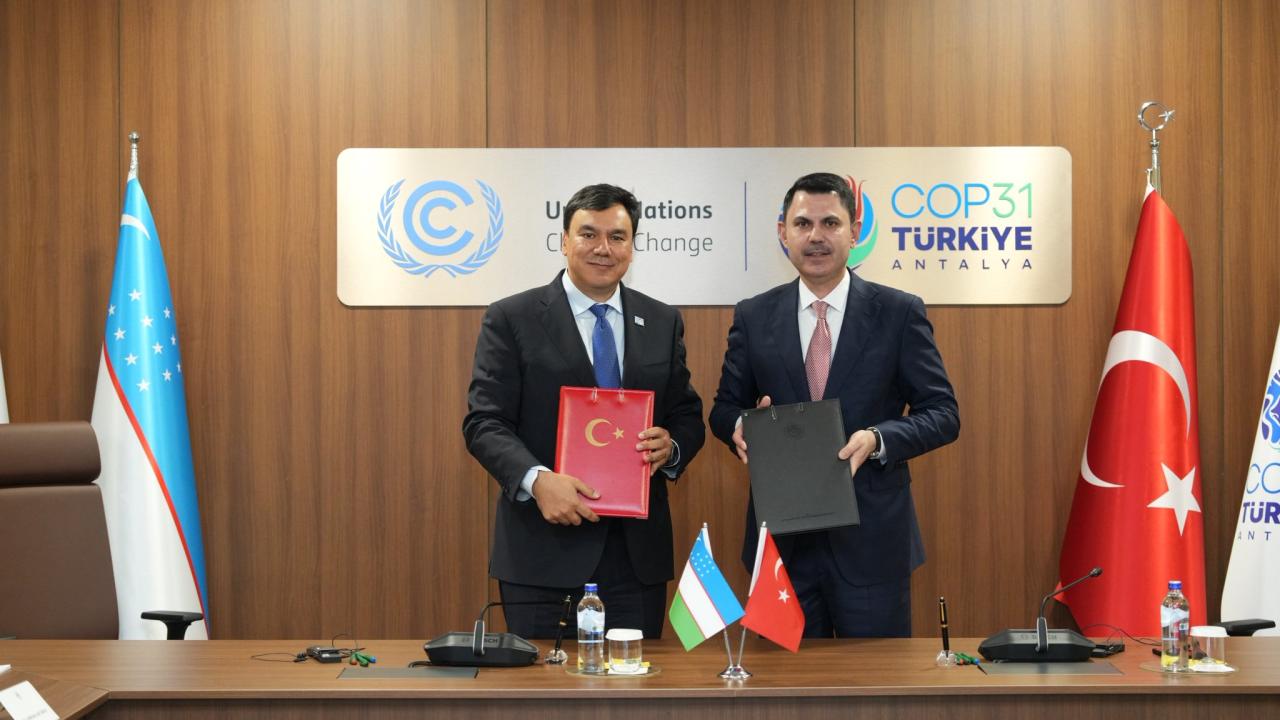
Turkey and Uzbekistan have taken a historic step for environmental sustainability within the framework of the COP31 summit, one of the most critical platforms for global climate diplomacy. The 'Memorandum of Understanding on Cooperation in the Field of Environmental Protection', signed between the Ministry of Environment, Urbanization and Climate Change of the Republic of Turkey and the Ministry of Ecology, Environmental Protection and Climate Change of the Republic of Uzbekistan, elevates the strategic partnership between the two nations to an ecological dimension. This document, signed following high-level meetings with Aziz Abdukhakimov, Advisor to the President of Uzbekistan on Environmental Issues and Chairman of the National Committee on Ecology and Climate Change, serves as a commitment to the common future of the Anatolian and Central Asian geographies.
This cooperation, matured during diplomatic contacts in Antalya, covers critical areas such as the prevention of air and water pollution, the development of waste management strategies, and the implementation of circular economy models. Both countries aim to establish a joint defense line against the risks of drought and environmental degradation caused by climate change. This memorandum acts as a bridge, integrating Turkey's 'Green Development Revolution' vision with the environmental reforms under Uzbekistan's 'New Uzbekistan' strategy.
Background of the Development
Relations between Turkey and Uzbekistan have reached the level of 'comprehensive strategic partnership' in recent years. However, global challenges such as climate change necessitated a deepening of these relations at a technical and operational level. For Uzbekistan, which feels the effects of the ecological disaster in the Aral Sea basin, Turkey's expertise in water management and waste recycling technologies holds great significance.
Historically, cooperation between the two countries focused primarily on energy, construction, and textiles. However, the COP31 process has placed environmental diplomacy at the heart of bilateral relations. Turkey's 'Zero Waste' project and its determined stance in the fight against climate change have become a model for Uzbekistan. This memorandum of understanding demonstrates that past good-faith discussions have now been placed on a concrete, measurable, and auditable legal foundation.
This development should also be interpreted as part of the environmental cooperation agenda within the Organization of Turkic States (OTS). The vulnerability of Central Asia to climate change is being balanced by Turkey sharing its environmental experience in the region. The signed memorandum goes down in history as one of the first concrete steps of a green transformation vision covering the entire Turkic world.
Expert and Industry Insights
Industry representatives and environmental economists emphasize that this memorandum is not merely a diplomatic text but also holds significant market potential. According to experts, Uzbekistan could become a key hub for Turkey's environmental technology exports.
- Turkish engineering firms are expected to play a more active role in the Uzbek market for waste management technologies.
- The widespread adoption of water-saving agricultural irrigation systems in Uzbekistan is critical for food security.
- Circular economy projects will contribute to job growth and the creation of green jobs in both countries.
- The integration of air quality monitoring networks will facilitate the harmonization of regional environmental policies.
- The establishment of joint R&D centers will enable the development of indigenous solutions in the fight against climate change.
Economists state that this cooperation will facilitate access to 'Green Finance' resources. Funds provided by international development banks for environmental projects can be utilized more efficiently through joint projects between Turkey and Uzbekistan. This will create a leverage effect, enabling both countries to secure a larger share of international climate funds.
Economic and Social Implications
From a social perspective, the greatest impact of this memorandum will be the increase in environmental awareness and the promotion of sustainable living standards. The spread of eco-friendly practices among the people of both countries will not only protect nature but also have positive effects on public health. In particular, reducing air pollution will contribute to lower healthcare expenditures in the long run.
In terms of economic markets, this development boosts confidence in the green energy and environmental technology sectors. Investors view the determination of Turkey and Uzbekistan to raise environmental standards as a sign of a long-term and secure investment environment. This will pave the way for foreign direct investment, particularly in renewable energy and waste recycling facilities.
Furthermore, this cooperation process establishes a serious mechanism for knowledge and technology transfer between the public institutions of both countries. Working groups established between ministries will play an active role in overcoming bureaucratic obstacles and harmonizing legislation, reflecting principles of transparency and efficiency in public administration onto environmental policies.
Future Projections and Outlook
In the coming period, it is expected that the signed memorandum of understanding will be transformed into action plans. In the first phase, the establishment of a joint 'Environmental Monitoring and Evaluation Committee' and its periodic meetings are envisaged. This committee will set the timeline for concrete projects on issues such as waste management and water pollution.
Regarding risks, the unpredictability of the pace of climate change stands out as the greatest challenge. However, early warning systems and resilience strategies to be developed jointly by the two countries will help minimize these risks. Furthermore, the sustainability of financial resources and the adoption of projects by local communities will be the keys to success.
In conclusion, this environmental cooperation between Turkey and Uzbekistan aims to secure not only the present but also the quality of life for future generations. This signature in Antalya is considered one of the most valuable legacies left to the common future of the two nations. In the coming years, we will witness the fruits of this memorandum spreading across the entire region, both economically and ecologically.
💬 Yorumlar 0
Henüz yorum yapılmamış. İlk yorumu siz yazın!





