A Historic Moment at COP31: Strong Support for Palestine and Emphasis on Climate Justice
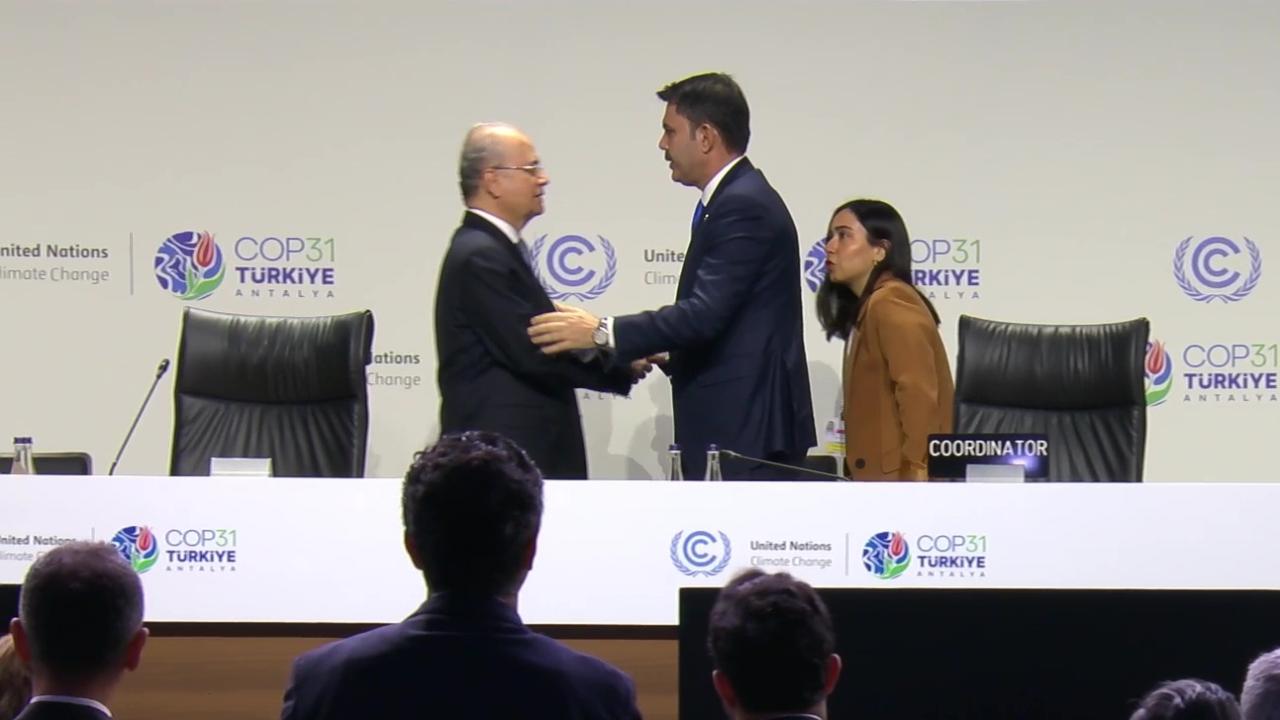
The UN Climate Change Conference (COP31), held in Antalya, has become not only a hub for environmental targets but also a center for the global conscience. COP31 President and Minister of Environment, Urbanization and Climate Change Murat Kurum marked a historic moment at the conference by inviting Palestinian Prime Minister Mohammad Mustafa to the podium with a powerful introduction. Minister Kurum reaffirmed Turkey's steadfast solidarity with the people of Palestine and Gaza, establishing a strong link between the injustices caused by the climate crisis and ongoing humanitarian tragedies.
This moment at the Anatolian General Assembly Hall was met with a standing ovation from representatives of participating nations. Referring to the powerful speech delivered by President Recep Tayyip Erdoğan from the same podium just a day earlier, Minister Kurum emphasized that Turkey's stance on the international stage is clear. "We were with you yesterday, we are with you today, and we will continue to act together with our Palestinian and Gazan brothers and sisters tomorrow," Kurum stated, highlighting the humanitarian priorities in Turkey's foreign policy.
Background of the Development
While COP31 was planned as a global turning point in the fight against climate change, it has also brought the impacts of regional conflicts and humanitarian crises on climate policies to the forefront. Palestine's participation in climate change mitigation processes is seen not only as an environmental right but also as an existential demand for a people struggling for survival in occupied territories. Historically, Palestine has been an actor bearing the heaviest consequences of climate change while struggling to make its voice heard on international platforms.
Turkey's COP31 presidency focuses not only on technical climate goals but also on the concept of "climate justice." Under the leadership of Minister Kurum, this process aims to facilitate access to climate finance for developing countries and conflict zones. The invitation of Palestinian Prime Minister Mohammad Mustafa to the podium proves that Turkey is utilizing this platform as a ground for political and humanitarian justice, not just environmental issues.
This development reflects Turkey's diplomatic weight within the UN and its vision for regional leadership. The voice rising from Antalya reminds the world that climate change is not merely a carbon emission issue but also a matter of human rights and conscience. The presence of the Palestinian delegation at the conference serves as a global message that the fight against climate change must be inclusive.
Expert and Industry Insights
International relations experts and climate change analysts state that this event has significantly altered the political climate of COP31. According to experts, linking climate change with humanitarian crises in conflict zones opens up a new area of debate for the more equitable distribution of global climate finance.
- Climate justice encompasses protecting the environmental rights of people in conflict zones.
- Turkey's diplomatic support could facilitate Palestine's access to international climate funds.
- COP31 has certified that climate change is not just a technical issue but also a security issue.
- Palestine's participation has increased the importance of global solidarity in the fight against climate change.
- The call to "stop the silence of conscience" emphasized by Minister Kurum has developed a new discourse in climate diplomacy.
Industry representatives express that such diplomatic gestures foster the spirit of global cooperation necessary to combat climate change. The message that developing countries should not be left alone in the fight against climate change has become one of the main agenda items of the conference.
Economic and Social Implications
This support for Palestine is not just a political message but also a call for economic solidarity. The impacts of the destruction in Gaza on climate change and the importance of environmental sustainability in the reconstruction process have been brought to the international community's agenda more strongly. Turkey's stance demonstrates that regional economic stability is directly linked to the fight against climate change.
From a social perspective, this announcement has increased the interest of conscious individuals and non-governmental organizations worldwide in the Palestinian cause. Climate activists state that making Palestine's voice heard expands the struggle for climate justice to a wider audience. Turkey's stance has the potential to form a "coalition of conscience" among countries fighting climate change.
Market analysts predict that Turkey's position could create new momentum in regional cooperation projects. The desire to act together in the fight against climate change could bring new investment opportunities in energy and environmental technologies.
Future Projections and Outlook
In the post-COP31 period, it is expected that Palestine's climate change mitigation plans will be implemented with international support. Turkey's guidance in this process will play a critical role in Palestine's access to climate finance. In the coming months, an increase in technical support and capacity-building projects for Palestine within the scope of the fight against climate change is anticipated.
Although there is a risk that global political tensions could disrupt climate negotiations, Turkey's determined stance aims to minimize these risks. It is expected that the emphasis on climate justice will become a main agenda item at other climate conferences to be held in the coming years.
In conclusion, the voice rising from Antalya has shown the world that the fight against climate change is not just a technical process but also a quest for justice. With this conference, Turkey has initiated a new era in climate diplomacy and demonstrated leadership that centers on humanitarian values.
💬 Yorumlar 0
Henüz yorum yapılmamış. İlk yorumu siz yazın!





