A Holistic Paradigm in Energy, Agriculture, and Climate: Strategic Resilience Call from COP31 Antalya
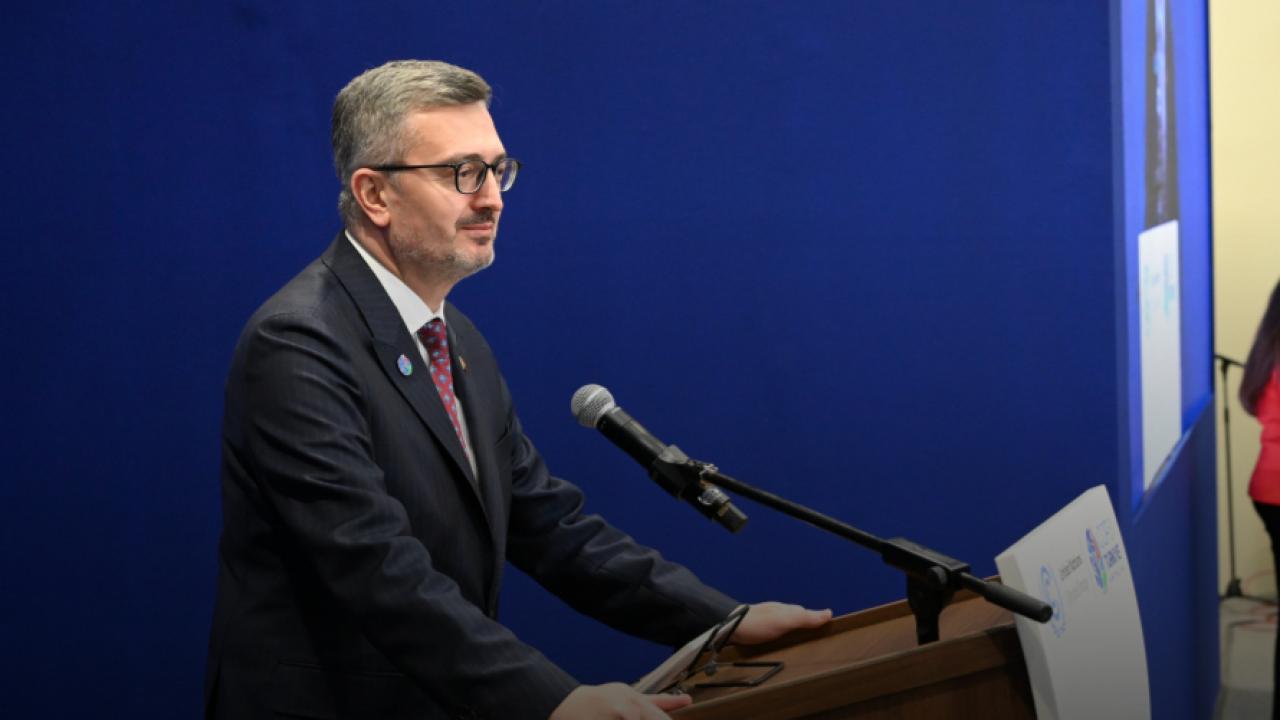
On November 11, 2026, the 31st Conference of the Parties (COP31) to the UN Framework Convention on Climate Change, hosted in Antalya, witnessed one of the most critical sessions in global climate diplomacy. Held in Special Event Room 4 of the Blue Zone, the panel titled “Holistic Approach to Energy, Agriculture, and Climate Policies: Increasing Resilience through International Cooperation” was organized through a strategic partnership between the Presidency’s Directorate of Communications and the international think tank Forward Thinking. The session brought together diplomats, industry leaders, and academics to advocate for a hybrid strategy that treats climate action not merely as an environmental concern, but as a cornerstone of energy security, agricultural sustainability, and economic stability.
Opening the panel, Prof. Dr. Burhanettin Duran, the President’s Director of Communications, characterized the climate crisis as the most complex and multidimensional challenge of the modern era. Duran emphasized that climate change is systematically weakening agricultural production capacities, straining energy grids, and ultimately threatening global economic development. He argued that viewing the issue solely through the lens of nature conservation is a strategic oversight. To safeguard food security and social stability, Duran asserted that nations must harmonize their energy and agricultural policies with climate goals in a synchronized manner, ensuring they meet rising demands while adapting to shifting environmental conditions.
Background of the Development
The past decade of climate action has exposed the inefficiencies of siloed sectoral policies. Particularly in regions like West Asia and North Africa (WANA), where water stress is acute, the interdependence of energy and agriculture creates a domino effect during crises. This panel in Antalya reinforces Turkey's leading role in climate diplomacy and its vision of generating global solutions for regional challenges. The collaboration with Forward Thinking aimed to bridge the gap between academic depth and the practical needs of policymakers, creating a roadmap for tangible action rather than mere rhetoric.
Historically, the 2006-2009 drought in Syria, referenced during the panel, serves as a stark reminder of how climate events can trigger social collapse and mass migration. During that period, farmers forced to abandon rain-fed agriculture turned uncontrollably to groundwater, leading to an irreversible depletion of resources and a decline in water quality. This historical lesson is central to the "resource management" debates currently shaping COP31 negotiations. These past crises provide the fundamental motivation for the holistic policy framework being advocated today, highlighting the cost of inaction and fragmented planning.
Institutionally, Turkey’s active engagement in such international platforms through the Directorate of Communications demonstrates that public diplomacy is being fortified to address existential threats like the climate crisis. The panel did not just provide a platform for technical discussion; it aimed to present a concrete roadmap for increasing the international community's capacity for resilience. As moderator Oliver McTernan noted, the success of COP31 depends on moving beyond consensus to the implementation of concrete actions, a transition facilitated by these types of high-level institutional collaborations.
Expert and Industry Insights
Experts at the panel provided a deep dive into the technical and socio-political dimensions of climate change. Majd Al Naber, sustainability expert and former Director General of the WANA Institute, focused on the Water-Energy-Food-Environment (WEFE) Nexus. Al Naber pointed out that the global surge in food prices following the Russia-Ukraine war proved how vulnerable local production systems and international supply chains have become. She noted that in countries like Lebanon, Jordan, and Iraq, water scarcity directly threatens food security, which in turn triggers debates over national sovereignty and regional stability.
Cesar Abi Khalil, a Lebanese Member of Parliament and former Minister of Energy and Water, highlighted the direct link between water infrastructure and energy costs. He noted that while solar energy offers a massive opportunity to reduce the operational costs of water pumping and treatment, it could inadvertently encourage the over-extraction of groundwater if not properly regulated. Abi Khalil argued that technological solutions must be backed by strict oversight and sustainable management plans. The key solutions agreed upon by the experts included:
- Expanding digital agriculture and smart irrigation systems to maximize resource efficiency.
- Developing and distributing climate-resilient and drought-tolerant seed varieties to farmers.
- Integrating renewable energy sources into agricultural processes while balancing water usage.
- Diversifying supply chains to strengthen local production capacities against external shocks.
- Utilizing "water diplomacy" tools to manage transboundary waters, focusing on shared prosperity rather than conflict.
Economic and Social Implications
The economic dimension of climate policy was a focal point of the discussion. It was emphasized that climate change is not just an environmental issue but a matter of "environmental justice." Volatility in food prices reduces the nutritional quality for low-income households and triggers climate-induced migration from rural areas to cities. This puts immense pressure on urban infrastructure and increases the risk of social unrest. The panel argued that building climate resilience is, by extension, a strategy for poverty alleviation and social cohesion.
In terms of economic impact, the influence of energy costs on agricultural input prices was detailed. Renewable energy investments are projected to lower operational costs for farmers in the long run and help curb food inflation. However, it was noted that the financing for this transition must be channeled more equitably to developing nations through international funds and green financing instruments. Socially, ensuring water and food security was described as a guarantee for regional peace, particularly in the Middle East and North Africa, where water must become a bridge for cooperation.
Ambassador Mohamed Higazy, former Egyptian Deputy Foreign Minister, provided a geopolitical perspective using the Nile River as an example. Higazy argued that river basins should be viewed as shared ecosystems. Integrating these resources with energy and transport networks could accelerate regional integration. This approach suggests that economic development is best achieved not within national borders alone, but through basin-based cooperation that transforms interdependence into strategic partnership.
Future Projections and Outlook
The COP31 Antalya gathering provided vital clues for the climate agenda of the next decade. In future projections, the interconnectivity of energy and water grids at a regional level stands out as a top priority. The integrated energy and transport corridors proposed by Ambassador Higazy—stretching from Ethiopia to Egypt, and onward to Turkey and Europe—have the potential to create a collective defense shield against climate change. Implementing such macro-projects requires diplomatic negotiations to be supported by rigorous technical planning.
Regarding official processes, the principle of a "holistic approach" voiced at the panel is expected to be reflected in the COP31 final declaration and nations' Nationally Determined Contributions (NDCs). Strengthening the coordination between public institutions, local governments, and the private sector through legal frameworks will be a critical step in strategic planning. Specifically, concrete applications such as wastewater reuse and the transition to modern irrigation techniques are expected to be accelerated through state incentives.
In conclusion, this high-level meeting in Antalya proved that the fight against climate change is not just about emission reductions; it requires a new global governance model encompassing water, energy, and food security. In the coming period, the greatest expectation is for international cooperation to move from rhetoric to action, placing environmental justice at the heart of all policy processes. Climate diplomacy will continue to be a primary agenda item not only for environmentalists but also for economic and security strategists worldwide.
💬 Yorumlar 0
Henüz yorum yapılmamış. İlk yorumu siz yazın!





