AK Party Spokesperson Çelik on COP31: A Historic Threshold for Global Justice and Climate Diplomacy
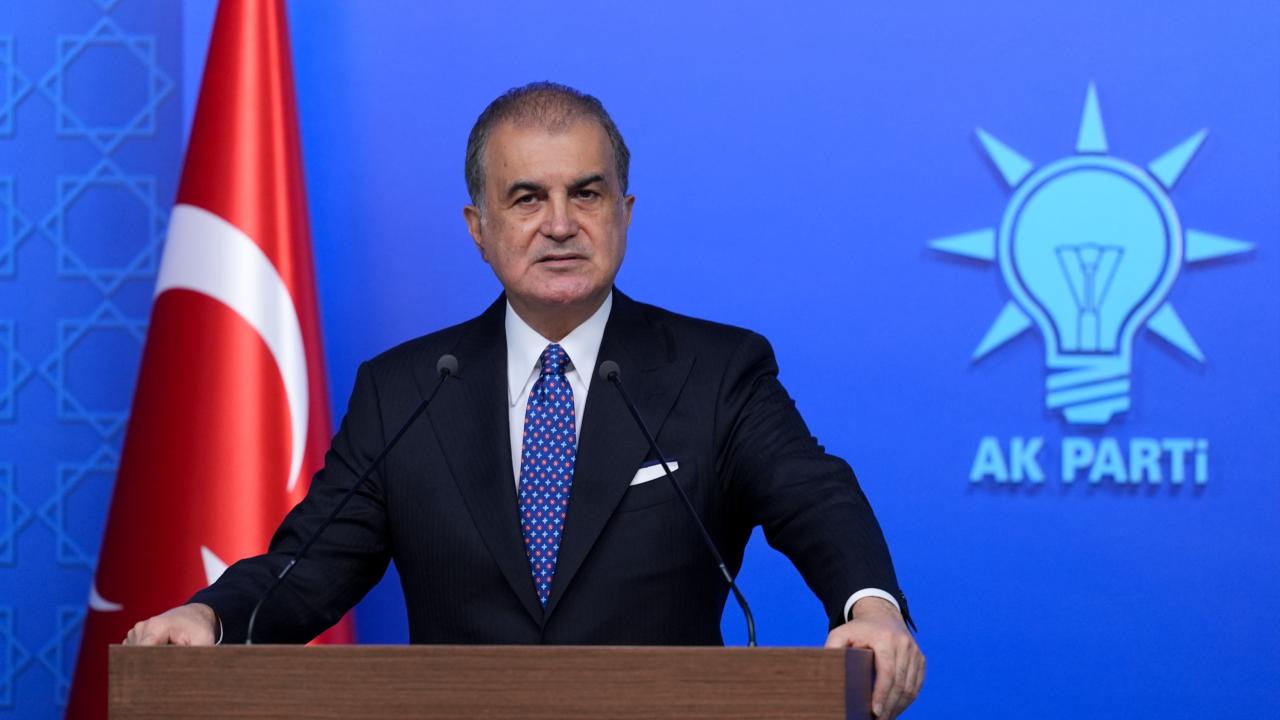
As the world grapples with the greatest existential threat since the Industrial Revolution—the climate crisis—Turkey is emerging not merely as a participant but as a decisive playmaker in this global struggle. Ömer Çelik, Deputy Chairman and Spokesperson of the AK Party, underscored the significance of the 31st Conference of the Parties (COP31) to the UN Framework Convention on Climate Change, set to take place in Antalya. Çelik described this massive organization as a historic threshold for global justice and the collective future of humanity. He noted that Turkey's diplomatic weight has translated into tangible power at the climate negotiation table, a success he attributed to the determined leadership and vision of President Recep Tayyip Erdoğan.
Climate change has transcended being a purely environmental issue to become a geopolitical matter directly impacting global security, economy, and social equity. In this context, Turkey's bid to host COP31, one of the world's most widely attended summits, is seen as a reflection of the country's 'conscientious and fair' stance within the international system. According to Çelik, Turkey is assuming the role of an architect in building an equitable and sustainable model, not just within its borders but for the entire world. The selection of Antalya is strategically significant, given both the city's logistical capacity and the fact that the Mediterranean basin is one of the regions most vulnerable to the climate crisis.
Background of the Development
Turkey's ascent in climate diplomacy is not a coincidental development but the result of systematic steps taken over the last decade. The process gained significant momentum in 2021 with the ratification of the Paris Climate Agreement by the Grand National Assembly of Turkey. Following this, the declaration of the 'Green Development Revolution' served as a roadmap for restructuring Turkey's economic and industrial policies around the axis of sustainability. President Erdoğan's announcement of the '2053 Net Zero Emission' target at the United Nations General Assembly declared Turkey's seriousness to the international community at the highest level.
In the institutional background lies the 'Zero Waste' project, carried out under the auspices of First Lady Emine Erdoğan, which has become a global brand. The UN General Assembly's resolution to declare March 30 as 'International Day of Zero Waste' is the most concrete evidence of how Turkey's environmental policies resonate on a global scale. This project is not just about waste management; it is a social mindset revolution aimed at transforming consumption habits and production models. As Turkey prepares for the COP31 process with this accumulated experience, it aims to use its expertise to build a bridge between the Global South and the Global North.
Viewed in a historical context, COP31 will be one of the largest platforms to test Turkey's multilateral diplomatic capabilities. Having successfully hosted major organizations such as the G20, NATO Summits, and the Antalya Diplomacy Forum, Turkey places the concept of 'Climate Justice' at the center of solving the climate crisis. This concept advocates for protecting the rights of developing countries that have little historical responsibility but are most affected by the crisis. The emphasis on 'global justice' highlighted by Ömer Çelik points precisely to Turkey's moral compass in the international arena.
Expert and Industry Insights
Energy, environmental, and economic experts are analyzing Turkey's COP31 candidacy and its role in this process from multiple perspectives. According to experts, the rapid increase in Turkey's renewable energy capacity—ranking among the top in Europe for solar and wind energy—is a technical advantage that strengthens its hand at the table. Industry representatives state that such summits offer immense opportunities not only politically but also in terms of technology transfer and green finance flows.
- Diplomatic Prestige: COP31 will consolidate Turkey's role in global governance, certifying its transformation from a regional power to a global actor.
- Access to Green Finance: The summit process will accelerate the attraction of international green funds and sustainable investments for industrial and energy projects in Turkey.
- Technology and Innovation: In line with decarbonization goals, it will provide a unique platform to promote domestic technologies (such as TOGG and renewable energy equipment) in the global market.
- Regional Leadership: Turkey will strengthen its position as a model and guide for Middle Eastern, Balkan, and Central Asian countries regarding climate change adaptation.
- Policy Harmonization: Turkey will play an active role in setting standards that will increase the competitiveness of the Turkish business world during the adaptation to international regulations like the European Green Deal.
In technical evaluations, the fact that Antalya is an agricultural and tourism hub directly experiencing the effects of climate change will provide concrete data for the summit's content. Experts predict that Turkey's strategies on 'water efficiency' and 'combating drought' will be among the main agenda items of COP31. Industry stakeholders agree that this organization will act as a catalyst for Turkey to achieve its sustainable development goals.
Economic and Social Implications
The economic impact of holding COP31 in Turkey, specifically in Antalya, is divided into short-term and long-term effects. In the short term, the arrival of tens of thousands of delegates, heads of state, NGO representatives, and journalists will create massive activity in the tourism and service sectors. However, the long-term economic transformation is more significant. Turkey's transition to a 'Green Economy' will change the employment structure and increase the demand for a 'green-collar' workforce. This means new career fields and innovative entrepreneurial opportunities for the young population.
From a social perspective, the vision of a 'common future' mentioned by Ömer Çelik triggers the formation of environmental awareness across all segments of society. The fact that the fight against the climate crisis has become a state policy brings about a sharing of responsibility ranging from local governments to individuals. Turkey's success in this process will also strengthen social solidarity and the sense of 'global citizenship.' Particularly, the sensitivity of younger generations toward climate activism and sustainability will find a more institutional and constructive ground with this summit.
Regarding market balances, Turkey's determination on the path to decarbonization will facilitate exporters' adaptation to carbon border adjustments. The green transformation of Turkish industry will solidify its position in global supply chains and increase the sustainability value of the 'Made in Türkiye' brand. The public expectation is that this process will not only be an environmental improvement but also the beginning of an economic model where prosperity is distributed more fairly.
Future Projections and Outlook
In the coming period, an intensive schedule of diplomacy and preparation awaits Turkey. On the road to COP31, lobbying activities and climate diplomacy efforts to be carried out by Turkey in international platforms are of critical importance. In the official process, the completion of fundamental legislative work, such as the Climate Law, and the updating of Nationally Determined Contributions (NDCs) are expected. These steps will ensure that Turkey enters the summit not just as a host but as a leader that has done its homework and achieved concrete successes.
In future projections, Turkey's strategy to increase the share of renewables in its energy mix to over 50% and to commission base-load plants like nuclear energy to reach 2053 targets is at the forefront. COP31 will be a ground where these strategies are validated on a global scale and where new cooperation agreements are likely to be signed. Regarding risks, although global political tensions have the potential to overshadow climate cooperation, Turkey's identity as a 'mediator' is the strongest tool to minimize these risks.
In conclusion, as Ömer Çelik stated, COP31 is much more than an organization; it is a declaration of Turkey's will to build a fairer, more livable, and greener world. This vision, carried out under the leadership of President Erdoğan, has brought Turkey to the front lines of the most critical struggle of the 21st century. The expectation is that the decisions emerging from Antalya will transform into an 'Antalya Consensus' that will positively change the fate of not just Turkey, but all of humanity.
💬 Yorumlar 0
Henüz yorum yapılmamış. İlk yorumu siz yazın!





