Cevdet Yılmaz: Turkey Has Completed Its Strategic Transformation in Defense Industry
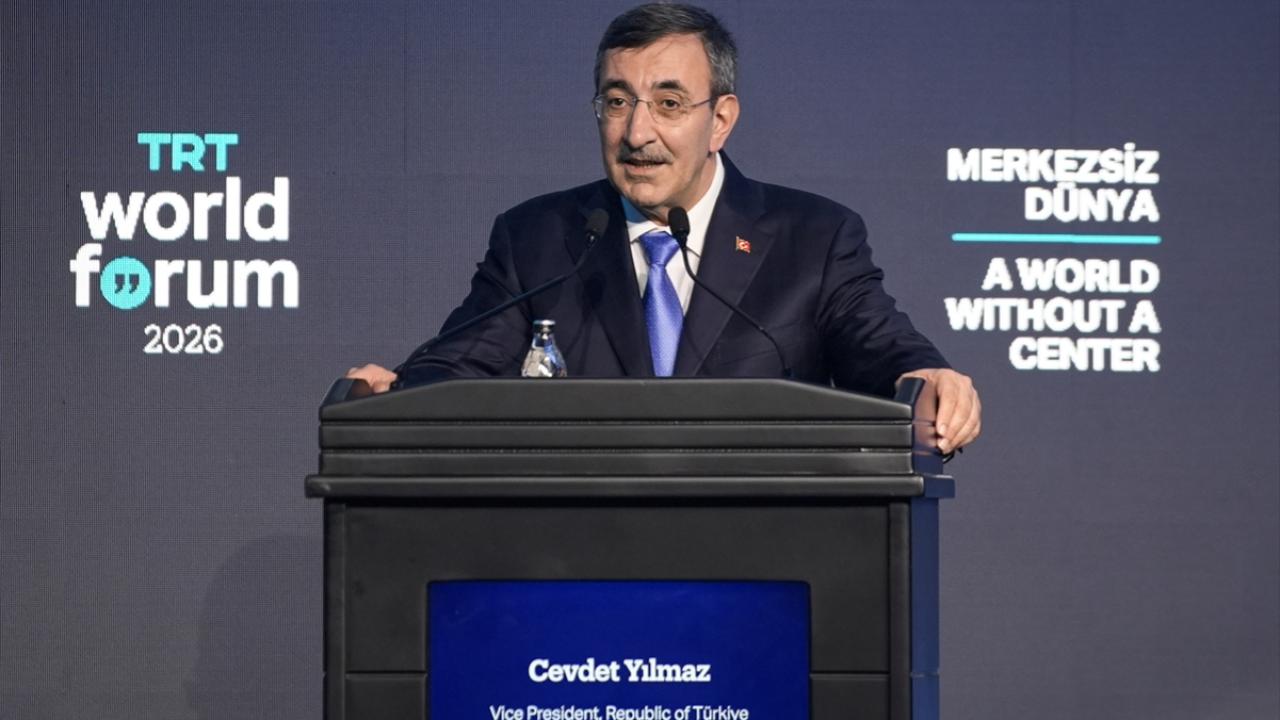
The Istanbul Congress Center hosted a significant gathering that captured the pulse of global politics and diplomacy. The 10th TRT World Forum, organized this year under the theme "Decentralized World: Who Leads When Rules No Longer Apply?", opened its doors. Speaking at one of the most notable sessions of the forum, titled "Turkey: From a Regional Power to an Inter-Regional Actor," Vice President Cevdet Yılmaz shared with the global public the structural transformation Turkey has undergone over the last quarter-century and the revolutionary developments in its defense industry. Yılmaz emphasized that Turkey has become not just a geographical bridge, but also a political and military balancing factor.
The focus of Yılmaz's speech was the reality that global power balances are no longer concentrated around a single center. Stating that influence is increasingly spreading to a wider spectrum of states and regional actors, Yılmaz expressed that Turkey has taken on a proactive role in this new world order. He noted that the steps taken in the defense industry over the last 24 years have increased Turkey's maneuverability in foreign policy, positioning the country as an actor capable of protecting its own rules and security in a world where "might makes right." This process has solidified Turkey's determination to not only protect its own borders but also to serve as a guarantor of regional peace.
Background of the Development
Turkey's rise in the defense industry and the diplomatic arena is not a coincidental development but the result of strategic planning spanning the last 24 years. The localization initiatives launched in the early 2000s with the goal of reducing foreign dependency have today made Turkey one of the leading countries in UAV/UCAV technology, shipbuilding, and ammunition technology. While explaining this historical process, Vice President Cevdet Yılmaz implied that the embargoes and restrictions Turkey faced in the past actually became the driving force for domestic production. This institutional memory has allowed Turkey to use its defense capacity not only as a military power but also as a diplomatic negotiation tool.
In an institutional and historical context, while Turkey continues to be part of the Western alliance with its NATO member identity, it has also modernized its ties with the East and the South. As Yılmaz emphasized, Turkey's deep historical ties with the Balkans, the Caucasus, Central Asia, and the Middle East offer a strategic depth beyond its geographical location. This depth has fortified Turkey's presence in the Black Sea and the Mediterranean while also making it an indispensable part of the European security architecture. The investments made in the defense industry over the last 24 years have created the physical and technological infrastructure of this strategic depth.
This process, carried out under the leadership of President Recep Tayyip Erdoğan, has enabled Turkey to transcend the definition of a "regional power" and reach the level of an "inter-regional actor." Behind this transformation lies active diplomatic traffic aimed at controlling crises and advancing political solutions. Turkey is no longer just a country that reacts to events, but a power that determines the course of events and sets the table for solutions. The stability of the TRT World Forum, which has been ongoing for 10 years, is also considered a reflection of Turkey's claim to this intellectual and diplomatic leadership.
Expert and Industry Insights
Industry representatives and geopolitical experts describe the framework drawn by Cevdet Yılmaz as a success of Turkey's quest for "strategic autonomy." According to experts, at a time when the rules-based international order is under pressure, Turkey's strength both on the ground and at the table is of critical importance for global stability. Turkey's multi-dimensional foreign policy is built on the ability to speak simultaneously with different and even competing actors.
In light of sectoral analyses, the cornerstones of Turkey's new era strategy can be listed as follows:
- Technological Independence: The localization rate in the defense industry exceeding 80% has liberated decision-making processes in foreign policy.
- Proactive Diplomacy: Instead of waiting for crises to emerge, an approach focused on de-escalation through preventive diplomacy and mediation activities has been adopted.
- Regional Ownership: Local collaborations are encouraged in line with the principle that regional problems should be solved by regional actors.
- Diversified Partnerships: Strategic partnerships are established across a wide spectrum from Africa to the Gulf, and from South Asia to Central Asia.
- Balance of Security and Prosperity: Increasing defense capacity is seen as a prerequisite for protecting economic development and regional prosperity.
Experts state that this approach of Turkey perfectly aligns with the theory of a "decentralized world." It is stated that in this new era where no single superpower dominates, medium-sized but high-capacity powers like Turkey have become the keystones of the system. As Yılmaz also pointed out, Turkey's role cannot be explained by geography alone; it is the result of a conscious strategic vision and concrete cooperation capacity.
Economic and Social Implications
This massive growth of Turkey in the defense industry is not only a military success but also serves as a serious economic lever. The fact that defense and aviation exports break records every year contributes directly to reducing the current account deficit and increasing high-tech production capacity. While this situation moves Turkey's position in the global value chain upward, it also triggers the development of qualified labor and engineering infrastructure. Economically, the defense industry has become the financial engine of Turkey's technological independence.
From a social perspective, the domestic and national technology initiative has created a great sense of self-confidence and belonging in society. This process, supported by organizations like TEKNOFEST, has increased the interest of young generations in science and technology, shaping Turkey's future human capital. In public opinion, Turkey's ability to produce its own defense systems is accepted as one of the most concrete indicators of national sovereignty. This social support also provides the political legitimacy necessary for the government to continue its long-term investments in defense projects.
Furthermore, the humanitarian diplomacy Turkey conducts as an inter-regional actor brings with it elements of soft power. Embassies opened in Africa, restoration projects in the Balkans, and institutional ties established with Central Asia prove that Turkey exists not only with hard power but also with cultural and economic collaborations. This situation reinforces Turkey's global image as a "responsible and reliable partner," increasing the trust placed in Turkey in the international arena.
Future Projections and Outlook
In the coming period, it is expected that Turkey will spread its accumulation in the defense industry to civilian areas and take the lead in next-generation fields such as artificial intelligence and space technologies. The vision of "concrete cooperation" emphasized by Cevdet Yılmaz shows that Turkey will be a partner that not only sells weapons but also transfers technology and develops joint production projects. This strategy makes Turkey an attractive option for friendly and allied countries that want to increase their defense spending but seek technological independence.
In future projections, it is foreseen that Turkey's role in mediation and facilitation will become even more institutionalized. Under the assumption that bottlenecks in the global system will continue, Turkey's balanced relationships with both the West and the East will continue to make it an indispensable solution partner in global crises. As Yılmaz stated, Turkey will continue to be one of the voices advocating for justice and fairness in the reconstruction of the rules-based international system.
In terms of risks and the calendar, increasing geopolitical tensions may increase the burden on Turkey. However, the resilient infrastructure and strategic autonomy built over the last 24 years provide the necessary tools to manage these risks. In line with Turkey's 2053 and 2071 visions, the main goal will remain to bring the localization rate in the defense industry close to 100% and to consolidate its position as a game-maker in global diplomacy. In this process, platforms like the TRT World Forum will continue to explain Turkey's theses to the world and seek solutions to global problems.
💬 Yorumlar 0
Henüz yorum yapılmamış. İlk yorumu siz yazın!





