Communications Director Duran: Journalism and the Struggle for Sovereignty in the Algorithmic Age
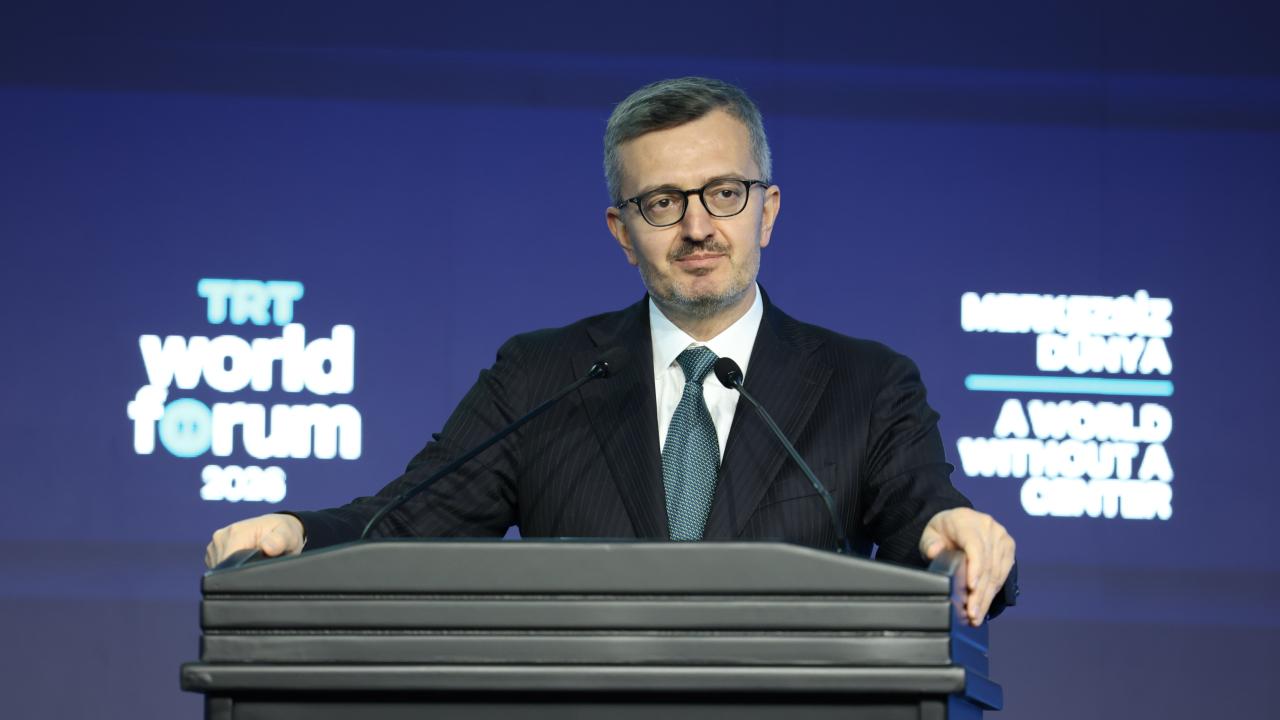
Presidential Communications Director Burhanettin Duran addressed the transformative effects of digital transformation on the media landscape and societal values during a session titled "Who is in Control in the Algorithmic Age? Companies, States, Citizens" at the 10th TRT World Forum, held at the Istanbul Congress Center. Speaking at the forum, themed "Decentralized World: Who Leads When Rules No Longer Apply?", Duran emphasized that algorithms, which have replaced the traditional "gatekeeping" mechanism of journalism, threaten not only journalism but also national memory and individual opinions.
In his speech, Duran drew attention to the determined stance of established institutions like TRT and Anadolu Agency in the fight against disinformation, while focusing on the structural problems underlying the convenience offered by digital platforms. Stating that journalism is not just about visibility, but requires independence, financial support, and strong professional ethics, Duran called for global awareness against the risk of "techno-feudalism" brought about by the algorithmic age.
Background of the Development
The digitalization process has led to a radical rupture in the media sector. News, which once passed through the filters of editors, legal experts, and reporters, has now been replaced by algorithms focused on speed and engagement. The "manual era" pointed out by Communications Director Duran represented a process where editorial responsibility was tied to an identity, making accountability possible. However, today, we are faced with an ecosystem where content serving the commercial interests of platforms is prioritized over the accuracy of the news.
From a historical perspective, media organizations have always had certain commercial and political affiliations. However, as Duran emphasized, the difference today is that the decision-making mechanism has shifted from the "human" factor to the "software" factor. This situation causes the fundamental pillars of the journalism profession—verification and ethical principles—to be ignored for the sake of algorithmic efficiency. Institutions like TRT and Anadolu Agency serve as "safe harbors" in this digital chaos to protect the truth.
This transformation directly affects not only journalistic practices but also the sovereignty of states. The shift of control over information flow from nation-states to cross-border technology giants brings the debate of "techno-feudalism" to the forefront. Duran's speech reveals that this loss of sovereignty is not just an economic issue, but also a cultural and political survival issue.
Expert and Industry Insights
Media and technology experts agree that the issue of "algorithmic control" raised by Duran is one of the greatest tests modern democracies face. Industry representatives argue that with the increasing role of artificial intelligence in news production, original journalistic labor must be protected. Key insights from experts are as follows:
- Algorithms prioritize engagement potential rather than the social benefit of news, creating "echo chambers."
- The production of content by AI tools without citing sources creates a serious crisis regarding copyright and journalistic ethics.
- The monopoly of digital platforms over news distribution threatens the financial sustainability of local and national media outlets.
- The perception of history and cultural heritage by younger generations is at risk of homogenization due to algorithmic filters.
- The fight against disinformation is possible not only with technological tools but with a strong editorial oversight mechanism.
Industry representatives state that at this point, states and international organizations must establish a more transparent and accountable regulatory framework for technology companies. In this context, Duran's question, "Are our opinions being shaped on our behalf?" serves as a critical warning for the protection of individual freedoms.
Economic and Social Implications
The economic implications of the algorithmic age have a devastating effect, particularly on the revenue models of traditional media outlets. The labor, time, and cost spent on producing a piece of news are devalued by the advertising revenues of digital platforms. This makes it difficult to finance quality journalism, restricting the public's right to access accurate information.
From a social perspective, content consumption guided by algorithms can deepen social polarization. Feeding individuals with content that aligns with their own worldviews prevents the formation of a common social memory and fragments the perception of "reality." As Duran noted, the fact that younger generations learn their historical identity from the limited perspective offered by digital platforms is a risk factor that could lead to cultural erosion in the long term.
This process also necessitates increasing the digital literacy levels of citizens. Understanding how algorithms work and how content can be manipulated has become one of the most important citizenship skills of the modern age. Educational efforts by public institutions in this area are vital for increasing social resilience.
Future Projections and Outlook
In the coming period, the struggle over "content and copyright" between technology companies and media organizations is expected to intensify. It is anticipated that states will increase their oversight of digital platforms and implement legal regulations to protect the rights of local media. During this process, institutions like TRT and Anadolu Agency are expected to continue playing a leading role in the fight against disinformation by strengthening their technological infrastructure.
Risks include the increasing sophistication of AI-supported disinformation (such as deepfakes) and its growing capacity to manipulate public opinion. International cooperation and the establishment of common ethical standards are global necessities to counter these risks. The proactive approach of the Directorate of Communications on this issue forms the cornerstone of Turkey's digital sovereignty strategy.
In conclusion, journalism in the algorithmic age has become not just a process of news transmission, but a "struggle for truth." To ensure that future generations can discover their own past and values not in the shadow of algorithms, but freely and consciously, media ethics and editorial responsibility must be re-established.
💬 Yorumlar 0
Henüz yorum yapılmamış. İlk yorumu siz yazın!





