Education Ministers Gather at COP31 for Global Climate Action
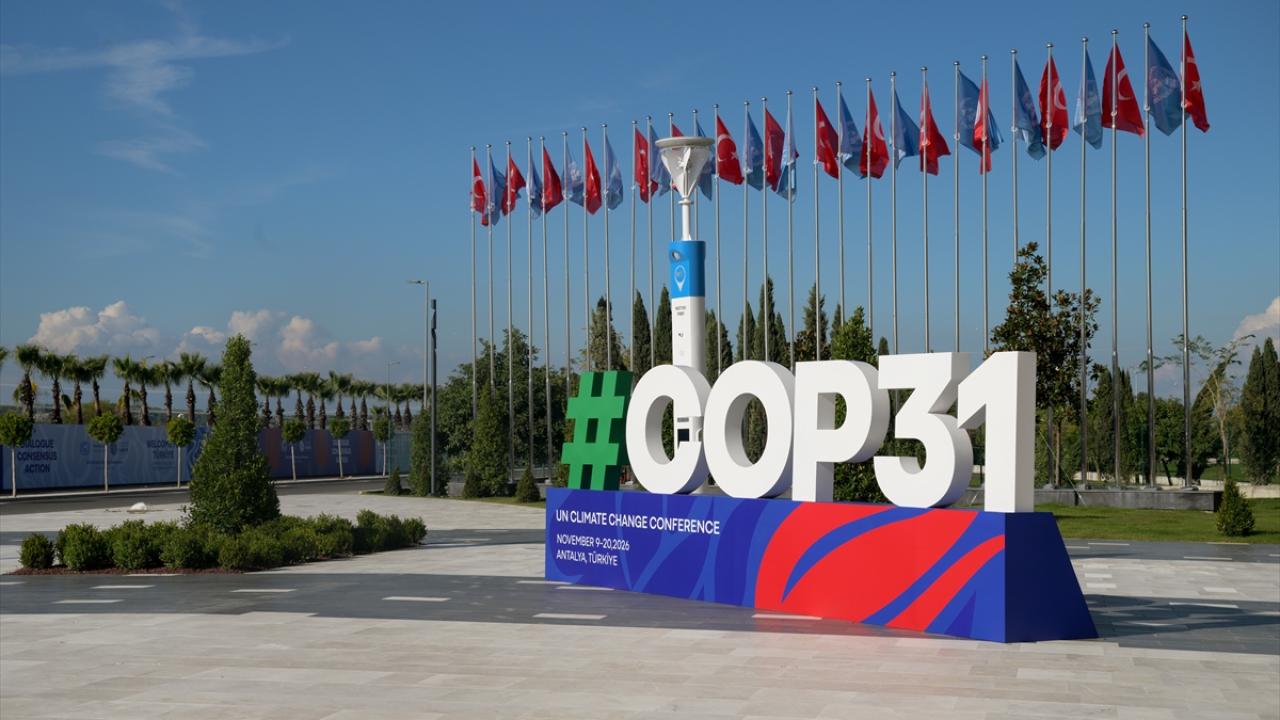
As one of the most critical platforms of international climate diplomacy where the future of global environmental policies is shaped, the COP31 process is preparing to host a massive education-focused organization. According to the official statement from the Ministry of National Education (MEB), preparations are meticulously continuing for events to be held in the Blue Zone and Green Zone throughout the conference. While the devastating impacts of the climate crisis on our planet become more pronounced by the day, the transformative power of education in combating this global threat will be brought to the table. Through comprehensive programs organized during the conference, vital topics such as the active participation of children and youth in climate action, the empowerment of teachers, and the adaptation of education systems to climate change will be addressed at the international level. This strategic step reveals that the climate crisis is not merely an environmental policy issue, but also requires a deep pedagogical and societal transformation.
One of the most critical turning points of the organization will be the 'Children, Youth, Education, and Skills Day' to be observed on November 14. This high-level program, to be hosted by Minister of National Education Yusuf Tekin, will see the participation of education ministers from various countries around the world, high-level representatives of international organizations, and experts. These concrete steps to integrate educational policies with climate action on a global scale are recorded as one of the most tangible indicators of international cooperation and the search for a common mind. The diplomatic and academic contacts carried out under the leadership of Minister Tekin reinforce Turkey's pioneering role in this field while providing a unique platform to announce policies aimed at raising future generations as more resilient and conscious individuals against climate change to the international public.
One of the most important institutional partnerships of this grand gathering will take place between the Ministry of National Education and the UNESCO Greening Education Partnership (GEP). The official opening of the program will be held with a strategic session titled 'Antalya Action Protocol: Children, Youth, and Teachers at the Center of Green Education'. In this session, the central role of children, youth, and teachers in global climate policies will be thoroughly discussed. Furthermore, Turkey's declaration of accession to the UNESCO Greening Education Partnership as the 100th member country is anticipated to be announced to the entire world. This accession serves as international recognition of Turkey's determination to align its educational infrastructure with green transformation principles in line with sustainable development goals.
Background of the Development
The discussion of the nexus between climate change and education in international platforms has recently climbed to the top of the global environmental agenda. Climate negotiations, which were previously conducted largely around carbon emissions, energy policies, and economic transformation, are now facing the reality that altering societal behavioral patterns is only possible through a radical education reform. In recent years, Turkey has taken significant steps toward integrating environmental awareness into curricula, expanding energy efficiency projects in schools, and institutionalizing ecological movements such as zero waste. The COP31 process presents a historical window of opportunity for Turkey to carry this accumulation achieved at the national level into the international arena and have a say in shaping global education standards.
When viewed in a historical context, the negative impacts of the climate crisis on the physical and mental health of children and youth have also entered the agenda of international human rights and child rights conventions. Ensuring that future generations are prepared for future environmental disasters requires them to be equipped not only with technical knowledge but also with critical thinking, problem-solving, and ecological literacy skills. In this context, the efforts carried out by the MEB also include the vision of making education systems resilient to climate shocks (climate-resilient schools). This broad perspective, extending from the renovation of physical infrastructure of schools to teacher training, transforms into concrete projects at COP31 as a result of multi-year planning.
International mechanisms such as the UNESCO Greening Education Partnership (GEP) function as a critical network for member countries to share best practices in the field of climate education and develop common standards. Turkey's inclusion in this structure as the 100th member country will increase the country's weight in global environmental education while simultaneously opening new doors regarding access to international funds and joint projects. This process, crowned with the Antalya Action Protocol, constitutes a chronological stage of transforming local and national steps taken in the past into international norms with a global vision. This protocol holds the quality of being not merely a declaration of intent, but also a binding and guiding action plan for all stakeholders.
Expert and Industry Insights
Education economists and climate policy experts agree that this high-level summit to be held within the scope of COP31 will be a new turning point in global educational policies. Experts emphasize that in order to cope with the uncertainties brought by the climate crisis, education curricula must be transformed from structures that merely transmit academic knowledge into dynamic systems that encourage ecological sensitivity, practical skills, and sustainable lifestyles. Industry representatives draw attention to the key role of teachers in this process, pointing to the urgency of updating pedagogical training programs with climate literacy.
The Turkey Climate School, which is one of the most concrete outputs of the summit and will be opened in the Green Zone, is evaluated by experts as an innovative applied education model. Bringing together students, teachers, parents, academics, and national-international stakeholders starting from November 9, this school will be an attraction center where theoretical knowledge is put into practice in laboratory and natural environments. According to analyses made by industry stakeholders, such applied centers assume a catalytic role in the internalization of environmental awareness by younger generations and in contributing to climate action at the individual level.
Expert analyses and industry evaluations regarding the subject are summarized under the following main headings:
- It is of vital importance that climate change education is integrated into the core curriculum at all levels rather than being limited to elective courses.
- Supporting teachers through continuous professional development programs regarding climate pedagogy will directly affect the success of the transformation.
- Practice-oriented centers such as the Turkey Climate School allow students to test theoretical knowledge on real-world problems.
- UNESCO GEP membership will increase international academic collaborations and facilitate access to common funding sources.
- Involving children and youth in the decision-making mechanisms of climate policies is the transfer of democracy and interactive participation to future generations.
Educational technologies and sustainable development experts underline that the green education vision must also be supported by digital tools. According to expert evaluations, distance education platforms, artificial intelligence-supported ecological analysis tools, and augmented reality applications can create a major leverage effect in spreading climate awareness to wide masses and reaching students particularly in disadvantaged regions. In this context, the COP31 platform also creates a perfect showcase for Turkey to share its innovative approaches in educational technologies with international stakeholders.
Economic and Social Implications
The strengthening of climate education policies and the proliferation of green schools also engender profound implications on economic and social planes. Viewed from a macroeconomic perspective, transforming educational buildings in accordance with energy efficiency significantly reduces energy costs spent from the public budget in the long run, while simultaneously preparing the ground for cultivating the qualified workforce required for the 'green economy'. The awareness of saving, recycling, and ecological balance acquired by children at an early age positively influences household consumption habits, ensuring a more efficient use of resources at the societal level.
When the social dimension is addressed, involving children and youth—the segments that will be most affected by the climate crisis—in decision-making processes is a major step toward establishing social justice and intergenerational equity. The Turkey Climate School and similar initiatives contribute to equality of opportunity by enabling students from different social strata to come together and strengthening social integration. The active participation of parents in these processes strengthens the bond between the school and the family, triggering the spread of environmental awareness to the home environment and consequently to the entire society.
International stakeholder reactions and public approaches also demonstrate that Turkey's moves in this field are met very positively. Joining the UNESCO Greening Education Partnership as the 100th member reinforces Turkey's international reliability in environmental and education policies while returning as a soft power element in other strategic sectors such as tourism, diplomacy, and foreign trade. Integrating social stakeholders, non-governmental organizations, and local governments into these processes accelerates the grassroots dissemination of climate action and facilitates the achievement of sustainable development goals.
Future Projections and Outlook
Steps to be taken and official processes in the upcoming period are planned to encompass the conversion of agreements reached at COP31 into national legislation and action plans. With efforts to be conducted under the leadership of the Ministry of National Education, the articles of the Antalya Action Protocol will be meticulously implemented, and curriculum updates in schools will accelerate. Following the high-level summit on November 14, it is expected that international cooperation networks will be further expanded, joint projects financed, and best practice examples transferred to other countries.
At the very top of the list of expectations is that the activities of the Turkey Climate School will not remain limited to physical participation, but will spread to all provinces of the country and even the international arena through digital platforms. Studies to be conducted by academics and researchers in this center will ensure the production of scientific data that will guide future climate policies. Viewed from a risk management perspective, ensuring the continuity of education against sudden shocks brought by the climate crisis will continue to remain at the center of strategic planning for the future.
In conclusion, these comprehensive and visionary steps to be carried out within the scope of COP31 rivet Turkey's position as a global actor in education and climate diplomacy. Opening its doors on November 9 in line with the official calendar, the Turkey Climate School and the ministers' summit on November 14 constitute a milestone in raising generations that will build the world not only of today but of tomorrow. Long-term projections clearly reveal that with the full implementation of green education policies, Turkey will attain a societal structure that is resilient to the climate crisis, has high environmental awareness, and has adopted sustainable development principles.
💬 Yorumlar 0
Henüz yorum yapılmamış. İlk yorumu siz yazın!





