Emine Erdoğan Hosts World Leaders' Spouses at a 'Zero Waste' Themed Table
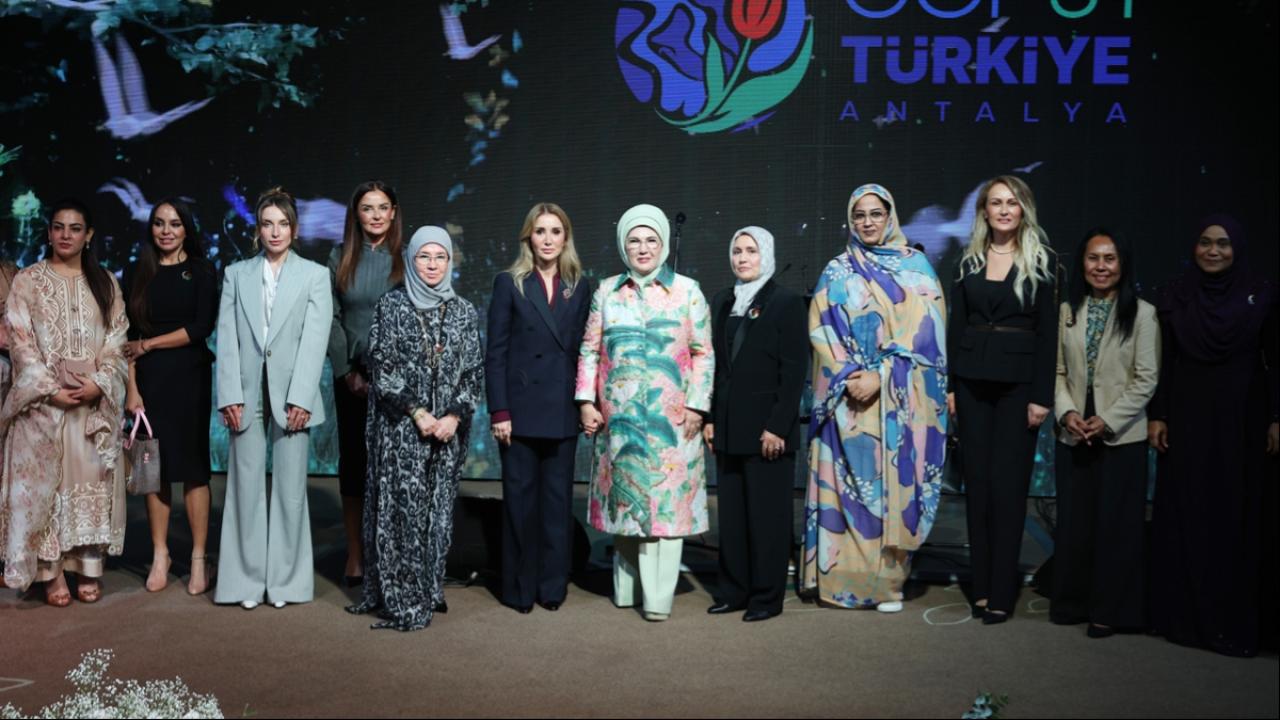
Emine Erdoğan, the spouse of the President of the Republic of Türkiye, Recep Tayyip Erdoğan, brought together the spouses of world leaders for a special dinner themed 'Zero Waste' during the United Nations (UN) General Assembly meetings. This meaningful gathering went beyond mere diplomatic courtesy, serving as a testament to the global impact of the 'Zero Waste' movement championed by Türkiye. Spouses of leaders from countries including the TRNC, Mauritania, Palau, Bangladesh, Burundi, Eswatini, Solomon Islands, Bosnia and Herzegovina, Maldives, and Libya shared a common vision regarding sustainability and the preservation of cultural heritage under the hospitality of Emine Erdoğan.
The 'Colors from Nature in Anatolia' exhibition, held prior to the dinner, formed the intellectual and cultural backbone of the event. Prepared by Public Education Centers (Olgunlaşma Enstitüleri), this exhibition presented the ancient natural dyeing techniques and local weaving arts of Anatolia to the guests, blended with modern climate consciousness. The guests, welcomed by Minister of Family and Social Services Mahinur Özdemir Göktaş, witnessed how natural dye recipes collected from seven regions of Anatolia were brought back to life with traditional motifs.
Background of the Development
The 'Zero Waste' project, initiated under the leadership of Emine Erdoğan, has evolved into a global initiative recognized by the United Nations. This project is not merely a waste management strategy but a philosophy of life based on the efficient use of resources and the promotion of a circular economy. Throughout history, the Anatolian geography has been known for its practices of living in harmony with nature. The exhibition by the Public Education Centers repositions this historical accumulation as a tool to combat climate change, the greatest challenge of the modern world.
The wedding dresses made of Ödemiş silk, Dival embroidery designs on Shal-Shepik fabric, and traditional rugs colored with root dyes are, in essence, a 'manifesto of sustainability.' At a time when the environmental damage caused by chemical dyes is being debated, Anatolia's tradition of root dyeing is being presented to the world stage as an ecological alternative. This work also plays a critical role in preserving and passing on endangered crafts to future generations.
The presence of prominent figures such as Ritu Banga, wife of the World Bank President, Tunku Azizah Aminah Maimunah Iskandariah, wife of the Sultan of Pahang, Malaysia, and Leyla Aliyeva, daughter of the President of Azerbaijan, demonstrates that the project has become an element of 'soft power' on an international scale. In this setting, where diplomacy meets cuisine and art, environmental awareness served as a common language.
Expert and Industry Insights
Sustainability experts and fashion designers describe Emine Erdoğan's initiative as a 'redefinition of cultural heritage through an environmental lens.' According to experts, combining traditional methods with modern designs serves as an important source of inspiration for reducing the carbon footprint in the textile industry.
- Natural dyeing is an ecological method that prevents chemical waste from contaminating water resources.
- Protecting local weaving supports rural development and secures cultural diversity.
- The zero-waste approach aims to transform not only industrial but also individual consumption habits.
- The integration of traditional motifs with modern fashion increases the added value of local products in the global market.
- Ecological printing techniques offer creative solutions for repurposing waste fabrics.
Industry representatives emphasize that such events are not just exhibitions but 'platforms for awareness.' This meeting, which also included the participation of COP31 Climate Champion Samed Ağırbaş, reveals that the fight against climate change is not just a technical issue but also requires a cultural transformation.
Economic and Social Implications
This event is a significant step in Türkiye's journey to turn its 'Zero Waste' vision into a global brand. From an economic perspective, there is high potential for naturally dyed and handmade products in the global luxury market under the heading of 'sustainable fashion.' Introducing Anatolian traditional weavings to the spouses of world leaders in this manner creates a major promotional opportunity for Türkiye's handicraft exports and cultural tourism.
In terms of social implications, showcasing the handiwork of women on such a prestigious platform is a great source of motivation for local producers and artisans. The work of the Public Education Centers supports employment and ensures that traditional knowledge is transformed into economic value. At the societal level, redefining the concept of 'waste' as a 'resource' contributes to spreading environmental awareness to the grassroots.
Future Projections and Outlook
In the coming period, it is expected that the Zero Waste Foundation and relevant ministries will expand such cultural and environmental collaborations to a wider geography. Specifically, transforming natural dyeing and ecological printing workshops into international training programs will consolidate Türkiye's leadership in this field.
While the difficulty of producing traditional methods on an industrial scale remains a challenge, it is anticipated that this issue can be overcome through boutique and high-value production models. Strengthening official processes with funds supporting such cultural diplomacy activities will increase the sustainability of the project.
In conclusion, this 'Zero Waste' table, where Emine Erdoğan brought together the spouses of leaders, is not just a dinner but a step taken toward building a common future. As Anatolia's ancient wisdom seeks solutions to the environmental problems of the modern world, Türkiye's pioneering role in this field will continue to be watched with appreciation by the international community.
💬 Yorumlar 0
Henüz yorum yapılmamış. İlk yorumu siz yazın!





