Emine Erdogan Opens Zero Waste Museum: A New Milestone in Global Environmental Vision
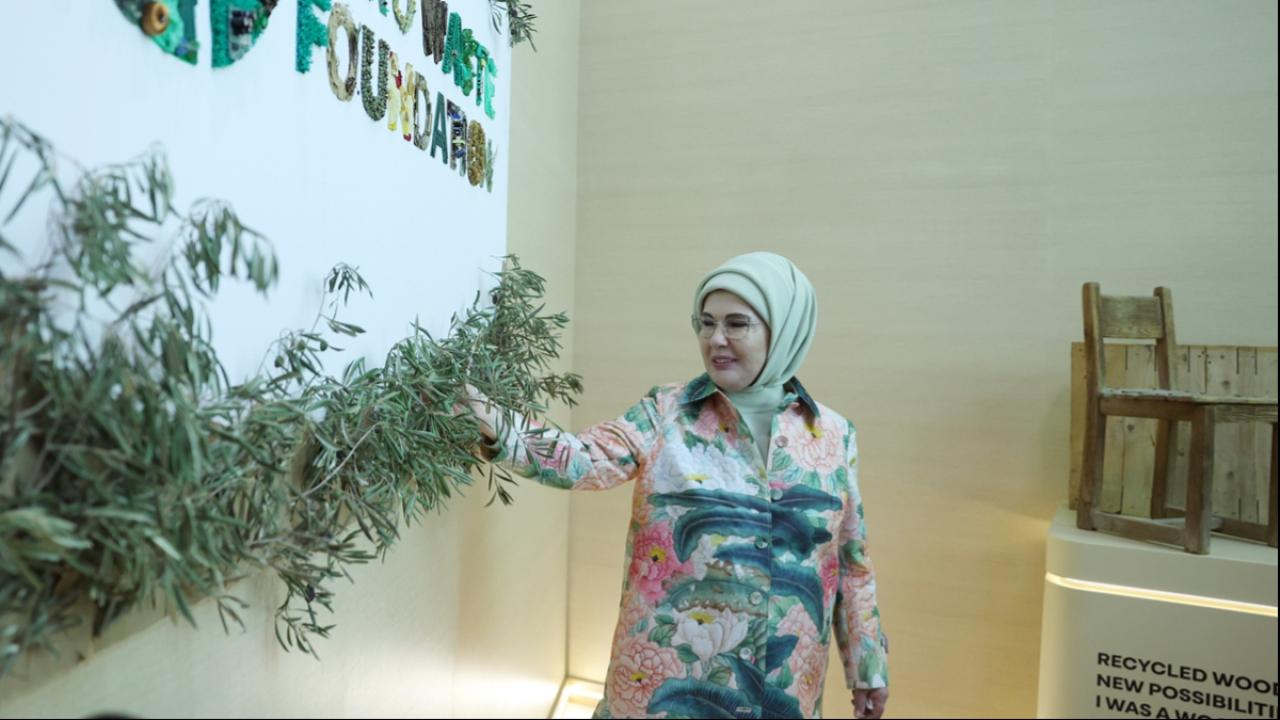
Emine Erdogan, spouse of the President of the Republic of Turkey, has transformed the 'Zero Waste' vision—a cornerstone of her environmental policies—into a tangible center for education and awareness. The inauguration of the Zero Waste Museum, held on the sidelines of the COP31 climate summit in Antalya, marks not just the opening of a facility, but a symbolic milestone in sustainable living practices in the fight against global climate change. Opening its doors with the cutting of a ribbon crafted from waste fabrics and lace, the museum brings the historical journey of waste management and future eco-friendly technologies to its visitors.
The opening ceremony was attended by the spouses of heads of state and government from countries including Mauritania, Palau, Burundi, Eswatini, the Solomon Islands, the Maldives, and Libya, as well as the spouse of the Sultan of Pahang, Malaysia, and Leyla Aliyeva from Azerbaijan. The presence of Minister of Family and Social Services Mahinur Ozdemir Goktas and Minister of Environment, Urbanization and Climate Change Murat Kurum underscored the event as a premier example of environmental diplomacy.
Background of the Development
The Zero Waste movement, initiated in 2017 under the auspices of Emine Erdogan, has quickly transformed into Turkey's most comprehensive environmental mobilization. Having gained global recognition after the UN General Assembly declared March 30 as 'International Day of Zero Waste,' the initiative now operates under an international governance mechanism through the UN Advisory Board of Eminent Persons on Zero Waste. The museum was designed to pass the legacy of this long-term struggle to future generations.
The museum hosts interactive areas that explain the environmental impacts of waste, the economic value of recycling, and the strategic importance of protecting natural resources. Guided by Samed Agirbas, President of the Zero Waste Foundation, the tour focused on waste reuse processes and circular economy models. This museum is conceived not merely as an exhibition space, but as a 'living laboratory.'
Historically, waste management was viewed merely as a disposal issue; however, with the Zero Waste approach, it has evolved into a discipline of resource management. The museum presents this paradigm shift from a chronological perspective, aiming to show visitors how individual habits evolve into societal transformation.
Expert and Industry Insights
Environmental scientists and sustainability experts describe the opening of the museum as a critical threshold for 'societal behavioral change.' According to experts, the fact that waste management is not just a technical issue but a cultural one is reinforced by this museum. Key insights from industry representatives include:
- Viewing waste as 'raw material' forms the foundation of the circular economy.
- Education-focused museums are the most effective tools for increasing environmental literacy among younger generations.
- The participation of international leaders facilitates the adoption of the Zero Waste model as a global standard.
- The integration of digitalization and waste management is one of the museum's most innovative aspects.
- Transparency in recycling processes increases public trust in the project.
Samed Agirbas and other experts emphasize that the museum will not remain just a museum but will also become a hub where strategies to prevent waste generation are developed. The participation of artists and athletes, particularly environmental activists like Sahika Ercumen, creates a significant multiplier effect in spreading the project to the grassroots level.
Economic and Social Implications
The economic dimension of the Zero Waste project is measured in billions of liras in annual savings and raw material recovery. The opening of the museum serves as a catalyst for adopting this economic model not just as a state policy, but as a lifestyle. The intense interest from all segments of society proves that environmental sustainability is now perceived as a necessity rather than a luxury.
Socially, the museum functions as a meeting point. The keen interest from youth and NGOs demonstrates that environmental awareness is building a bridge between generations. The photo taken in front of the 'digital tree' stands out as a powerful message regarding the need to maintain the balance between nature and technology.
In terms of market dynamics, the growing interest in the recycling sector is enabling the birth of new business lines and supporting green employment. By showcasing innovations in this sector, the museum aims to be a source of inspiration for investors as well.
Future Projections and Outlook
In the coming period, it is expected that similar Zero Waste Museums will be established in other major cities in Turkey and even on international platforms. Under the leadership of the Zero Waste Foundation, this museum heralds an era where digitalization and AI-supported sorting systems will be more widely used in waste management.
Official processes envision integrating the museum into educational curricula and including it in regular school visit programs. In this way, environmental awareness will be transformed into a life discipline starting from school years.
Risks include the potential failure to change consumption habits and the continued increase in waste volume. However, awareness centers like this museum act as 'social defense lines' to minimize these risks. The future belongs to societies that view waste not as a problem, but as a value.
💬 Yorumlar 0
Henüz yorum yapılmamış. İlk yorumu siz yazın!





