Emine Erdogan's Global Zero Waste Vision: A Call for Action-Oriented Future
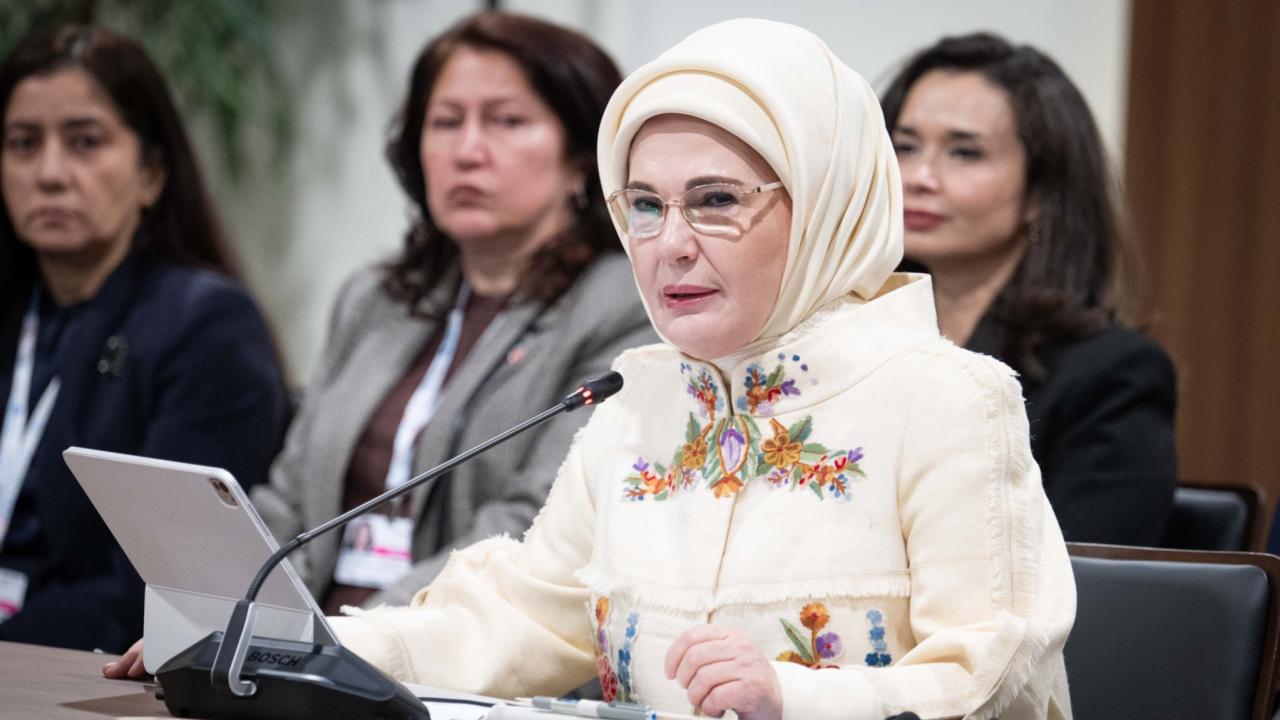
Emine Erdogan, spouse of the President of the Republic of Türkiye, participated in the High-Level Meeting of the Global Zero Waste Alliance Leaders' Spouses, delivering a powerful message regarding a sustainable future. Erdogan stated that the solution to the environmental crises facing the world today lies not only in theoretical knowledge but in the political and social will to implement what we know. Referring to the COP31 process, she emphasized that this summit should be an 'Action COP,' noting that the measure of success should not be the pledges made, but the tangible changes created in our production methods and urban lives.
Background of the Development
The Zero Waste movement is a comprehensive environmental management model initiated in Türkiye nine years ago, which has quickly gained international status. Originally designed as a local waste management project, this initiative has evolved into a global platform under the auspices of the United Nations. Led by Emine Erdogan, the process is based on the principles of source separation of waste, the transition to a circular economy, and the protection of natural resources.
Historically, Zero Waste, which has been at the center of Türkiye's environmental policies since 2017, has become a model that resonates in more than 100 countries today. This movement is a paradigm shift aimed not only at reducing the volume of waste but at fundamentally changing consumption habits. The establishment of the Alliance aims to transform this local success into a global network of solidarity.
The Global Zero Waste Alliance is designed as a mechanism for knowledge and technology transfer, allowing countries to be inspired by each other's successful practices. The active role of leaders' spouses in this platform utilizes the soft power of environmental diplomacy to ground interstate cooperation on a more human and social foundation.
Expert and Industry Insights
Environmental economics experts state that the 'action-oriented' approach emphasized by Emine Erdogan addresses a critical gap in the fight against climate change. Industry representatives emphasize that waste management is no longer a cost item but a source of income and employment thanks to the circular economy. Key expert insights include:
- Circular economy models reduce dependency on raw materials, protecting national economies from external shocks.
- Zero Waste practices are the most effective local management strategy that directly lowers the carbon footprint in cities.
- International alliances facilitate access to environmental technologies for developing countries, reducing global inequality.
- Education and awareness efforts are as important as technical infrastructure for the sustainability of waste management.
- The participation of leaders' spouses ensures that environmental policies are placed at the top of political agendas.
Experts state that for this alliance to be more than a declaration of intent, it must be supported by concrete projects, and that establishing common standards in areas such as plastic pollution and food waste is essential.
Economic and Social Implications
The expansion of the Zero Waste movement has profound economic effects, not just environmental ones. The transition to a circular economy enables the birth of new business lines, an increase in waste recovery facilities, and a reduction in production costs through resource efficiency. At the social level, individuals questioning their consumption habits encourages a lifestyle where resources are used more efficiently.
Collaboration between the public and private sectors plays a decisive role in the success of this movement. Corporate social responsibility projects of companies are being aligned with Zero Waste principles, improving the environmental sustainability records of brands. This situation positively changes market dynamics by increasing consumer demand for eco-friendly products.
In terms of social implications, the inclusivity of this movement increases the participation of local communities in environmental protection processes. The leading role played by women and youth in these processes also integrates concepts of gender equality and intergenerational justice into environmental policies.
Future Projections and Outlook
In the coming period, the Global Zero Waste Alliance is expected to develop a common 'Zero Waste Certification' system among countries. This system will transparently document the life cycle of products from production to disposal, raising environmental standards in global trade. Furthermore, the establishment of a 'Best Practices Data Bank' is targeted to disseminate local solutions on a global scale.
Risks include the technological gap between developed and developing countries and difficulties in accessing financial resources. However, the diplomatic bridge built by the leaders' spouses creates the political will to overcome these obstacles. In the coming years, this alliance is projected to play a key role in achieving the United Nations Sustainable Development Goals.
In conclusion, this vision, shaped under the leadership of Emine Erdogan, transforms environmental issues from mere technical matters into a quest for global solidarity and a shared future. This new action-oriented era is poised to go down in history as one of the most concrete steps taken to protect the world, which is the common home of humanity.
💬 Yorumlar 0
Henüz yorum yapılmamış. İlk yorumu siz yazın!





