Emine Erdoğan: Women are the Beating Heart of Art and Craft
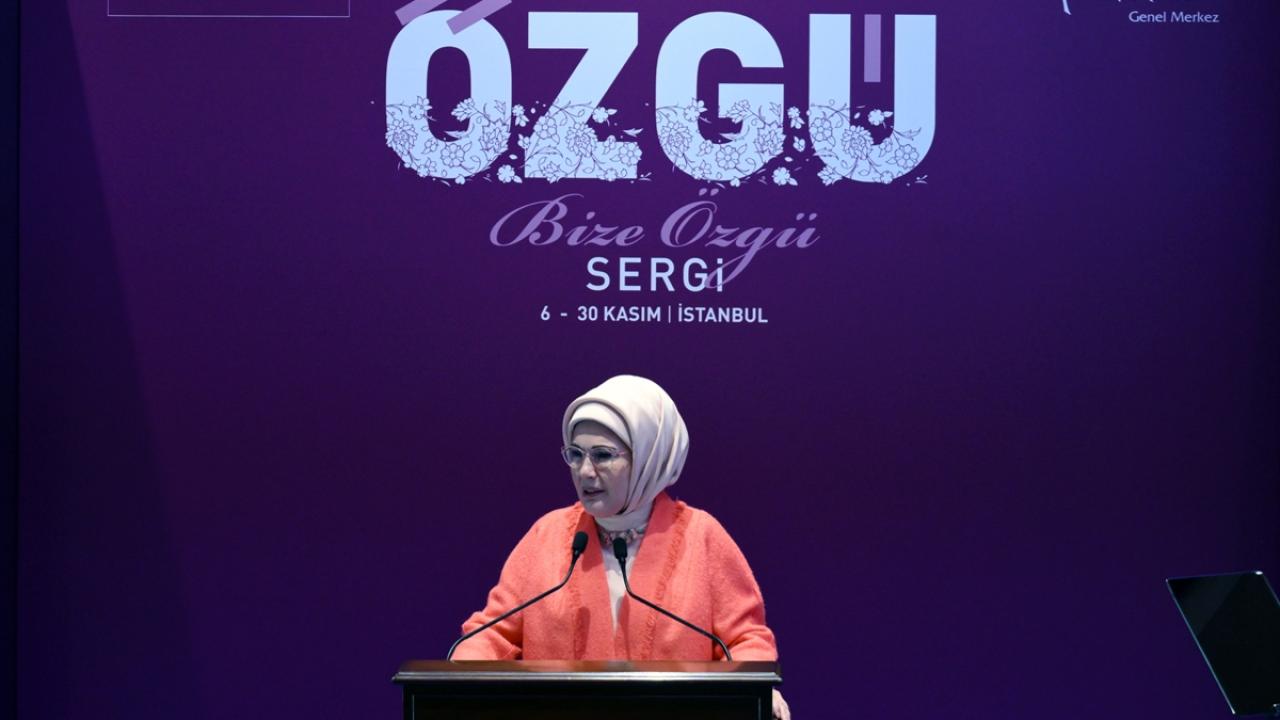
Emine Erdoğan, wife of President Recep Tayyip Erdoğan, attended the 'Artisan Women: 81 Provinces, 81 Women, 81 Stories' program organized by the AK Party Women's Branch at Rami Library, where she delivered a significant address. The 'ÖZGÜ-Bize Özgü' (Unique-Unique to Us) exhibition, held within the scope of the program, brought together the handcrafted works of 81 female artists and artisans from 81 provinces of Turkey. Emine Erdoğan stated that this exhibition is not merely an art display, but a tangible reflection of Anatolia's rich cultural tapestry.
In her speech, Erdoğan drew attention to the geographical belonging of traditional arts, noting that every art form is shaped by the climate of the land where it was born. Establishing a connection between the universality of art and local roots through the example of Yunus Emre, Erdoğan emphasized the vital role of preserving cultural values in the construction of national identity, stating, 'Art is universal, but its feet are planted on this land.'
Background of the Development
This event is considered part of Turkey's vision to protect its cultural heritage and pass it on to future generations. Projects initiated in previous years to support traditional arts have gained an institutional identity today through comprehensive organizations such as '81 Provinces, 81 Women.' The process, carried out in cooperation with the Ministry of Culture and Tourism and local governments, aims to provide economic support to artisans and revitalize professions that are on the verge of being forgotten.
When viewed in a historical context, the Anatolian geography has been a mosaic bearing the traces of different civilizations for thousands of years. The concept of 'cultural memory,' highlighted by Emine Erdoğan, reveals that protecting this heritage is not just an aesthetic issue, but a matter of social existence. The risk of local production being dissolved within global standards, especially with industrialization and digitalization, further increases the importance of such projects.
The chronological course of the process has gained momentum with the encouragement of women's entrepreneurship in cultural fields in recent years. Relevant institutions are carrying out the necessary infrastructure work for artisan women to market their works on digital platforms and are organizing training on intellectual property rights for the registration of these works. This is not just an exhibition, but also a development model.
Expert and Industry Insights
Experts in cultural economics state that protecting local production against the danger of 'uniformity,' which Emine Erdoğan pointed out, is a strategic necessity. According to experts, the protection of cultural values is one of the most important elements that increase a country's 'soft power.' Industry representatives argue that craftsmanship should be transformed into a serious economic sector, not just a hobby.
- Strengthening certification systems to protect authenticity during the commercialization of traditional arts.
- Facilitating artisan women's access to digital marketing channels and increasing e-export incentives.
- Supporting local production workshops with the status of 'cultural heritage centers' and providing tax exemptions.
- Integrating the master-apprentice relationship with modern educational curricula to increase the interest of the younger generation in traditional crafts.
- Increasing the brand value of cultural products in international markets by protecting them with geographical indication registration.
Industry representatives emphasize that such events should not remain just promotional activities but should transform into a sustainable economic ecosystem. Independent audit mechanisms and objective data analysis stand out as the main criteria to measure the success of this process.
Economic and Social Implications
Emine Erdoğan's messages found wide resonance regarding the preservation of social memory. From an economic perspective, the participation of artisan women in production contributes directly to the revitalization of local economies and the increase in women's employment. The fact that women living, especially in rural areas, turn their traditional skills into economic value is a critical step in terms of gender equality and economic independence.
On a social level, the preservation of culture strengthens the sense of social belonging. In an age where global culture is dominant, the protection of local motifs and stories enables societies to maintain their own identities. This acts as a shield against the threat of 'uniformity' created by social media and digital platforms.
Market actors predict that such cultural initiatives will also have a positive impact on tourism revenues. Exhibitions like 'ÖZGÜ-Bize Özgü' increase Turkey's cultural tourism potential and respond to the experience-oriented expectations of tourists. This encourages the inclusion of local artisans in the tourism value chain.
Future Projections and Outlook
In the coming period, it is expected that the works of artisan women will take part more in international platforms. It is known that official institutions are preparing a more comprehensive roadmap for the protection and marketing of these works. Creating the 'Anatolian Handicrafts' brand, especially in European and Asian markets, is among the priority goals.
Risks include the imitation of traditional methods by industrial production. Therefore, the protection of intellectual property rights and the tightening of inspections will be one of the most important stages of the process. It is stated that the relevant ministries are working on new regulations on this issue.
In conclusion, this vision led by Emine Erdoğan forms a solid foundation that will carry Turkey's cultural heritage into the future. The public expects the concrete outputs of this process to reach wider audiences in the coming period and for the economic welfare of artisan women to increase.
💬 Yorumlar 0
Henüz yorum yapılmamış. İlk yorumu siz yazın!





