From Awareness to Action: Empowering Women and Youth in Climate Leadership
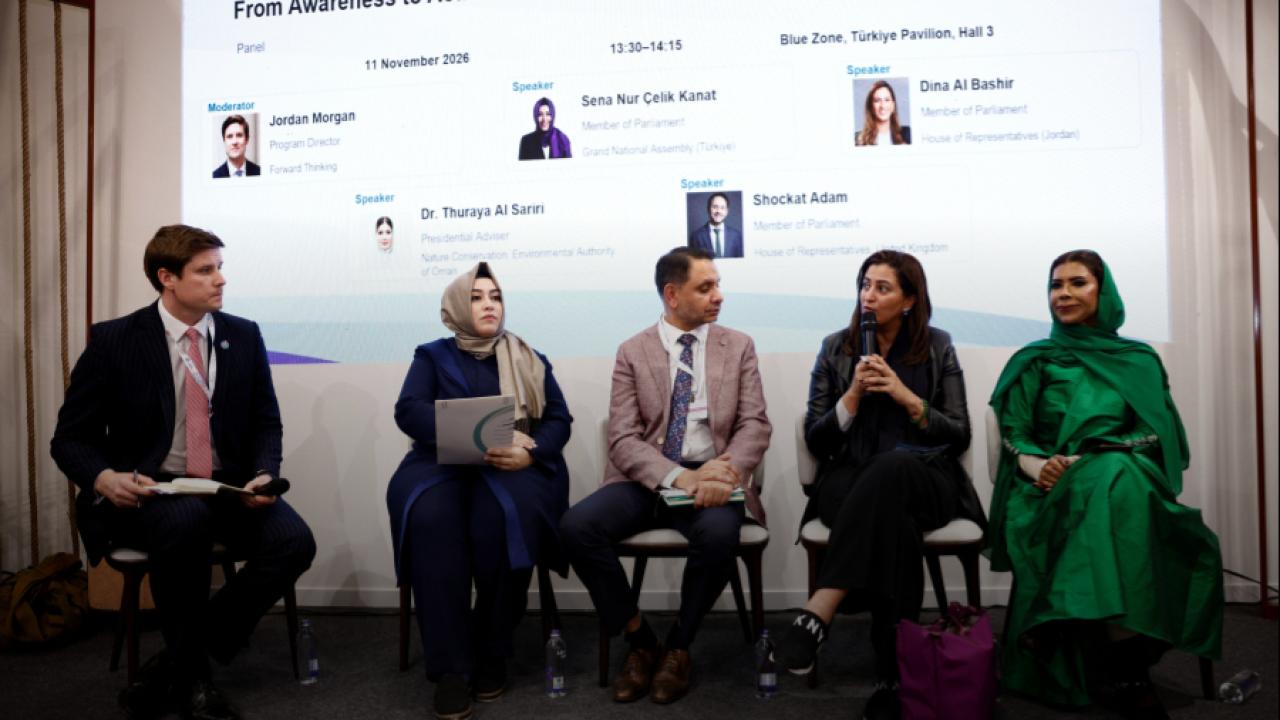
The COP31 summit, held in Antalya on November 11, 2026, marked a critical turning point in the global search for solutions to the climate crisis. The panel titled “From Awareness to Action: Empowering Women and Youth in Climate Leadership,” organized by the Directorate of Communications at the Turkey Pavilion in the Blue Zone, examined the leadership capacities of women and youth—the groups most vulnerable to the environmental, economic, and social impacts of climate change. The panel served as a platform that went beyond theoretical discussions, emphasizing the necessity of transforming commitments into legal regulations and concrete actions.
Background of the Development
Climate change has evolved into a security issue that directly threatens food and water security, particularly in regions such as West Asia, North Africa, and Europe. In this context, COP31 aims to open a new chapter in global climate diplomacy with Turkey’s approach of “From Dialogue to Consensus, from Consensus to Action.” Discussions on the feasibility of decisions made in previous climate summits have necessitated a focus on local and inclusive action plans at this year’s summit.
Turkey aims to increase local ownership in the fight against climate change through projects such as the Zero Waste Movement, the Green Homeland Program, and the Climate Ambassadors Program. However, for these efforts to achieve global success, the integration of women and youth into decision-making processes is accepted not only as a right but as a strategic necessity. The legal quotas introduced by countries like Jordan and Oman for women and youth representation in their internal reform processes serve as important examples for institutionalizing this transformation.
Historically, climate policies have been limited to high-level diplomatic negotiations, while real-world needs and gender balance have often been overlooked. COP31 has made the development of mechanisms to facilitate access to climate finance for women’s cooperatives and youth initiatives a key agenda item to address this historical deficiency.
Expert and Industry Insights
Experts speaking at the panel underscored that the fight against climate change is not just a technical transformation but also a matter of social justice. Industry representatives and parliamentarians analyzed the impacts of green transformation on employment, emphasizing that women should not be excluded from the labor market, particularly in sectors like textiles and agriculture.
- Monitoring climate commitments annually through independent audit mechanisms.
- Opening direct climate finance channels for women’s cooperatives and youth initiatives.
- Making gender and youth quotas a legal requirement in political parties and electoral legislation.
- Implementing gender-sensitive retraining programs against job losses caused by automation in the transition to a green economy.
- Positioning women volunteers as decision-makers in disaster preparedness and risk management processes.
Experts argue that, as seen in the Bangladesh example, green transformation can sometimes lead to job losses for female workers; therefore, “just transition” policies must place gender equality at their center. Furthermore, as demonstrated by reforms in Jordan, supporting legal regulations with cultural change is essential for long-term success.
Economic and Social Implications
Climate change emerges as a factor triggering economic instability. The participation of women and youth in economic life plays a key role in mitigating the economic burden created by the climate crisis. Making women’s labor visible in agricultural production and improving property rights is of critical importance for ensuring food security. The Oman Vision 2040 and 2050 Net Zero Emission targets offer a concrete roadmap for how an inclusive growth model can be implemented.
Socially, the migration and resource scarcity caused by climate change place a disproportionate burden on women and youth. Including these segments in decision-making mechanisms increases the overall resilience of society. The reflection of decisions taken at the local level into national and global policies ensures that climate action spreads to the grassroots.
From the perspective of market dynamics, green energy and sustainable production processes have the potential to create new job areas. However, whether women and youth benefit equally from these opportunities depends on removing barriers to education and finance. Otherwise, green transformation could become a factor that deepens existing inequalities.
Future Projections and Outlook
In the coming period, the integration of the Antalya Action Protocol into national policies will be the most important indicator of COP31's success. It is expected that parliaments will be structured in a way that allows women’s and youth organizations to make their voices heard more strongly in the fight against climate change. This is not just a matter of representation, but a process that increases the legitimacy of climate policies.
Risks include economic contractions or regional conflicts pushing climate goals to the background. However, the legal initiatives of youth and the grassroots organization of women act as an insurance policy against these risks. Directing climate finance toward local and inclusive projects will be one of the most discussed topics in the coming years.
In conclusion, the expectation for 2026 and beyond is that the fight against climate change should be treated not just as an environmental policy, but as a human rights and development strategy. A green future shaped by the leadership of women and youth is the strongest source of hope for a fairer, more resilient, and more sustainable world.
💬 Yorumlar 0
Henüz yorum yapılmamış. İlk yorumu siz yazın!





