Justice Minister Gürlek Announces Major Breakthrough in Fund Investigations: 32.5 Billion Lira Voluntarily Returned
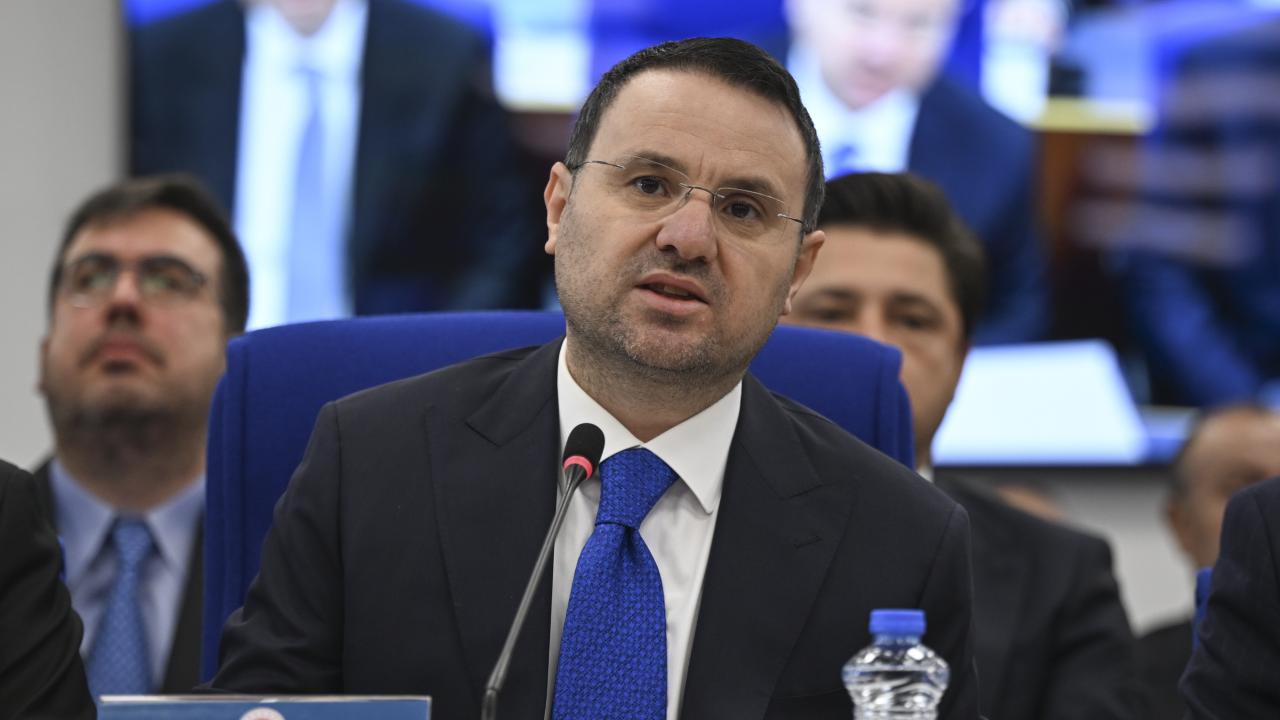
During the 2027 budget negotiations at the Turkish Grand National Assembly (TBMM) Planning and Budget Committee, Minister of Justice Akın Gürlek provided significant data regarding the ongoing fund investigations that have captured public attention. Addressing questions from a member of parliament, Minister Gürlek emphasized that the investigation process is being conducted with full transparency, refuting claims of negligence and highlighting the meticulous scrutiny applied across all levels of the state. "There are 120 individuals in custody. The number of real persons whose assets have been frozen is 386, and the number of legal entities is 116," Gürlek stated, illustrating the scale of the operation.
Minister Gürlek's remarks served as proof that the investigation is not limited to the private sector but extends to the upper echelons of the public bureaucracy. The fact that executives from critical financial institutions—such as the Banking Regulation and Supervision Agency (BDDK), the Capital Markets Board (SPK), Borsa Istanbul, and Takasbank—are either in custody or under judicial control underscores the state's determination to maintain financial discipline. This is widely regarded as a concrete step toward restoring confidence in financial markets.
Background of the Development
The fund investigations have been recorded as one of the largest allegations of malpractice in Turkey's financial markets in recent years. The process began under the coordination of the Istanbul Chief Public Prosecutor's Office, utilizing cross-referenced data from the Central Registry Agency (MKK), Borsa Istanbul, and the Capital Markets Board (SPK). As the operations expanded to identify individuals and institutions that gained excessive profits, they aimed to purge elements threatening the security of the financial system.
Historically, these investigations are part of a broader effort to strengthen oversight mechanisms in Turkey's capital markets. Past market manipulations had highlighted the necessity of stricter enforcement of regulations. As Minister Gürlek noted, the 'voluntary restitution account' established under the Savings Deposit Insurance Fund (TMSF) represents the state's solution-oriented approach, focusing not only on punishment but also on rectifying grievances.
The depth of the investigation reached a new dimension with the inclusion of public officials. The involvement of two BDDK Vice Presidents, the General Manager of Turkey Insurance, the General Manager of Borsa Istanbul, and senior SPK officials demonstrates that internal audits and judicial processes are functioning without exception. This is viewed as a critical step in protecting Turkey's institutional reputation in financial markets.
Expert and Industry Insights
Economists and legal experts consider the 32.5 billion lira return announced by Minister Gürlek to be highly significant for maintaining market discipline. According to experts, this amount is not merely a figure but a message to market actors that 'illicit gains will not go unpunished.' Industry representatives argue that such operations will increase investor confidence in the long term.
- The goal is to restore the principle of transparency in financial markets.
- The inclusion of public officials in the investigation reinforces trust in the independence of the judiciary.
- The voluntary restitution mechanism serves as an instrument to accelerate judicial processes.
- The coordination of institutional audits (SPK, BDDK, MKK) increases the success of the investigation.
- Such operations are critical for protecting investor confidence in the market.
Legal experts state that the 'voluntary restitution' process functions similarly to 'effective remorse' provisions in the Turkish Penal Code, allowing the state to compensate for public losses as quickly as possible. Industry representatives emphasize that this process should be supported by strengthening financial literacy and audit mechanisms.
Economic and Social Implications
The economic implications of the investigation are evident in the suppression of speculative movements in the markets. Recovering 32.5 billion lira into the system contributes to alleviating the burden on public finances and addressing grievances. Socially, this development is welcomed by the public as a fulfillment of the expectation for 'the manifestation of justice.'
Regarding market balances, while such operations may create short-term uncertainty, they strengthen the institutional structure in the medium and long term. Investors know they can trade more securely in a market where audits are strict. This is essential for the sustainability of domestic and foreign interest in capital markets.
Stakeholder reactions are generally positive. These steps, taken particularly to protect the rights of small investors, increase the reliability of the financial system. The Ministry's determined stance is read as a strong signal that an era of 'rule-breaking' in capital markets has come to an end.
Future Projections and Outlook
The question of whether the investigations will expand and how the judicial process will conclude remains a subject of intense interest. Minister Gürlek's statements indicate that the process is being followed meticulously and that operations may deepen in light of new evidence. The greatest expectation is the punishment of those found guilty and the distribution of returned assets to their rightful owners upon the conclusion of the judicial process.
In the official process, the indictments to be prepared by the Istanbul Chief Public Prosecutor's Office will determine the course of the case. The public will continue to closely follow the trial processes, especially those involving public officials. This case will serve as a litmus test for how Turkey applies its rule-of-law principle in the financial sphere.
In conclusion, the 32.5 billion lira return is a testament to Turkey's determination to combat economic crimes. Future projections include the more effective use of financial oversight technologies (RegTech) and the digitalization of market surveillance. These steps will be fundamental elements that enhance Turkey's competitive power among global financial centers.
💬 Yorumlar 0
Henüz yorum yapılmamış. İlk yorumu siz yazın!





