Logistics Revolution in Gaziantep: Minister Uraloğlu Announces Major Infrastructure Projects and High-Speed Rail Expansion
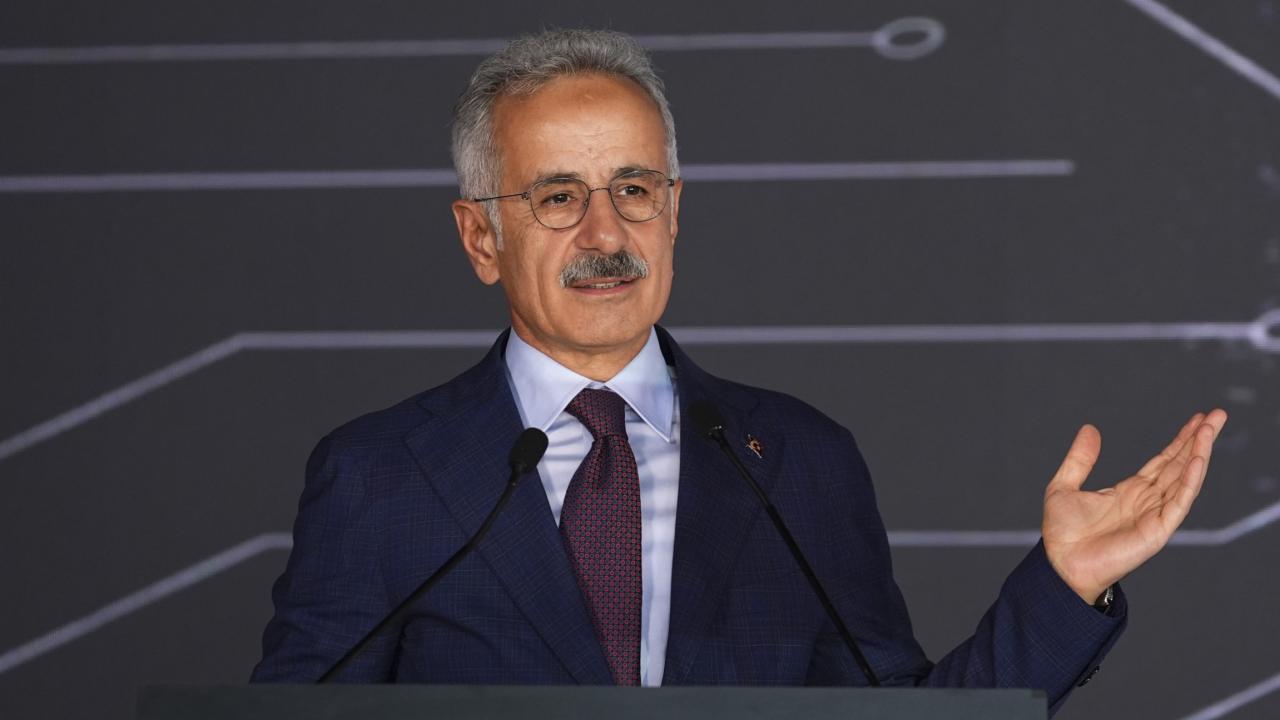
Gaziantep, one of Turkey's leading industrial and commercial powerhouses, is undergoing a historic transformation in its transportation infrastructure. During the opening ceremony of the Nizip-Karkamış Road and the Nizip Courthouse Junction, Minister of Transport and Infrastructure Abdulkadir Uraloğlu announced strategic investments that modernize the city's transport network. Minister Uraloğlu stated that the length of divided roads in Gaziantep has been increased from 116 kilometers to 476 kilometers, while the length of roads with bituminous hot mix coating has risen from 179 kilometers to 462 kilometers. These developments underscore the city's determination to become a regional logistics hub. The two major projects inaugurated today not only alleviate local traffic but also bring a new dimension to commercial and strategic mobility along Turkey's southern border.
The first prominent project, the Nizip Courthouse Junction, spans a total of 4.2 kilometers including its connection roads. Built to the standard of a divided road with bituminous hot mix coating, this grade-separated junction modernizes access to the Nizip Courthouse and surrounding public service areas. The second major investment is the 30.5-kilometer Nizip-Karkamış Road. Stretching from the Karkamış junction of the Nizip D-400 road to the Karkamış-Jarabulus Border Gate on the Turkey-Syria border, this route significantly strengthens the security and transportation infrastructure in the region. Minister Uraloğlu emphasized that these projects are concrete development moves that convert Gaziantep's production power and Nizip's agricultural fertility into national growth.
Background of the Development
The massive expansion of Gaziantep's transportation infrastructure is the result of systematic planning implemented over the last two decades. The fact that the divided road network, which was only 116 kilometers in the past, has reached 476 kilometers today demonstrates how much the link between the city's industrial zones, ports, and border gates has been strengthened. The increase in bituminous hot mix (BSK) coated roads from 179 kilometers to 462 kilometers is a technical revolution that enhances not only road length but also driving comfort and road longevity. This development process has run parallel to the upgrading of standards for roads connecting Gaziantep to neighboring provinces.
The Nizip Courthouse Junction project was designed to relieve transportation axes that had reached a breaking point due to the city's rapidly growing population and increasing number of vehicles. Improving the junction's geometry and restructuring the traffic flow has facilitated access to public services in the region while maximizing traffic safety. Delays and accident risks previously experienced during peak hours have been minimized through this engineering solution. This investment represents the transportation pillar of urban transformation and modern urban planning.
The Nizip-Karkamış Road holds significant geopolitical importance. Extending to the Karkamış-Jarabulus Border Gate on the Turkey-Syria border, this line directly contributes to the normalization of life in regions where security has been re-established across the border. Conducting border trade safely and swiftly is vital for the revitalization of the regional economy. Upgrading this road to divided road standards is not just a transportation project but also a symbol of stability and economic integration in the region.
Expert and Industry Insights
Transportation experts and logistics industry representatives state that these investments in Gaziantep align directly with Turkey's export targets. In particular, the modernization of the Nizip-Karkamış line is seen as a factor that reduces costs and increases speed in border trade. Industry representatives emphasize that higher road standards reduce vehicle maintenance costs and prevent disruptions in the logistics chain. In light of technical evaluations, the advantages provided by the projects can be listed as follows:
- Operational Efficiency: With the improvement of junction geometry, vehicle maneuverability has increased, and visibility distances have been optimized to minimize accident risks.
- Time Management: The Nizip Courthouse Junction and Nizip-Karkamış Road projects provide millions of hours of time savings annually.
- Fuel and Maintenance Savings: By reducing stop-and-go traffic and improving road surface quality, an annual fuel saving of over 60 million lira is targeted.
- Border Security and Logistics: The high-standard road on the Karkamış-Jarabulus line ensures that military and humanitarian logistics mobility is carried out more safely and quickly.
- Environmental Sustainability: The annual reduction of 2,312 tons in carbon emissions is in full compliance with green logistics goals.
Experts point out that such infrastructure projects also increase real estate values and investment appetite in the region. The increased speed in delivering Nizip's agricultural products to the market reduces product loss for farmers while facilitating industrialists' access to raw materials. This situation has a multiplier effect on Gaziantep's overall economic performance.
Economic and Social Implications
The economic balance sheet of the inaugurated projects is quite striking. According to data shared by Minister Uraloğlu, the Nizip Courthouse Junction project will provide an annual total saving of 113.5 million lira, including 100.5 million lira from time and 13 million lira from fuel. The Nizip-Karkamış Road will contribute 201 million lira annually to the economy by saving 154 million lira in time and 47 million lira in fuel. The total annual saving of 314.5 million lira is characterized as a great success in terms of the efficient use of public resources.
From a social perspective, the projects' enhancement of pedestrian safety and regulation of urban traffic directly improves the quality of life for the people of Nizip. As emphasized by AK Party Group Deputy Chairman Abdulhamit Gül during the ceremony, these investments reinforce the climate of brotherhood and peace in the region. Providing safe transportation opportunities in the fertile lands of the Euphrates allows the people of the region to look toward the future with more confidence. This modern infrastructure, offered for the common use of all citizens—Turks, Kurds, Alevis, and Sunnis alike—also serves social integration.
Furthermore, the annual reduction of 2,312 tons of carbon emissions is a critical step in protecting the ecological balance of the region. In Gaziantep, where industrialization is intense, reducing transportation-related pollution is part of a sustainable environmental vision. This environmental impact secures not only the present but also the right of future generations to live in a cleaner environment.
Future Projections and Outlook
One of the most striking parts of Minister Uraloğlu's speech was the future railway vision for Gaziantep. Announcing that the high-speed train project will not be limited to Gaziantep, Uraloğlu gave the good news that the line will be extended through Şanlıurfa to Habur. This project is part of a massive rail-sea corridor that will connect Turkey to the Persian Gulf via Iraq. This vision will make Gaziantep one of the most critical stops on the modern Silk Road (Development Road Project) stretching from China to Europe.
In the coming period, the Ministry of Transport and Infrastructure's investments in Gaziantep will continue without slowing down. Within the framework of the regional development strategy, it is aimed to increase the capacities of existing roads and integrate smart transportation systems. The high-speed train line extending to Habur will exponentially increase the export potential in the region and carry Turkey's trade volume with the Middle East to a new level.
In conclusion, the road and junction projects inaugurated in Gaziantep are concrete local reflections of the "Turkey Century" vision. These projects, implemented in line with the growth strategy focused on investment, employment, production, and export, serve the goal of making Gaziantep one of the most modern and accessible cities not only in Turkey but in the entire region. Future projections indicate that the city will solidify its place in global logistics networks and that economic prosperity will spread to the grassroots.
💬 Yorumlar 0
Henüz yorum yapılmamış. İlk yorumu siz yazın!