MEB's 'Turkey Climate School' Opens Doors at COP31: Raising the Climate Leaders of the Future
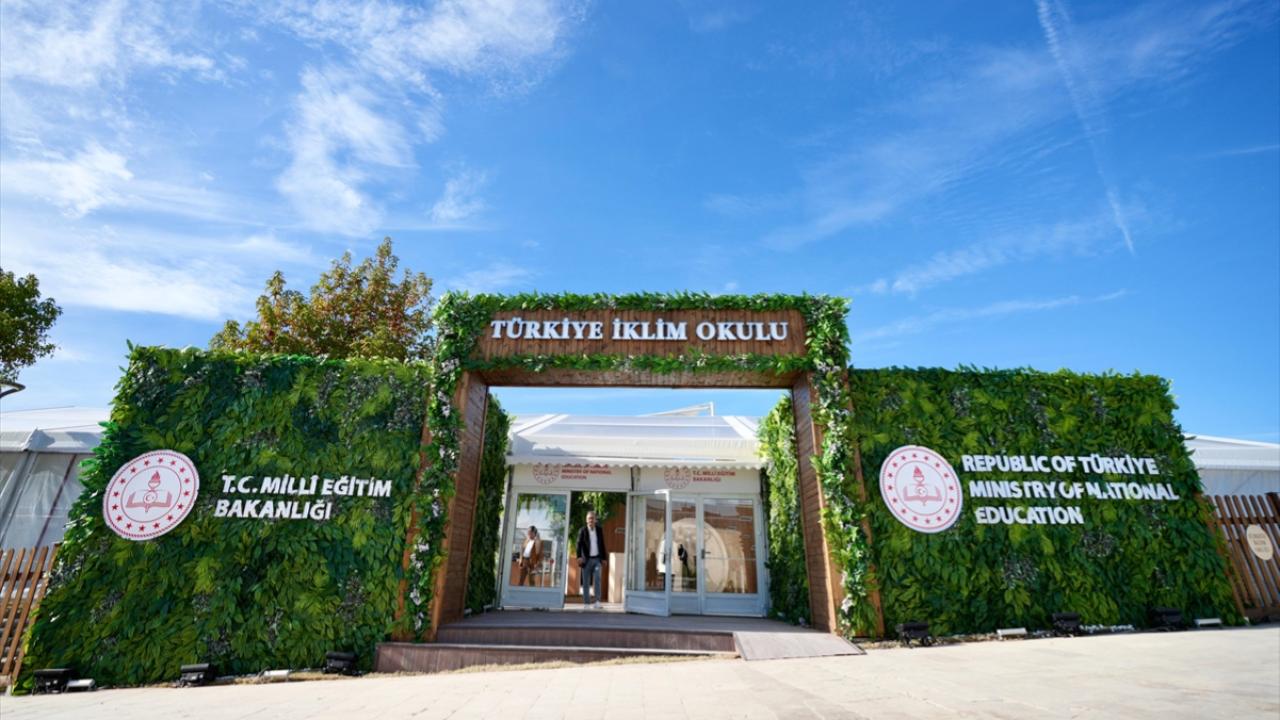
The Ministry of National Education (MEB) has launched the 'Turkey Climate School' project, which centers on the transformative power of education in the fight against climate change, as part of the 31st Conference of the Parties (COP31) to the United Nations Framework Convention on Climate Change, hosted in Antalya. Established in the Green Zone of this major organization, for which TRT is the host broadcaster, the school brings together students, teachers, academics, and NGO representatives to build a collective consciousness against the climate crisis.
The project is designed as a 'living school' rather than just a space for theoretical knowledge. In this area, where visitors can directly experience climate change, environmental awareness, and sustainable living practices, technology and nature are presented in an integrated manner. Having attracted great interest since its first day, the school has become a center that encourages the active participation of younger generations in climate action.
Background of the Development
COP31, as one of the most important stops in global climate diplomacy, is critical for Turkey to demonstrate its determination in the fight against climate change to the world. The presence of the MEB with the 'Turkey Climate School' in this process aligns directly with the ministry's 'Zero Waste' vision and sustainable education policies. Environmental education programs conducted in the past have been moved to an international platform with this project.
The design of the school is based on the fact that climate change is not just an environmental issue but also a matter of education and lifestyle. Historically, strengthening the educational pillar of Turkey's climate policies is one of the most strategic steps taken in line with the 2053 Net Zero Emission target. This project is part of a long-term strategy aimed at increasing the education system's capacity to adapt to climate change.
From an institutional perspective, this initiative by the MEB offers a multi-stakeholder model carried out in cooperation with civil society and the private sector. The climate school serves not only as an event space but also as a laboratory where eco-friendly technologies and sustainable living skills are tested.
Expert and Industry Insights
Education experts and climate scientists state that the 'Turkey Climate School' is a turning point in increasing climate literacy. Industry representatives emphasize that such applied education centers are essential for transforming theoretical knowledge into behavioral change.
- Early education in the fight against climate change increases social resilience.
- Practical workshops improve children's problem-solving skills.
- Zero Waste libraries instill an awareness of the circular economy.
- The integration of technology and nature inspires sustainable city models.
- Academic and civil society cooperation ensures inclusivity in climate action.
Experts state that workshops such as 'Give New Life to Waste' are very valuable in showing that waste management is not just a recycling process but a design and production process. In particular, the 'Designing My Climate-Friendly City' activity stands out as a simulation that reflects the vision of young people regarding urbanization policies.
Economic and Social Implications
The Turkey Climate School creates not only environmental but also economic awareness. Encouraging recycling and local production increases awareness of resource efficiency, leading to economic gains in the long run. 'Producing with Nature' activities emphasize the importance of local production, concretizing individual responsibilities for reducing the carbon footprint.
From a social perspective, the interaction environment created by the school unites people from different walks of life around a common goal. Children designing their own city models provide important data to local governments and policymakers about the kind of living space future generations imagine. This sets a strong example for integrating social participation into climate policies.
Furthermore, areas such as the Zero Waste Library contribute to the construction of a social culture regarding the protection and reuse of resources. Such projects lead the way in the spread of sustainable consumption habits by ensuring that environmental awareness becomes a lifestyle.
Future Projections and Outlook
It is expected that the Turkey Climate School will be transformed into a permanent model after COP31 and expanded to schools across Turkey. The MEB's integration of this project into the sustainable education system in line with the curriculum will strengthen Turkey's hand in the fight against climate change.
In the coming period, it is aimed to reach wider audiences by moving the workshop models developed at the school to digital platforms. In this way, not only visitors in Antalya but also students across Turkey will have the opportunity to learn climate-friendly living skills.
In the balance of risks and opportunities, the sustainability of the project is of great importance. Fighting climate change is a dynamic process, and supporting this school with constantly updated content will make the project's success permanent. With this initiative, Turkey has taken on a global leadership role in climate education.
💬 Yorumlar 0
Henüz yorum yapılmamış. İlk yorumu siz yazın!





