Minister Kurum at COP31: Our Duty is to Limit Temperature Rise
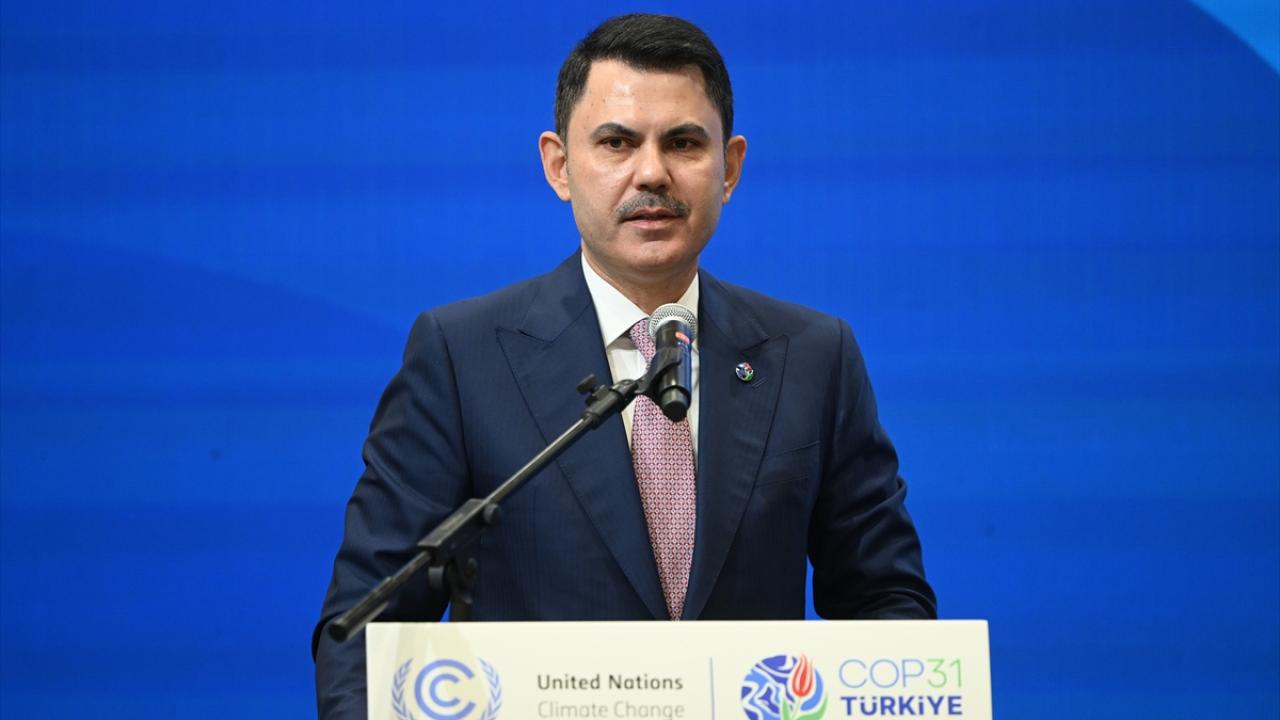
Environment, Urbanization and Climate Change Minister and COP31 President Murat Kurum held a critical press conference at the COP31 venue in Antalya, alongside UNFCCC Executive Secretary Simon Stiell and Australia's Minister for Climate Change and Energy, Chris Bowen. Speaking at the Mevlana Press Conference Hall, Kurum highlighted that the swift adoption of the COP31 agenda on the first day serves as a positive signal for the strengthening of a culture of consensus among parties. Minister Kurum emphasized that in a period when the global climate crisis is deepening, maintaining the 1.5-degree threshold is not merely a preference but a mandatory duty for the future of the planet.
Background of the Development
The targets set by the Paris Agreement form the fundamental roadmap for states worldwide in the fight against climate change. However, the impact of meteorological phenomena such as El Nino, which has pushed global temperatures to record levels, has raised concerns that existing measures may prove insufficient. In this context, COP31 is viewed not only as a negotiation platform but as a turning point where concrete action plans will be implemented.
Unlike the deadlocks experienced in previous summits, the rapid adoption of the agenda at the start of COP31 demonstrates that participating countries have grasped the urgency of the climate crisis. As Minister Kurum emphasized, a process shaped by the participation of all stakeholders, rather than "top-down" decisions, increases the feasibility of the decisions taken. This approach is being evaluated as a harbinger of a new era in climate diplomacy.
Historically, carbon emissions that have risen since the Industrial Revolution are causing devastating effects today, ranging from oceans to cities. As Minister Kurum stated, exceeding the 1.5-degree threshold could open the door to irreversible ecological damage. Therefore, the concept of "climate resilience," which is the focus of the summit, has become a matter of geopolitical security, not just environmental concern.
Expert and Industry Insights
Climate experts and industry representatives find Minister Kurum's emphasis on "electrification" to be highly strategic. The transition from fossil fuels to electric energy in transportation, industry, and buildings stands out as one of the most effective tools for reducing the carbon footprint. Experts state that this transformation requires not only technological but also economic restructuring.
- Accelerating the transition to electric vehicles in the transport sector will directly improve urban air quality.
- Energy efficiency in buildings and the integration of renewable energy will reduce housing costs in the long term.
- The use of green hydrogen and electricity in industry will increase global competitiveness.
- Protecting oceans and building climate-resilient urban infrastructure will minimize disaster risks.
- The second global stocktake will place countries' commitments on a realistic foundation.
Industry representatives draw attention to the financing needs of this transformation, stating that developed countries must fulfill their responsibilities regarding technology transfer and financial support. The consultations led by Minister Kurum provide a critical platform for making this financial flow more equitable and accessible.
Economic and Social Implications
The fight against climate change is not only an environmental necessity but also a massive opportunity for economic transformation. The transition to a green economy creates new job sectors while reducing energy dependency, which positively reflects on countries' foreign trade balances. The electrification process pointed out by Minister Kurum is one of the most strategic steps taken to ensure energy supply security.
At the social level, climate-resilient cities improve the quality of life for citizens while protecting society against extreme weather events. Placing loss and damage funds at the center of the climate agenda represents social justice in terms of protecting the most vulnerable segments affected by climate change. This is considered a concrete demonstration of international solidarity.
From the perspective of market dynamics, encouraging sustainable investments directs capital toward green projects. This shows that climate risks are now being priced as "financial risks" in financial markets. The determination emphasized by Minister Kurum serves as a reassuring message for investors.
Future Projections and Outlook
The ministerial meeting on the "Second Global Stocktake" in the coming days of COP31 will be the most critical phase of the summit. The results of this meeting will form the basis for countries to revise their 2030 and 2050 targets. Scheduling concrete steps to return below the 1.5-degree threshold is the fundamental criterion that will determine the success of the summit.
Expectations are particularly focused on developed countries increasing their emission reduction targets and raising climate finance for developing nations to the levels they have pledged. The COP31 Presidency, under the leadership of Minister Kurum, aims for a global consensus by assuming a neutral and inclusive role as a moderator during this process.
In conclusion, COP31 is one of the most important tests humanity faces against the climate crisis. The "action-oriented" approach expressed by Minister Kurum could enable the summit to evolve from a platform of rhetoric into a mechanism that produces concrete results. The responsibility of leaving a livable world for future generations increases the weight of the decisions to be taken at this summit more than ever before.
💬 Yorumlar 0
Henüz yorum yapılmamış. İlk yorumu siz yazın!





