Minister Kurum's Historic Call at COP31: Our Fates Are Intertwined in the Climate Crisis
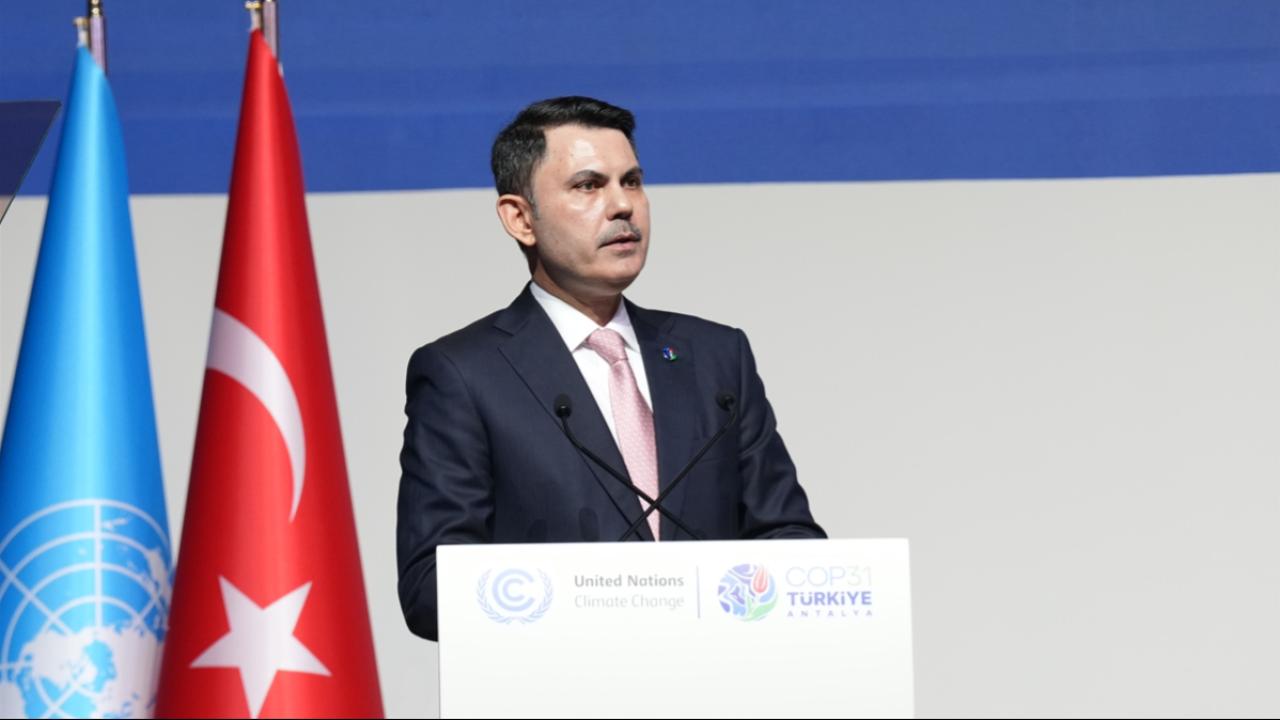
Environment, Urbanization and Climate Change Minister Murat Kurum delivered a historic speech at the COP31 Ministerial Dinner held at the NEST Congress and Exhibition Center in Antalya, emphasizing the vital importance of international cooperation in the fight against global climate change. At this critical summit, which brought together representatives from 196 countries, Kurum stated that the climate crisis is a threat that knows no borders, reminding the world that the fates of nations and societies are inextricably linked.
In his speech, Minister Kurum stressed that climate change is not only an environmental issue but also a matter of security, economy, and human dignity. By stating, 'No border can stop rising seas; no wall can prevent drought; no flag can change the direction of a storm,' Kurum highlighted the physical and geopolitical risks posed by global warming and reaffirmed Turkey's determined stance in this process.
Background of the Development
The United Nations Framework Convention on Climate Change (UNFCCC) processes have formed the foundation of global environmental policies since the 1992 Rio Earth Summit. COP31 is recognized as one of the most critical thresholds in this long-standing struggle. Implementing the decisions taken at previous COP summits, operationalizing financial mechanisms, and technology transfer remain the primary agenda items of the process.
Following its accession to the Paris Agreement, Turkey has taken an active role in climate diplomacy by setting its '2053 Net Zero Emission' target. This summit in Antalya demonstrates that Turkey is not just a host, but also a 'bridge country' in shaping global climate action plans. Historically, the balance between the responsibilities of industrialized nations and the development rights of developing countries continues to be the most difficult diplomatic test of the COP processes.
The principle of 'shared responsibility' emphasized by Kurum forms the basis of climate justice. The historical emission responsibilities of developed countries and the adaptation needs of developing nations against climate change are the main agenda items of COP31. In this process, Turkey is advocating for a just transition on a global scale while simultaneously striving to finance its own green transformation.
Expert and Industry Insights
Climate change experts and industry representatives state that Minister Kurum's emphasis on 'shared destiny' is a critical declaration of political will to remove obstacles to financial mechanisms and technology sharing. According to experts, the success of COP31 depends not only on emission reduction targets but also on how much of the climate finance will be structured as 'grants' versus 'loans'.
- Climate Finance: Creating accessible and low-cost funds for developing countries.
- Technology Transfer: Scaling up renewable energy and carbon capture technologies globally.
- Adaptation Strategies: Increasing local resilience against risks such as drought and rising sea levels.
- Green Transformation: Establishing incentive mechanisms to reduce the carbon footprint in the industrial sector.
- International Cooperation: Fair implementation of cross-border carbon regulations.
Industry representatives state that aligning Turkey's increase in renewable energy capacity with the European Union's Green Deal is essential to maintain the competitiveness of Turkish industry. The 'courage and determination' pointed out by Minister Kurum is evaluated as a signal that increases the private sector's confidence in green investments.
Economic and Social Implications
The fight against climate change is not only an environmental necessity but also a major opportunity for economic transformation. The concept of 'green economy' affects a wide range of areas, from employment to foreign trade. Investments to be made in line with Turkey's 2053 targets have the potential to reduce energy dependency while encouraging domestic technology production.
From a social perspective, climate change directly threatens agricultural production and food security. Minister Kurum's emphasis on 'responsibility to future generations' aims to create awareness across all segments of society. The participation of youth and civil society in climate actions stands out as one of the most important elements strengthening the social legitimacy of this transformation.
In terms of market equilibrium, the implementation of carbon pricing mechanisms forces companies to redesign their production processes. While this may appear as a cost increase in the short term, it paves the way for a more efficient and sustainable economic model in the long run.
Future Projections and Outlook
Following COP31, Turkey is expected to update its Nationally Determined Contributions (NDCs) and anchor these targets within a legal framework. The vision of 'turning promises into reality' pointed out by Minister Kurum indicates that legal regulations, such as a climate law, will gain momentum in the coming period.
In the international arena, Turkey will continue to advocate for the principle of 'fair burden sharing' in the fight against climate change. This functions not only as an environmental policy but also as a foreign policy tool that increases Turkey's global geopolitical influence. The decisions to be taken with the common will of 196 countries will determine the economic map of the next decade.
In conclusion, the messages delivered in Antalya clearly reveal that the climate crisis is not a matter of 'tomorrow' but a matter of 'today'. The determined stance of Turkey, under the leadership of President Erdoğan, proves that the country is acting with a sense of responsibility that is not only national but global. Future generations will remember these steps taken today as a will that saved the world.
💬 Yorumlar 0
Henüz yorum yapılmamış. İlk yorumu siz yazın!





