Minister Uraloğlu: Our Transport Infrastructure Has Become a Strategic Force Multiplier for Emergencies
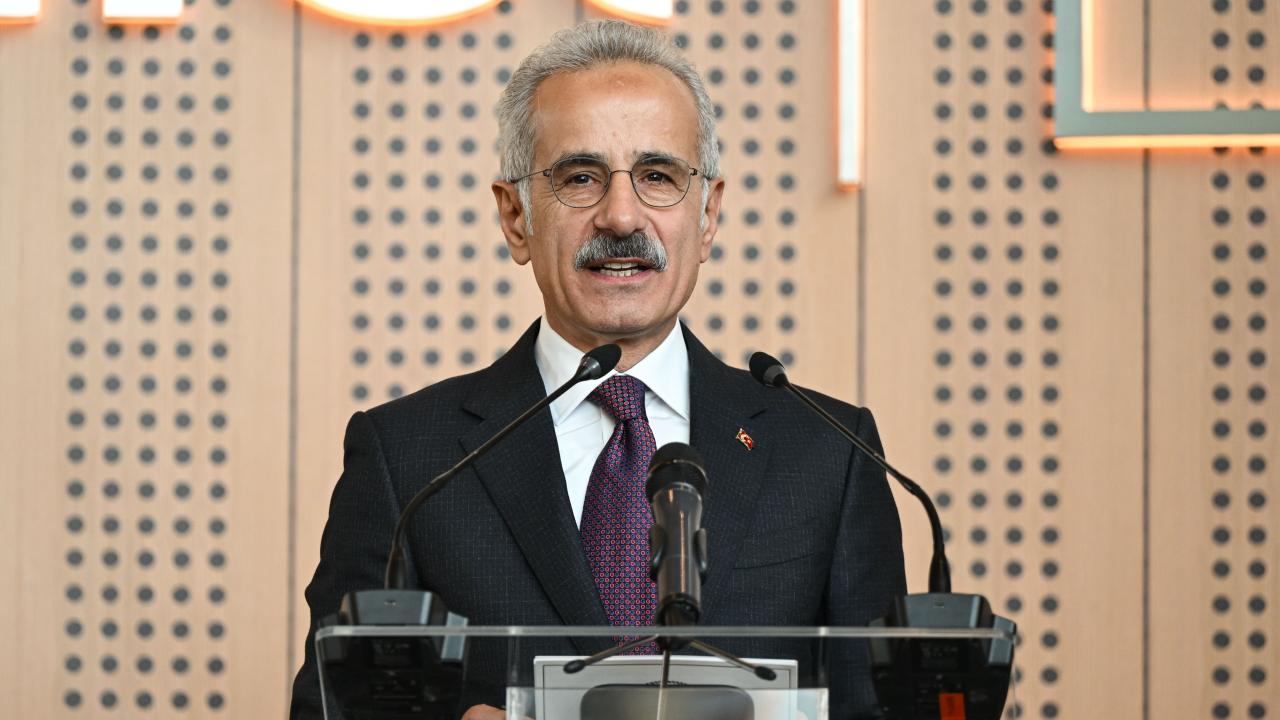
Minister of Transport and Infrastructure Abdulkadir Uraloğlu has shared a historic development regarding the integration of Turkey's defense industry with its transport infrastructure. The operation conducted on the Manisa-Balıkesir highway, where AKINCI and Bayraktar TB2 unmanned aerial vehicles (UAVs) developed by Baykar successfully landed and took off, has certified that Turkey's logistics network can be utilized not only for commercial purposes but also as military and strategic runways. This application has been recorded as a concrete indicator of how highways can transform into airbases during emergency scenarios.
Minister Uraloğlu stated that this operation is not just a technical success but also a part of Turkey's National Technology Initiative, noting: "The ability of these platforms, developed with Baykar's national technology accumulation, to use our highway as a runway has revealed the role our transport infrastructure can undertake in emergencies." This development sets a remarkable example on a global scale regarding how civil infrastructure can be integrated into national security strategies while enhancing Turkey's defense capacity.
Background of the Development
Over the past two decades, Turkey has connected the entire country with massive investments in transport infrastructure, including divided roads, tunnels, and bridges. However, these infrastructure projects are no longer just providing transportation convenience; they are evolving into multi-functional structures capable of meeting the needs of the defense industry. This test conducted on the Manisa-Balıkesir line has also showcased the durability and high standards of Turkey's highway network.
The AKINCI and TB2 platforms developed by Baykar are systems that have proven their worth with successes in various conflict zones around the world. The ability of these UAVs to land on and take off from a standard highway is a revolutionary capability in terms of logistical flexibility. In scenarios where traditional airbases might be targeted or rendered unusable, using highways as alternative runways is a critical strategic move to maintain the operational continuity of the air forces.
Historically, it is known that some highways in Europe were designed as emergency runways, particularly during the Second World War. This modern application by Turkey combines this historical concept with today's high-tech UAV systems, forming part of an effort to develop a defense doctrine suitable for 21st-century hybrid warfare strategies. This proves that transport infrastructure is not merely a construction project but a component of national security.
Expert and Industry Insights
Defense industry and logistics experts define this development as "strategic flexibility." Experts state that the ability of UAVs to land on highways will significantly increase Turkey's air superiority and operational speed. The common views of industry representatives are as follows:
- Reducing the runway dependency of UAVs increases operational range and flexibility.
- The fact that highway standards can support heavy and high-tech aircraft is an engineering achievement.
- Protecting logistics lines during emergencies is vital for the continuity of defense lines.
- Civil-military cooperation maximizes efficiency in national security strategies.
- Such tests accelerate the adaptation of domestic software and hardware to different geographical conditions.
From a technical perspective, for a UAV to land, the road's gradient, asphalt quality, and environmental obstacles (power lines, signs, etc.) must be minimized. This successful application on the Manisa-Balıkesir line has also proven that Turkey's road construction standards are compatible with international military standards.
Economic and Social Implications
The economic impact of this development is directly related to the increase in the export potential of the defense industry. The fact that UAVs produced by companies like Baykar are tested and succeed under such challenging conditions reinforces confidence in Turkey's defense products in the global market. This contributes to increasing defense industry export revenues and reducing the current account deficit.
Socially, public confidence in national technology is increasing. Seeing domestic UAVs on their own highways, the public takes pride in the fact that the localization rate in the defense industry has reached 80%. While this creates a positive impact on social morale and motivation, it also encourages the younger generation's interest in engineering and technology.
Furthermore, such applications set an example for the efficient use of public resources. The use of a road built solely for transportation as an airbase when necessary is a result of the "multi-purpose infrastructure" vision and provides strategic capacity enhancement without imposing additional burdens on public finance in the long run.
Future Projections and Outlook
In the coming period, it is expected that similar tests will be conducted in other regions of Turkey and that highway sections of strategic importance will be designated as "emergency runways." It is anticipated that coordination between the Ministry of Transport and Infrastructure and the Ministry of National Defense will continue to increase.
Regarding risk management, the next phase involves developing protocols on how such operations can be carried out without disrupting civil traffic. With the further development of UAV technologies, the goal is for autonomous landing systems to work seamlessly even on more complex road structures.
In conclusion, Turkey's transport infrastructure is no longer just a network for moving people and goods; it has become a part of the country's defense shield. As Minister Uraloğlu emphasized, this infrastructure will continue to be developed to meet all kinds of needs.
💬 Yorumlar 0
Henüz yorum yapılmamış. İlk yorumu siz yazın!