Minister Yumaklı: Food Safety is Our Red Line
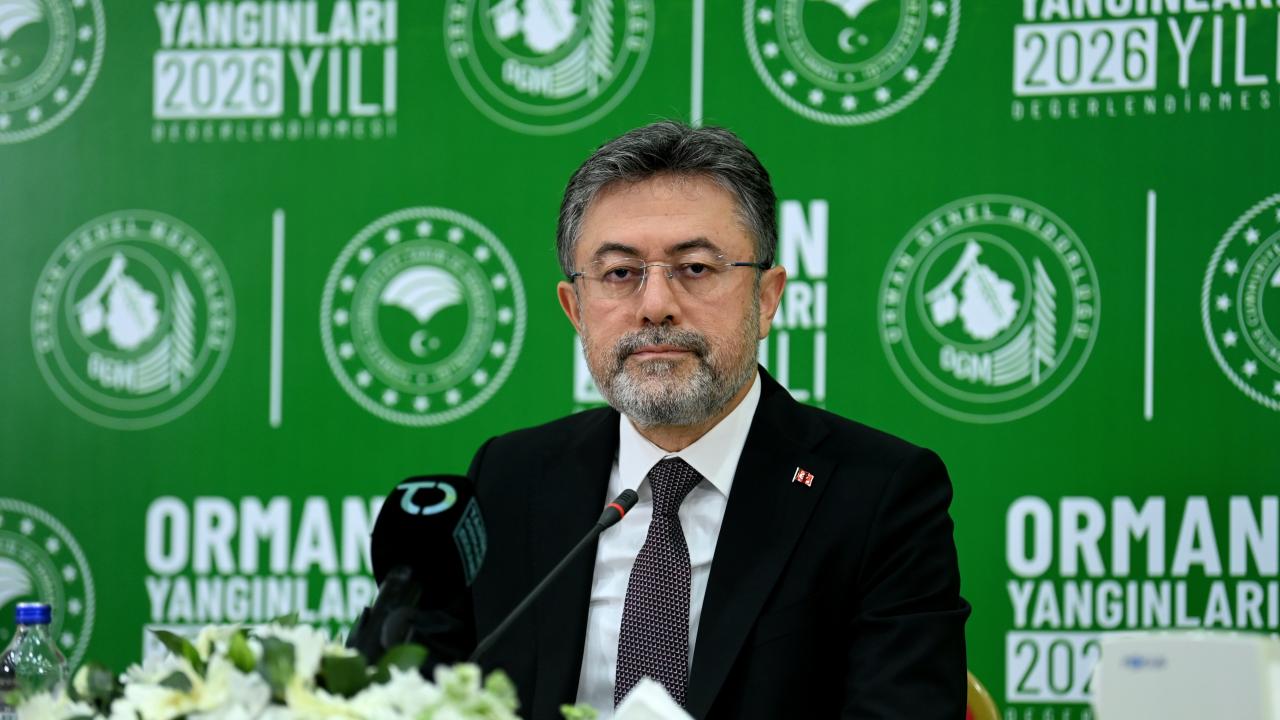
Minister of Agriculture and Forestry İbrahim Yumaklı met with members of the press in Istanbul to make critical statements regarding Turkey's food safety and forest management policies. Minister Yumaklı emphasized that they are following a "red line" policy against firms that engage in imitation and adulteration in the food sector, stressing that they will act with zero tolerance against elements that threaten public health. On the other hand, highlighting the technological transformation in the fight against forest fires, Yumaklı stated that unmanned aerial vehicle projects developed in cooperation with the defense industry, along with AI-supported Decision Support Systems, will elevate Turkey's firefighting capacity to a global level.
Minister Yumaklı stated that food safety is a "red line" for the ministry, emphasizing their uncompromising stance against firms producing fake and fraudulent food. Expressing that instant disclosures following penal sanctions and product recall decisions will continue with determination, Yumaklı emphasized that these steps taken to ensure transparency in the food chain are vital for protecting consumer health. Regarding forest fires, he stated that the technological infrastructure has been modernized with lessons learned from the major disasters in 2021, and that the AI-based Decision Support System allows for the identification of high-risk areas a week in advance, optimizing resources.
Background of the Development
Turkey has been struggling with extreme weather events caused by climate change and pressures on food supply security in recent years. Minister Yumaklı's statements clarify the state's strategic approach to these two main issues. Regarding food safety, the ministry aims to increase the deterrent effect of penal sanctions while trying to restore public confidence with firms exposed recently. This process is not just an inspection mechanism, but also an institutional step taken for the transparency of the food chain.
On the forest fire front, Turkey has modernized its technological infrastructure with lessons learned from the major fire disasters in 2021. The ministry adopts an "ecosystem-based" approach in post-fire afforestation activities. The decision not to interfere with the biological cycle of Red Pine forests, in particular, is an example of scientific data being reflected in field applications. Learning from the mistakes of monoculture forestry experienced by countries like Germany in the past, Turkey prioritizes the protection of local species.
Creating carbon sink areas in line with 2053 net-zero emission targets is another strategic priority of the ministry. Planning forest areas with high carbon sequestration capacity is seen not only as an afforestation project but also as an economic and environmental necessity in the fight against climate change. By involving forest villagers in the process, the ministry aims to establish a critical defense line for rural development and social resilience.
Expert and Industry Insights
Industry representatives and experts welcome the technological transformation and determination in inspections announced by Minister Yumaklı. In particular, UAV projects capable of directly intervening in forest fires with the defense industry have the potential to be a first in the world. The prominent evaluations of the experts are as follows:
- It is stated that instant disclosures in food inspections increase consumer awareness and ensure market discipline.
- AI-based Decision Support Systems optimize resource use by predicting fire risks in advance.
- Involving forest villagers in the process strengthens local intervention capacity in the fight against fires.
- Filing recourse lawsuits against those who intentionally start fires is a legal revolution in terms of deterrence.
- Creating carbon sink areas with scientific methods supports Turkey's international climate commitments.
From a technical perspective, equipping unmanned aerial vehicles with water-dropping capacity will provide the opportunity to intervene in fires in difficult geographies without risking human life. This will not only be an operational success but will also contribute to Turkey's defense industry export potential. Experts state that the development of these technologies with domestic and national resources reinforces Turkey's independence in disaster management.
Economic and Social Implications
The determination in food safety both establishes trust in the domestic market and helps maintain export standards. While sanctions against firms producing fake products protect the competitive power of honest producers, the protection of the consumer directly affects social welfare. In the fight against forest fires, the fact that fires are not just an environmental disaster but also an economic loss combines with the importance of carbon sink areas.
On a social level, water tankers and training provided to forest villages are of critical importance for rural development and social resilience. The ministry's message, "If you want us to drink your tea and coffee, let's be together," is a powerful call for a social contract that reminds us that the fight against fires is the responsibility of the entire society, not just the state. This approach increases the local population's sense of ownership in protecting forest assets.
Future Projections and Outlook
In the coming period, Turkey is expected to implement "unmanned intervention" technology against forest fires. If this R&D process, carried out with the defense industry, is successful, it could enable Turkey to become an exporter in firefighting technology. In addition, the expansion of carbon sink areas in line with 2053 targets will continue to be at the center of Turkey's green transformation agenda.
In legal processes, following up on recourse lawsuits against intentional acts that cause forest fires starts a new era in the fight against forest crimes. This strategy, which the ministry has built on a tripod of technology, science, and law, concretizes Turkey's determination to protect its natural resources. Increasing coordination between relevant institutions promises a more resilient ecosystem management in the coming period.
💬 Yorumlar 0
Henüz yorum yapılmamış. İlk yorumu siz yazın!





