President Erdoğan Continues Intensive Diplomacy at COP31 Summit
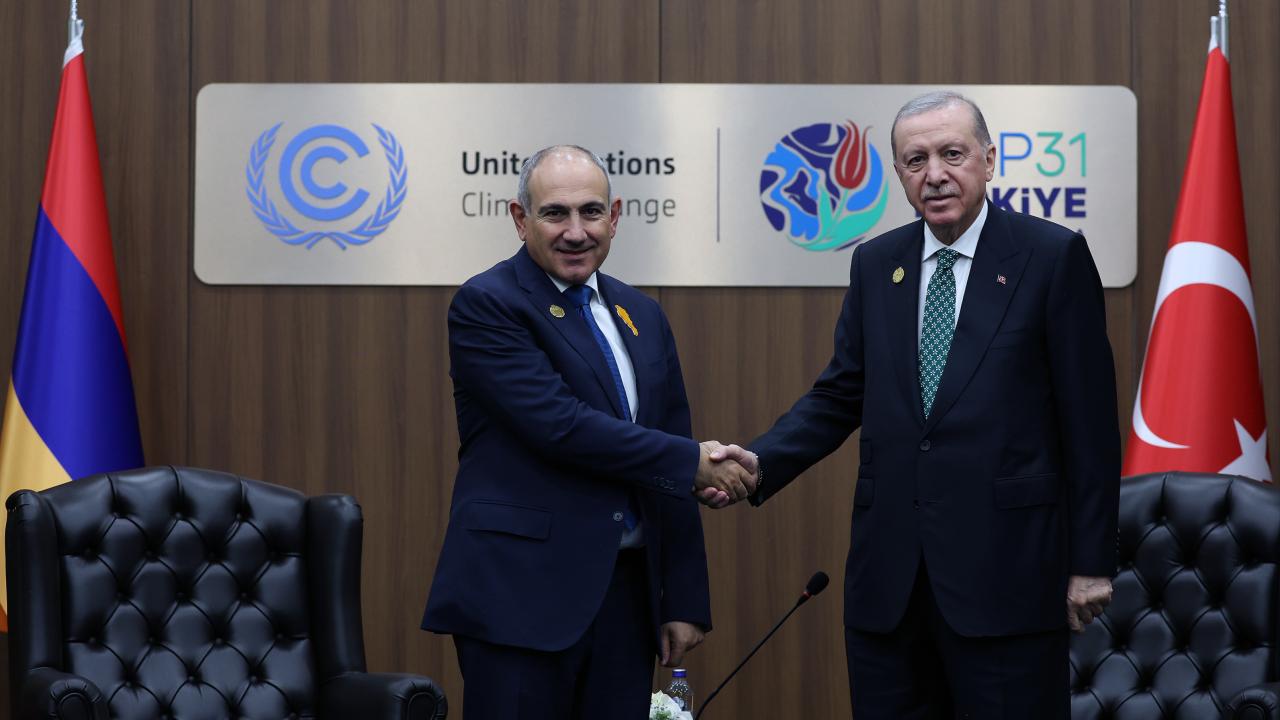
Antalya is currently hosting the 31st Conference of the Parties (COP31) to the United Nations Framework Convention on Climate Change (UNFCCC), where critical decisions regarding the global climate crisis are being deliberated. President Recep Tayyip Erdoğan is leveraging this summit to conduct an intensive series of diplomatic engagements, asserting Turkey's diplomatic influence on both climate change mitigation and regional stability. After receiving numerous world leaders yesterday, President Erdoğan continued his high-level meetings today with Chinese Vice President Han Zheng, Armenian Prime Minister Nikol Pashinyan, and UN Secretary-General Antonio Guterres.
The focus of these discussions spanned beyond climate change to include strategic economic partnerships between Turkey and China, as well as the integration of the Middle Corridor and the Belt and Road Initiative, which directly impact global trade networks. President Erdoğan expressed his satisfaction with Turkey assuming the COP31 presidency, emphasizing his hope that this summit in Antalya would serve as a new starting point for resolving climate-related challenges.
Background of the Development
COP summits serve as the highest decision-making body overseeing the implementation of the UNFCCC, which was adopted in Rio in 1992. Turkey has long played an active role in the fight against climate change, implementing a profound transformation process across industrial, energy, and transportation sectors in line with its 2053 net-zero emission target. COP31 in Antalya stands as a platform that reinforces Turkey's leadership role in this global process.
Historically, Turkey serves as a geopolitical hub due to its position as a bridge between Asia and Europe. This summit supports Turkey's vision of becoming not just a transit country, but also a hub for the green energy transition. The harmonization of the 'Middle Corridor' and the 'Belt and Road' initiatives with China is not merely a logistical goal but a strategic economic move that will significantly increase trade volume between the two nations.
The contacts with Armenia are viewed as part of the normalization processes in the region. President Erdoğan's meeting with Pashinyan serves as a significant signal regarding the establishment of lasting peace in the South Caucasus and how regional cooperation can be strengthened in the face of common threats like climate change.
Expert and Industry Insights
Experts in economics and international relations note that COP31 is not just an environmental summit for Turkey, but also a field of economic diplomacy. Analysts state that Turkey's COP31 presidency strengthens its hand in accessing global climate finance and technology transfer.
- Turkey's COP31 presidency confirms the country's determination in the fight against climate change on the international stage.
- The integration of the Middle Corridor and the Belt and Road Initiative will reduce logistics costs and stimulate regional trade.
- The potential for cooperation in energy, trade, and tourism will increase Turkey's capacity to attract foreign investment.
- Turkey's role as a diplomatic mediator in regional crises, such as the Iran-US dispute, contributes to global security.
- Green energy investments will enhance Turkey's competitiveness by reducing the carbon footprint in industrial production.
Industry representatives emphasize that collaborations in energy and logistics will play a critical role in achieving Turkey's 2053 vision. Technology transfer agreements with China are seen as a major opportunity to strengthen renewable energy infrastructure.
Economic and Social Implications
Hosting COP31 in Antalya once again proves Turkey's capacity as a tourism and convention hub. However, the impact of the summit extends beyond tourism. The Development Road Project, highlighted by President Erdoğan, will act as a vital artery connecting the economic development of regional countries. This will create economic dynamism across a wide spectrum, from local employment to foreign trade.
From a social perspective, increasing public awareness about the fight against climate change facilitates public support for Turkey's sustainable development goals. The sensitivity of younger generations to the climate crisis, in particular, allows the government to broaden the base of its initiatives in this area.
Future Projections and Outlook
In the coming period, there is an expectation that the decisions taken at COP31 will be transformed into concrete action plans. Throughout its presidency, Turkey will advocate for more equitable operation of climate finance mechanisms, which is vital for developing countries to cover the costs of their green transition.
Regarding the reduction of regional tensions, Turkey's strategy of keeping diplomatic channels open will continue to play a key role, particularly in de-escalating the tension on the Iran-US axis. Through these efforts, conducted in coordination with regional countries, Turkey will continue to pursue a foreign policy that prioritizes a culture of consensus over conflict.
In conclusion, the COP31 summit in Antalya will go down in history as a turning point where Turkey strengthened its position in the global system as both an environmental and geopolitical actor. In the coming months, we will begin to see the tangible economic and political results of the signatures signed and the bilateral relations established at this summit.
💬 Yorumlar 0
Henüz yorum yapılmamış. İlk yorumu siz yazın!





