President Erdoğan's Historic Call at COP31 Summit: We Must Make the 1.5-Degree Goal Attainable
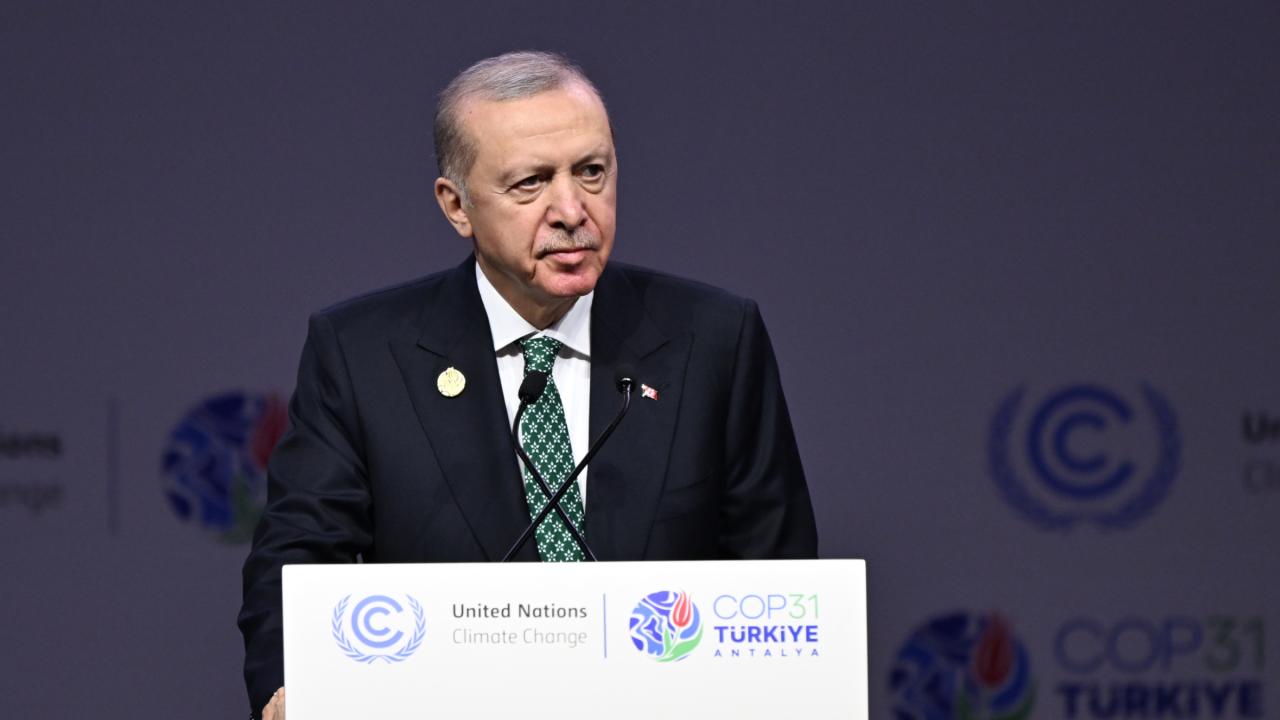
President Recep Tayyip Erdoğan, in a written statement following the COP31 Leaders' Summit hosted in Antalya, opened the doors to a new era in the fight against global climate change. Emphasizing that the gathering of heads of state and government in Antalya during a period when the international community faces major challenges is a critical turning point for concretizing political commitments to climate change, Erdoğan stressed that as we enter the second decade of the Paris Agreement, making the 1.5-degree goal attainable is both a scientific necessity and a moral responsibility to future generations.
Background of the Development
The COP31 Summit has been recorded as one of the platforms where multilateral cooperation has been most intensely experienced in the history of climate diplomacy. This summit, held in Antalya, proved that countries can find common ground despite their different national conditions, economic priorities, and historical responsibilities. Unlike the bottlenecks experienced in previous COP summits, this summit focused on developing concrete mechanisms such as the "Climate Implementation Bridge," symbolizing the transition from theoretical discussions to the practical implementation phase.
Historically, climate change has evolved from being merely an environmental issue to being at the center of the global security and economic architecture. COP31 provided a significant test in balancing the financing demands of developing countries with the emission reduction commitments of developed nations. The process led by President Erdoğan ensured that the voices of geographies that feel the devastating effects of climate change most deeply, such as Africa and the Pacific, were heard more clearly.
The background of the summit included strategic topics such as electrification, green industrialization, and zero waste. These topics are accepted not just as environmental policies, but as the cornerstones of the next-generation industrial revolution. The discussions in Antalya reinforced the idea that this transformation should be conducted not as a monopoly of wealthy nations, but within the framework of global solidarity.
Expert and Industry Insights
Industry representatives and climate economy experts define the results of COP31 as "pragmatic optimism." Experts agree that climate finance is not just aid, but a part of global economic stability. The "Climate Implementation Bridge" emphasized by Erdoğan is seen as a critical instrument for accelerating financial flows.
- Accelerating electrification processes will strengthen national security by reducing energy dependency.
- Green industrialization has the potential to create new employment areas while lowering the carbon footprint.
- Early warning systems are essential to minimize the costs of climate-related natural disasters.
- Zero-waste policies form the basis of the circular economy, increasing resource efficiency.
- Involving multilateral development banks is key to closing the financing gap.
Experts state that the greatest success of the Antalya summit was the ability of countries with different national conditions to reach a consensus on a common action agenda. This consensus ensures that the fight against climate change is seen not only as a cost but also as an investment opportunity.
Economic and Social Implications
The fight against climate change is now directly linked to social welfare and economic sustainability. The devastating effects of natural disasters on agriculture, tourism, and infrastructure are forcing governments to build more resilient cities. The spirit of solidarity that emerged at COP31 serves as a social contract for the protection of communities most vulnerable to climate risks.
From an economic perspective, the cost of green transformation is far lower than the cost of the disasters that climate change will create. Investors are now acting according to environmental, social, and governance (ESG) criteria, turning toward sustainable projects. The Antalya summit established the environment of trust necessary to direct this capital flow to the right channels.
Social implications are particularly important in meeting the demands of the younger generation for climate action. The principle of "responsibility to future generations" emphasized by Erdoğan reveals the summit's aim to save not only today but also tomorrow.
Future Projections and Outlook
In the post-COP31 period, it is expected that the decisions taken will be integrated into national legislation and move to the implementation phase. The operationalization of the "Climate Implementation Bridge" will be decisive in meeting the technology transfer and financing needs of developing countries in particular.
In the coming period, countries are expected to update their Nationally Determined Contributions (NDCs) and support these targets with green industrialization strategies. Risks still exist; geopolitical tensions and economic fluctuations could pose an obstacle to the resources allocated for climate action. However, the common will formed in Antalya sent a strong signal that these risks can be overcome through cooperation.
In conclusion, COP31 has initiated an "action era" in the fight against climate change. The vision presented under the leadership of President Erdoğan has reminded the whole world once again that the 1.5-degree target is not just a number, but the key to a livable world.
💬 Yorumlar 0
Henüz yorum yapılmamış. İlk yorumu siz yazın!





