Strategic Cooperation Between Turkey and TRNC: A New Roadmap from Vice President Yılmaz and PM Üstel
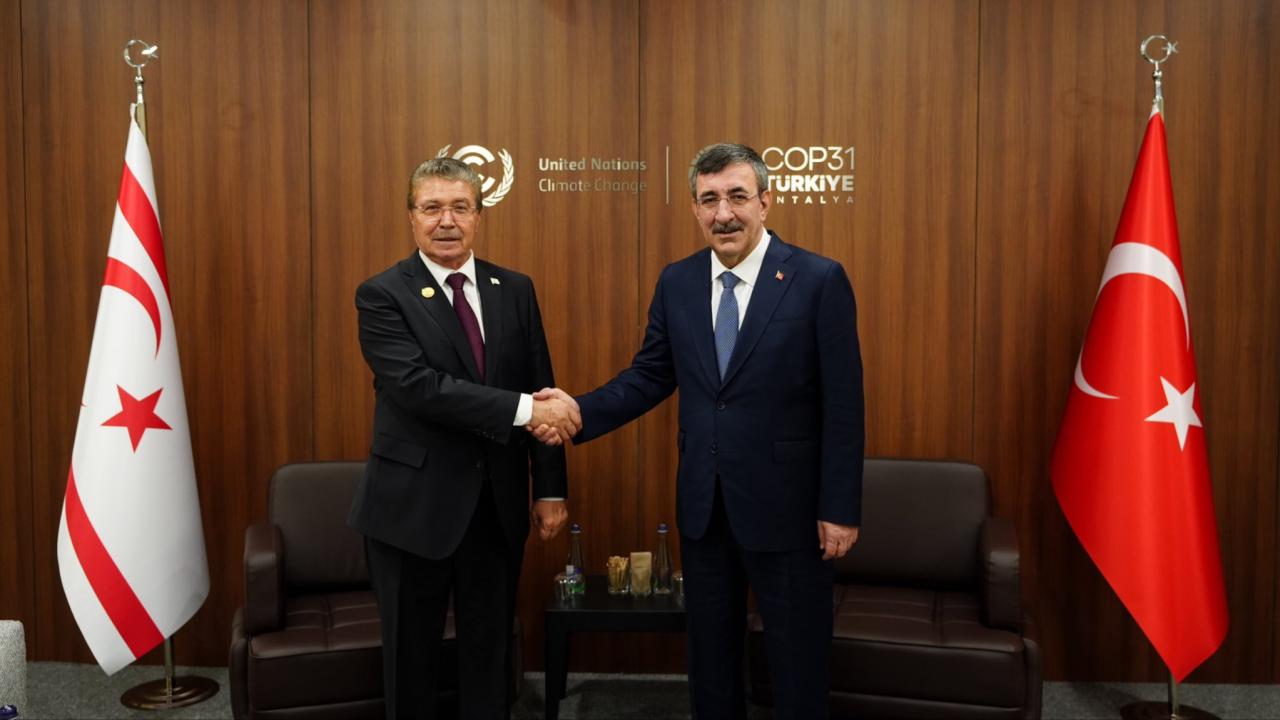
Vice President Cevdet Yılmaz received Prime Minister Ünal Üstel of the Turkish Republic of Northern Cyprus (TRNC) in Ankara. During the meeting, the two sides discussed bilateral relations, the economic development of the TRNC, the enhancement of public welfare, and regional cooperation projects. Key agenda items included joint strategies for combating climate change and promoting environmental sustainability, which are critical global challenges.
Following the meeting, Yılmaz emphasized that Turkey maintains a resolute stance in supporting the TRNC's strengthening in all areas and its pursuit of the recognition it deserves on the international stage. Stating that projects aimed at the prosperity of the Turkish Cypriot people will continue without interruption, Yılmaz highlighted the unbreakable bond between the two nations through messages of solidarity.
Background of the Development
Relations between Turkey and the TRNC are historically built on the concept of "one nation, two states." Over the years, this relationship has evolved beyond mere political support into a structure deepened by economic integration and infrastructure projects. Recently, the financial aid and development support provided by Turkey to the TRNC have aimed to strengthen the island's economic independence.
Supported in the past by massive investments such as water supply projects, energy transmission lines, and transportation infrastructure, the TRNC economy is now moving in coordination with Turkey in next-generation fields such as digitalization and green energy. Prime Minister Ünal Üstel's visit to Ankara represents a critical phase where this historical process is being revised according to current needs and new areas of cooperation are being defined.
This meeting also demonstrates the consistency of Turkey's diplomatic stance on the Cyprus issue and the fact that the struggle for the TRNC's international recognition continues to be supported by economic and social dimensions. Coordination mechanisms between the two countries are of strategic importance for both accelerating bureaucratic processes and managing joint projects more efficiently.
Expert and Industry Insights
Economy and foreign policy experts state that this meeting is a turning point in reducing the TRNC's external dependency. Industry representatives express that the emphasis on climate change and sustainability signifies a vital vision shift for the TRNC's tourism and agricultural sectors.
Key expert evaluations are as follows:
- Joint grid systems to be established with Turkey to ensure the TRNC's energy supply security are the cornerstone of economic stability.
- Projects to combat climate change will guarantee food security by increasing the island's agricultural productivity.
- Digital transformation projects will facilitate the entry of local TRNC businesses into global markets.
- Raising environmental sustainability standards in the tourism sector will enhance the island's brand value.
- Joint investments in education and health infrastructure will accelerate the TRNC's transformation into a regional hub of attraction.
Sectoral analyses reveal that the technical support provided by Turkey develops the TRNC's local capacity and ensures compliance with sustainable development goals.
Economic and Social Implications
This cooperation has the potential to create direct positive impacts on the people of the TRNC. Ensuring economic stability, alleviating inflationary pressures, and increasing employment opportunities are the primary goals of the Ankara-Nicosia dialogue. Socially, Turkey's support boosts the morale and motivation of the Turkish Cypriot people, strengthening their presence on the island.
Market stakeholders note that Turkey's investment incentives for the TRNC create new opportunities for local entrepreneurs. Projects aimed at youth employment, in particular, ensure that social welfare is distributed to the grassroots. This supports the transformation of the TRNC into a structure with a sustainable economic ecosystem, rather than just a tourism destination.
In terms of public balance, the financial support packages provided by Turkey allow for the discipline of the TRNC budget and the uninterrupted execution of public services. This solidarity acts as a cement that strengthens social ties between the two countries.
Future Projections and Outlook
In the coming period, the reflection of the protocols signed between Ankara and Nicosia on the ground is expected. Specifically, it is foreseen that steps to be taken within the scope of combating climate change will be implemented through concrete projects (renewable energy plants, waste management, etc.).
Accelerating official processes and removing bureaucratic obstacles stand out as a common priority for both sides. Expectations are for the TRNC to complete its transition to a competitive and sustainable economic model that can stand on its own feet.
Although regional geopolitical tensions remain among the risks, Turkey's resolute support and the reformist approach of the TRNC government ensure that these risks are minimized. Calendar-wise, it is expected that new cooperation agreements will be signed and audit processes for existing projects will be completed within the remainder of the year.
💬 Yorumlar 0
Henüz yorum yapılmamış. İlk yorumu siz yazın!





