Strategic Tourism Analysis from Minister Ersoy: Turkey Becomes an 'Island of Stability' Amidst a Ring of Fire
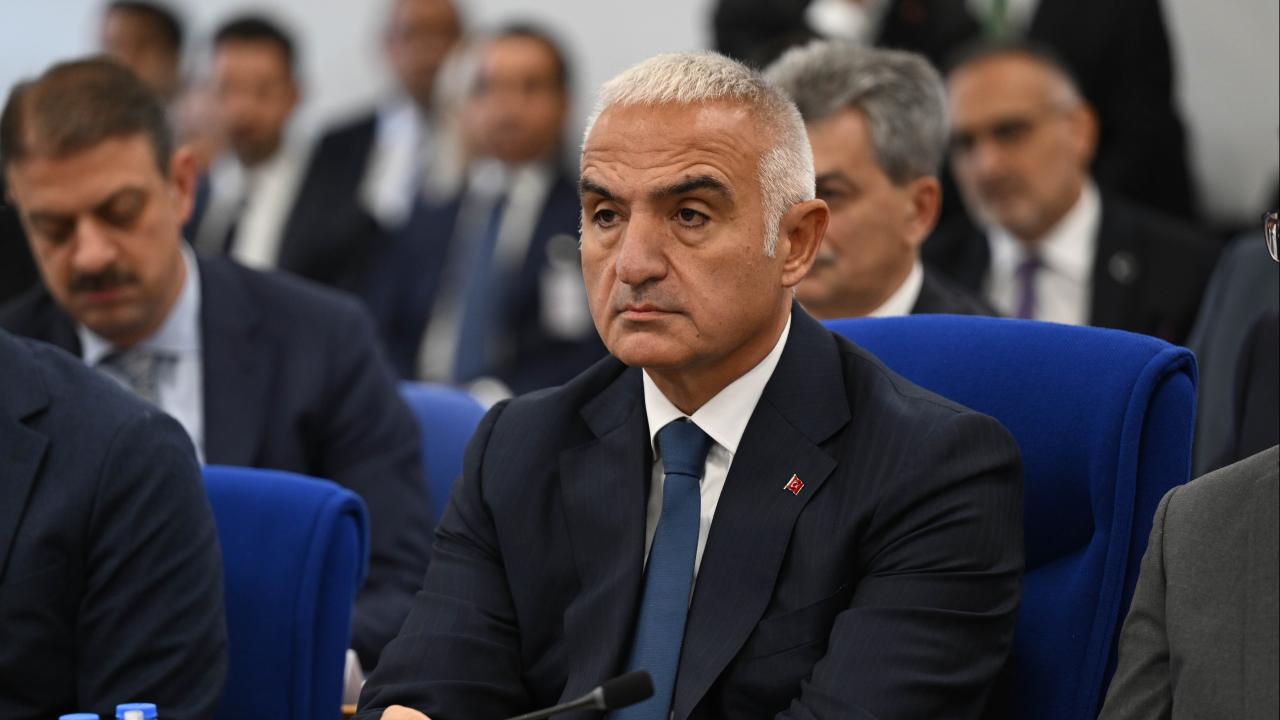
During his presentation on the Ministry's 2027 budget at the Grand National Assembly of Turkey (TBMM) Plan and Budget Commission, Minister of Culture and Tourism Mehmet Nuri Ersoy presented a striking vision of the resilience and future of Turkey's tourism sector. Minister Ersoy emphasized that while Turkey frequently faces crises due to its geopolitical location, it has successfully navigated these periods through strategic maneuvers. A significant highlight of his speech was the announcement regarding the 31st Conference of the Parties to the UN Framework Convention on Climate Change (COP31) to be hosted in Antalya. Ersoy revealed that the COP31 site would be gradually transferred to the Ministry's management after the event and operated by the MICE (Meetings, Incentives, Conferences, and Exhibitions) Presidency established within the Turkey Tourism Promotion and Development Agency (TGA).
The most critical emphasis in Minister Ersoy's statements was Turkey's position amidst regional instabilities. Reminding that 2025 concluded with record figures of $65.2 billion in tourism revenue and 64 million visitors, Ersoy noted that 2026 began with similar momentum. However, he pointed out that the conflict between Israel, the USA, and Iran, which escalated in late February, directly impacted the sector. During this period, resort regions like Antalya and the Aegean experienced cancellations of up to 20% during the early reservation phase. The Minister stated that these losses were largely compensated through intensive and target-oriented promotion activities conducted by the TGA. Defining Turkey's resilient structure as an "island of stability in the middle of a ring of fire," Ersoy noted that the sector is reaping the rewards of a growth strategy focused on quality rather than just quantity.
Background of the Development
The foundations of the resilient structure Turkey's tourism enjoys today date back to a radical strategy shift implemented in 2018. Minister Ersoy explained that upon taking office, they moved away from a model focused solely on visitor numbers to one aimed at increasing per capita overnight income and diversifying tourism products. The most concrete step of this vision was the establishment of the Turkey Tourism Promotion and Development Agency (TGA), which was legalized in 2019. The TGA began managing Turkey's competitive power in the global market with a professional corporate identity, standing out as one of the most successful examples of public-private partnership with its ability to make rapid decisions and diversify markets during times of crisis.
Looking back, Turkish tourism has been tested not only by the pandemic but also by large-scale regional conflicts such as the Russia-Ukraine war. Minister Ersoy stated that in each of these processes, dependency was reduced through market diversification. The TGA, established in 2019, brought Turkey's promotion budget and strategy to world standards, opening the door to the historic $65.2 billion revenue in 2025. This success was supported not only by sun-sea-sand tourism but also by investments in archaeology, gastronomy, health, and faith tourism. This multifaceted approach has allowed the industry to absorb shocks that would have otherwise been catastrophic.
The fact that COP31 will be held in Antalya is regarded as a development that reinforces Turkey's strength in international diplomacy and event tourism. Minister Ersoy emphasized that this massive organization is not just a climate summit but also a platform where Turkey will prove its logistical and organizational capabilities to the world. The planned transfer of the COP31 site to the MICE Presidency under the TGA after the event is recorded as part of Turkey's goal to create a permanent infrastructure for congress tourism. This move aims to transform Antalya from a seasonal summer destination into a year-round congress hub, attracting high-value professional travelers.
Expert and Industry Insights
Industry representatives and tourism experts view the picture painted by Minister Ersoy as evidence of Turkey's crisis management capacity. There is a consensus that the "aggressive marketing" strategy deployed by the TGA during crisis periods has minimized the economic cost of geopolitical risks. Experts point out that the establishment of the MICE Presidency could be a turning point in Turkey's strategy to increase tourism revenues by targeting high-spending segments.
- The TGA's data-driven promotion strategies allowed for real-time identification of which markets to focus on during crises, ensuring the rapid recovery of the 20% cancellation rate.
- The MICE Presidency taking over the COP31 site will directly serve the goal of attracting congress tourists with high spending capacity.
- Despite the closure of airspaces and rising energy costs, the strategic positioning of Turkish Airlines and other carriers has maintained Turkey's accessibility advantage.
- Quality-oriented growth has not only increased the number of tourists but also improved the service quality of accommodation facilities and, consequently, unit revenues.
- Sustainable tourism certification programs have made Turkey a preferred destination in the European market for environmentally conscious travelers.
While industry stakeholders acknowledge that rising aviation fuel prices and global inflation create cost pressures, they state that the price-performance balance offered by Turkey remains unrivaled. Experts add that the uncertainty created by regional tensions could turn into an opportunity by strengthening Turkey's image as a safe harbor. The increase in the share allocated to promotion and infrastructure in the Ministry's 2027 budget is seen as a factor supporting these views, ensuring that the momentum gained is not lost to temporary external shocks.
Economic and Social Implications
The tourism sector remains one of the most critical instruments for the Turkish economy, not only as a source of foreign exchange but also in closing the current account deficit. The $65.2 billion revenue generated in 2025 had a direct positive impact on the country's macroeconomic balances. As Minister Ersoy noted, although increases in energy costs and fluctuations in aircraft fuel prices have raised operational expenses, the growth in tourism revenues has remained at a level capable of absorbing these costs. This situation enhances Turkey's economic resilience against external shocks and provides a vital cushion for the national treasury.
From a social perspective, spreading tourism over 12 months and expanding it toward the interior of Anatolia is of great importance for the sustainability of local employment. The activity generated by giant organizations like COP31 in cities like Antalya feeds a wide ecosystem ranging from transportation to food, and from retail to the service sector. The Ministry's emphasis on quality tourism also contributes to improving the education level and income status of personnel working in the sector, fostering a more professional workforce. This shift helps in reducing seasonal unemployment, which has historically been a challenge for the Mediterranean region.
Furthermore, the promotion activities carried out to overcome the psychological threshold created by regional wars reinforce the perception of Turkey as a "safe country" in the international arena. The continued preference for Turkey as a tourism destination amidst conflicts centered in Russia-Ukraine and the Middle East also increases the country's soft power. This situation supports capital inflow by keeping the interest of foreign investors in tourism and real estate projects in Turkey alive. The social fabric of tourism hubs is also strengthened as these areas become global meeting points for diverse cultures, even during times of geopolitical friction.
Future Projections and Outlook
In the coming period, the most important agenda item for Turkish tourism will be the preparations for COP31 and the structural transformation this process will bring. According to the timeline announced by Minister Ersoy, with the transfer of the COP31 site, the MICE Presidency will launch an aggressive campaign to bring major international congresses to Turkey. The years 2026 and 2027 are projected as a transition period during which Turkey will climb to the top ranks of the world league in congress tourism. During this process, the goal is to complete the technological infrastructure and digital transformation of Antalya to meet the needs of the 21st-century business traveler.
Within economic expectations, it is planned to gradually increase the number of 64 million visitors from 2025 in 2026 and beyond, while maintaining revenue-oriented growth. The Ministry is working on new airline collaborations and promotion strategies to increase the number of tourists from distant markets such as China, Japan, and South America. To counter the risk of rising fuel costs, technical solutions such as more efficient flight routes and sustainable aviation fuels are being kept on the agenda. This proactive approach aims to decouple tourism growth from volatile energy markets as much as possible.
In conclusion, Turkey's tourism strategy is built not just on managing crises but on emerging stronger from them. Minister Ersoy's emphasis on being an "island of stability" symbolizes Turkey's determination to increase its share of the global tourism pie in the coming years. The management of the facilities to be taken over after COP31 and the dynamic structure of the TGA will continue to be the most important engines driving Turkey toward its 2030 vision. While risks exist, the adaptation capability Turkey has demonstrated in recent years maintains optimistic expectations for the future of the sector, positioning it as a global leader in resilient travel and hospitality.
💬 Yorumlar 0
Henüz yorum yapılmamış. İlk yorumu siz yazın!





