Transformation in Turkey's Current Account: Expectation of 4 Consecutive Months of Surplus
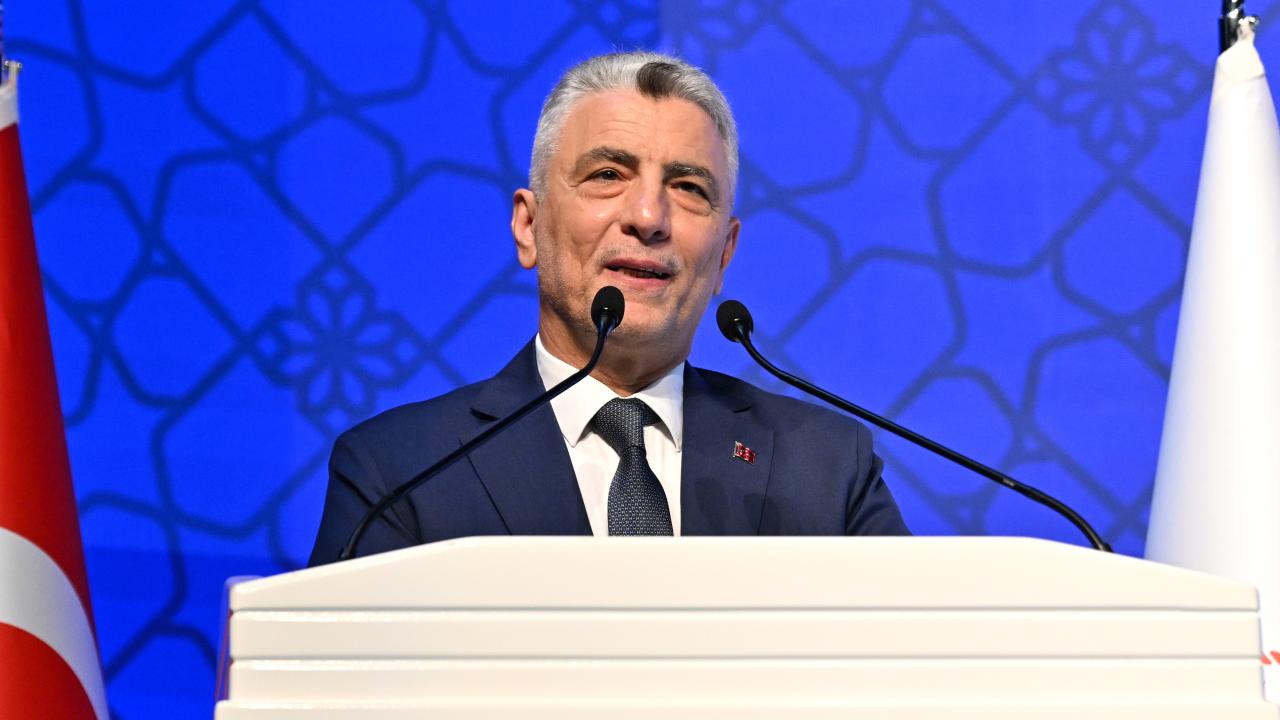
Trade Minister Ömer Bolat, in a written statement evaluating the September balance of payments data released by the Central Bank of the Republic of Turkey (TCMB), highlighted a historic turning point in Turkey's external balance. According to the data provided by Minister Bolat, Turkey achieved a significant success in its foreign trade and balance of payments performance by recording a current account surplus of $2.7 billion in September. While the current account deficit for the first nine months of the year fell to $28 billion, the annualized current account deficit narrowed to $39.2 billion. These figures demonstrate the tangible results of the rebalancing policies implemented by the economic administration.
The $27.9 billion surplus recorded in the current account excluding gold and energy particularly reveals the improvement in Turkey's structural foreign trade balance. The strong performance in service exports continues to be supported by contributions from tourism and transportation revenues. Minister Bolat stated that annualized travel revenues reached $61.6 billion and transportation revenues reached $45.1 billion, emphasizing that service exports reached a total of $127.2 billion, a 3.7 percent increase compared to the same period last year.
Background of the Development
The Turkish economy has long struggled with the chronic issue of current account deficits. High dependence on energy imports and gold demand have historically been factors that pressured the foreign trade balance. However, the monetary and fiscal policies implemented recently aim to reverse this picture by balancing domestic demand and encouraging exports. The fact that the current account balance recorded a surplus of $7.5 billion in the third quarter of 2024, an 8 percent increase compared to the same period last year, is accepted as the clearest indicator of this strategic transformation.
In previous years, rising energy costs due to the global conjuncture placed a serious burden on Turkey's current account. The steps taken by the government under the "New Economic Program" enabled total goods and services exports to reach $410.9 billion. This growth is supported not only by industrial production but also by value-added activities in the service sector. The decrease in the foreign trade deficit by 11.4 percent to $6.7 billion in September compared to the same month last year proves that the improvement in the foreign trade balance is sustainable.
From a historical perspective, Turkey's goal of achieving a current account surplus for four consecutive months is considered a critical threshold for restoring macroeconomic stability. The success in July, August, and September, if continued in October, points to a process that will strengthen reserve accumulation by reducing Turkey's external financing needs.
Expert and Industry Insights
Economists and industry representatives describe this improvement in the current account as a "success of the rebalancing process." Experts state that the slowdown in domestic demand suppressing imports and the strong performance of exports are the main architects of this picture. According to industry representatives, Turkey's competitiveness in service exports acts as a shield against global economic fluctuations.
- The rebalancing of domestic demand reduces the import bill, narrowing the current account deficit.
- The increase in service exports supports the external balance by diversifying foreign currency inflows.
- The current account surplus excluding gold and energy demonstrates the efficiency of Turkey's industrial production.
- The sharp decline in the annualized current account deficit reduces the country's external financing risks.
- The decrease in the foreign trade deficit contributes to the fight against inflation by easing pressure on the exchange rate.
Experts point out that despite the continued volatility in global commodity prices, Turkey's capacity to manage this process has increased. It is stated that while potential fluctuations in energy prices keep risks to the current account balance alive, the current export performance is at a level that can absorb these risks.
Economic and Social Implications
The improvement in the current account is not just a macroeconomic data point; it is also vital for the general welfare of society and the economic confidence environment. The increase in the current account surplus allows the Central Bank of the Republic of Turkey to strengthen its reserves. This increases confidence in the markets and positively affects the interest of foreign investors in Turkey. Strengthening economic stability prepares the ground for the normalization of interest rates and the improvement of the investment climate in the long term.
From a social perspective, the export-oriented growth model plays a critical role in maintaining and increasing employment. The $127.2 billion volume in service exports means that thousands of people are employed in sectors such as tourism and transportation. This contributes to the protection of household incomes and makes economic growth more inclusive.
Market stakeholders predict that the continuation of this positive trend in the current account will also be effective in Turkey's credit rating upgrades and the decline in the risk premium (CDS). While economic rebalancing increases Turkey's competitiveness in global markets, it also supports the appetite of domestic producers to open up to foreign markets.
Future Projections and Outlook
In the coming period, the primary goal of the economic administration will be to make these gains permanent and to bring the current account balance into a sustainable structure. As Minister Bolat stated, the high course and volatility of energy and commodity prices on a global scale continue to pose upward risks to the current account balance. However, Turkey's export-oriented growth strategy aims to minimize these risks.
Expectations are focused on maintaining the current account surplus in the final quarter of the year. The target of achieving a surplus for four consecutive months confirms that Turkey has entered a period where its external financing needs are decreasing. The data to be released in the coming months is expected to clarify how permanent this improvement trend is.
In conclusion, the Turkish economy is gaining a more resilient structure with this success in its external balance. While investors, analysts, and policymakers closely follow the continuity of this process, Turkey's determination to close the foreign trade deficit is also being watched carefully in global markets.
💬 Yorumlar 0
Henüz yorum yapılmamış. İlk yorumu siz yazın!





