TRT World Forum 2026: The Future of Global Trade and Geopolitical Fractures
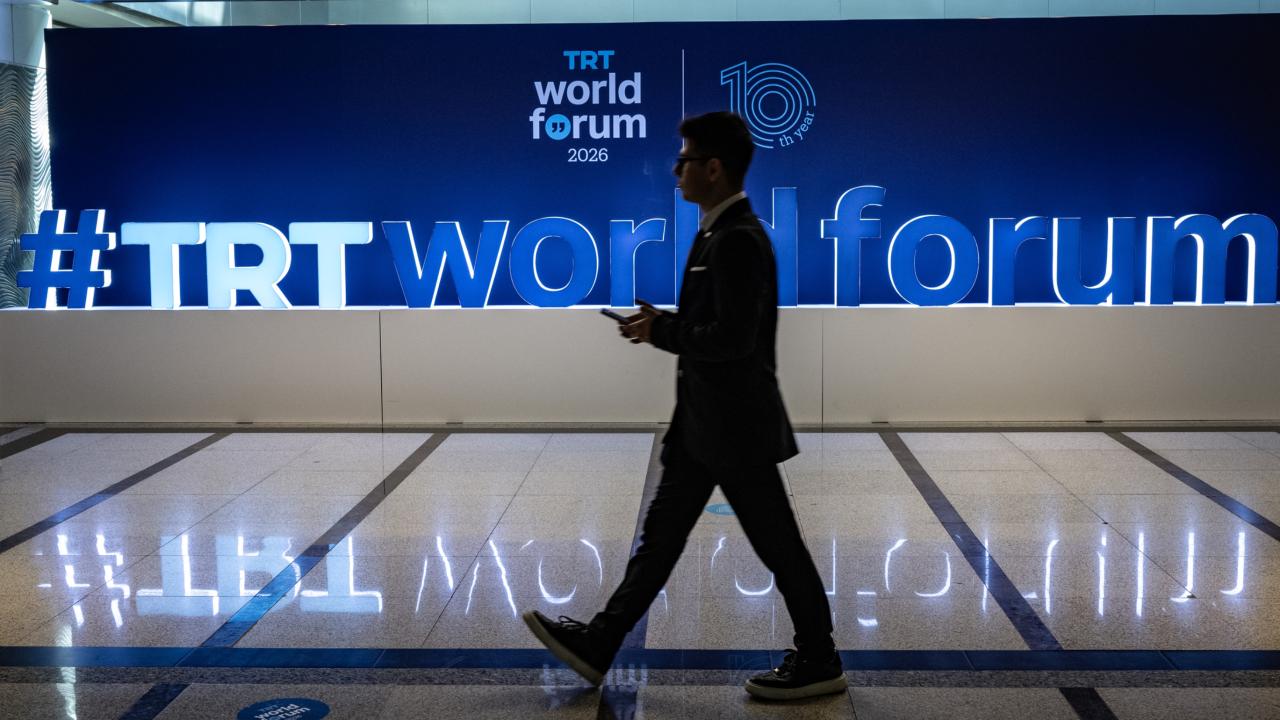
The Istanbul Congress Center hosted one of the most critical topics of global geopolitics during the 10th TRT World Forum 2026: "The New Geopolitics of Connectivity: Sea Lanes, Bottlenecks, and Corridors." Held under the theme "A World Without Centers: Who Leads When Rules No Longer Apply?", the forum examined the security of global trade routes and the pressures on energy supply. Moderated by TRT World presenter Adnan Nawaz, the panel brought together international experts to discuss the domino effect of regional conflicts on the global economy.
The panel featured prominent figures including Prince Turki Al-Faisal, Chairman of the King Faisal Center for Research and Islamic Studies; Prof. Dr. Jean-Paul Rodrigue of Texas A&M University; Radia Sedaoui from the UN ESCWA; Tatiana Rey-Bellet of the IRU; and Prof. Dr. Kılıç Buğra Kanat, a member of the Presidential Security and Foreign Policy Council. These experts issued urgent warnings regarding the future of trade, emphasizing that instability in the Middle East acts as a "bottleneck" that disrupts global supply chains.
Background of the Development
Global trade has been undergoing a major test in recent years, following post-pandemic recovery efforts and subsequent geopolitical tensions. The security issues in the Suez Canal and Red Sea routes, in particular, have highlighted the fragility of this critical artery, through which 12% of world trade passes. Historically, trade routes have played a decisive role in the rise and fall of empires; today, these routes are being redefined by energy security concerns and inflationary pressures.
Prince Turki Al-Faisal highlighted that the ongoing conflicts in Yemen, Lebanon, Syria, and Iraq are not merely humanitarian tragedies but also "security vacuums" at the heart of global logistics networks. In a region where military interventions have failed to provide solutions, Turkey's diplomatic mediation efforts and search for regional cooperation stand out as the only realistic path toward establishing stability.
From the past to the present, the security of trade corridors has formed the foundation of international law and inter-state agreements. However, in a world where "rules no longer apply," the shift from traditional trade routes to safer but more costly alternatives is forcing a structural transformation in the global economy.
Expert and Industry Insights
Experts on the panel emphasized that supply chains are not just physical infrastructure but systems based on political trust. Prof. Dr. Jean-Paul Rodrigue pointed to the complexity of logistics networks, while Radia Sedaoui presented data on the devastating effects of energy costs on the manufacturing sector.
- Rising energy costs are directly suppressing industrial production in major energy-importing economies like Japan and South Korea.
- Disruptions in logistics routes create inflationary pressure on final product prices, reducing global purchasing power.
- The failure of military solutions has proven that keeping diplomatic channels open is vital for commercial continuity.
- Supply chain resilience is possible not only through alternative routes but through the establishment of regional peace.
- Maintaining international transport standards is essential to prevent the collapse of global trade.
Experts noted that energy supply security is directly linked to the security of trade routes and that these two areas cannot be separated. Industry representatives stated that rising logistics costs make it increasingly difficult for developing countries to access global markets.
Economic and Social Implications
These bottlenecks in global trade routes do not only affect the balance sheets of large corporations; they also directly impact the struggle of ordinary citizens against inflation. While rising energy prices drive up production costs, the reflection of this on the final consumer is turning into a global cost-of-living crisis. In manufacturing-oriented economies, supply chain disruptions bring social risks such as unemployment and production declines.
The migration waves and humanitarian crises caused by regional conflicts make the security of trade routes even more complex. As Prince Turki Al-Faisal emphasized, the establishment of peace is not just a political goal but an economic necessity. Turkey's diplomatic initiatives stand out as a balancing element both regionally and globally.
Market actors are refraining from investment in an environment dominated by uncertainty, which pulls down global growth figures. The obstruction of the free flow of trade also negatively affects the fair distribution of prosperity, potentially triggering social unrest.
Future Projections and Outlook
In the coming period, global trade is expected to evolve into a "security-focused" structure. States will prioritize not only cost efficiency but also supply chain security. This points to an era where new concepts like "friend-shoring" will be heard more frequently.
In official processes, it is expected that regional peace agreements will be integrated with the security of trade corridors. In particular, it is anticipated that diplomatic processes led by Turkey will play a key role in overcoming logistics bottlenecks in conflict zones. Risks include the potential for conflict escalation and sudden fluctuations in energy markets.
In conclusion, TRT World Forum 2026 served as a reminder that trade is not just an exchange of goods, but a process of "trust and diplomacy." It is evident that in the coming years, global leadership will be determined by actors who can resolve these complex geopolitical knots and secure the flow of trade.
💬 Yorumlar 0
Henüz yorum yapılmamış. İlk yorumu siz yazın!





