TRT World Forum 2026: Turkey's Transformation from a Regional Power to a Trans-Regional Actor
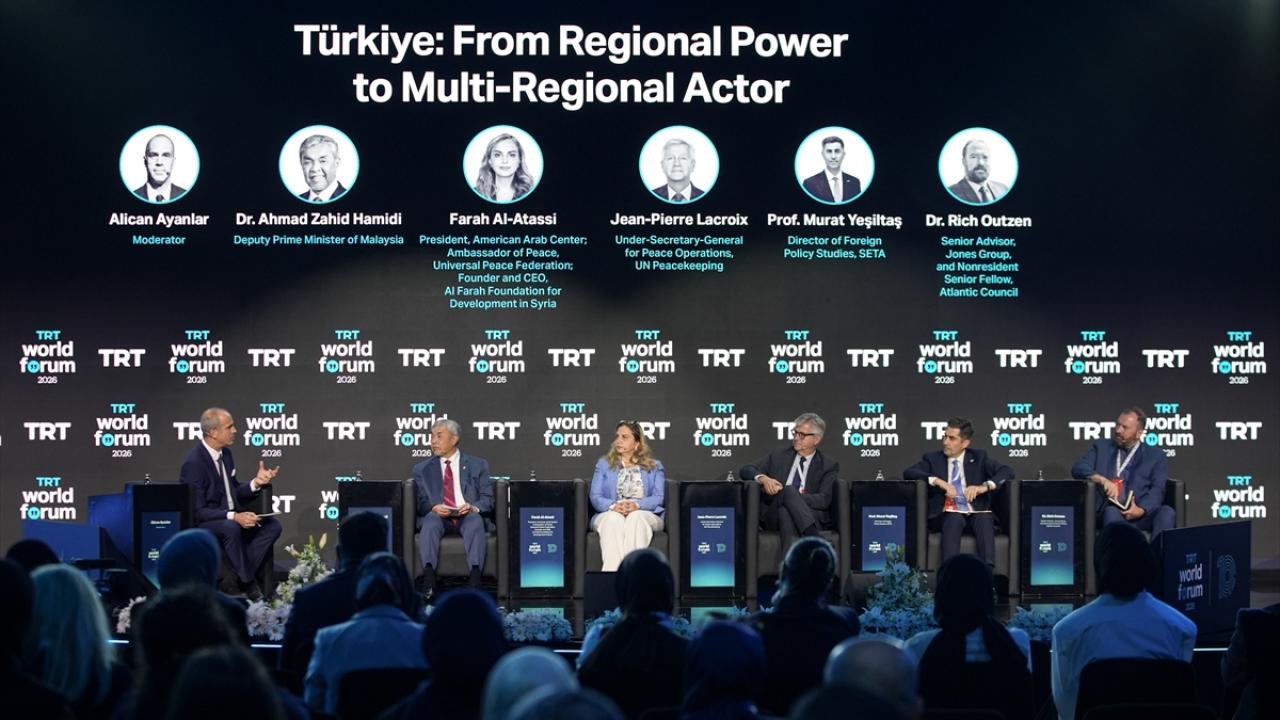
TRT World Forum 2026 continues to capture the pulse of global diplomacy, and the panel titled 'Turkey: From a Regional Power to a Trans-Regional Actor' signaled a new era in international relations. Moderated by Alican Ayanlar from TRT World, the session brought together Malaysian Deputy Prime Minister Ahmad Zahid Hamidi, UN Under-Secretary-General for Peace Operations Jean-Pierre Lacroix, American Arab Center President Farah al-Atassi, SETA Director Murat Yeşiltaş, and Atlantic Council Senior Fellow Rich Outzen. The panel examined Turkey's rise not just as a regional power, but as a cross-continental balancing element.
Turkey's multi-dimensional foreign policy in recent years has found concrete expression through strategic moves along the Syria, Egypt, and NATO axes. One of the most critical topics highlighted in the panel was Ankara's use of its diplomatic influence to encourage the lifting of sanctions on Syria. This approach is viewed not merely as a political maneuver, but as a strategic step toward the economic integration of the region.
Background of the Development
Turkey's foreign policy vision has evolved over the past two decades from a 'zero problems with neighbors' policy to a model of 'active and deterrent diplomacy.' This transformation accelerated as Turkey took humanitarian and diplomatic initiatives in the power vacuums created after the Arab Spring. Bilateral relations, which were once restricted by security concerns, have now been replaced by mutual economic interdependence and strategic partnerships.
The normalization process with Egypt, accompanied by multi-million dollar trade agreements, is the most concrete evidence of Turkey's pragmatic approach in the region. Regional peace initiatives, such as the Makkah Agreement, demonstrate that Turkey is positioning itself not just as a party to conflicts, but as a 'facilitator' and 'mediator.' This historical process proves that Turkey can forge deep ties with new regional actors while maintaining its traditional alliance relationships.
Regarding the Syrian issue, Turkey is now displaying a vision that supports the country's integration into the international banking system and its economic development, rather than focusing solely on security. This is the clearest indication that Ankara views the region not as a 'conflict zone,' but as a 'basin of investment and opportunity.'
Expert and Industry Insights
Experts speaking at the panel emphasized that Turkey's diplomatic capacity is of critical importance during a time when the global system is becoming increasingly complex. Rich Outzen, in particular, stated that no country can lead the global system alone anymore, noting that Turkey's ability to establish dialogue with conflicting parties simultaneously serves as a lever for US diplomacy.
- Turkey's multilateral diplomacy capacity plays a key role in resolving regional crises.
- Economic integration is accepted as a prerequisite for political stability.
- NATO membership is evaluated as a factor that increases Turkey's strategic depth.
- The 'wait-and-see' approach to regional security initiatives is important for sustainability.
- Diplomatic flexibility positions Turkey as a global 'balancer.'
Farah al-Atassi stated that the Arab world's perspective on Turkey has changed, and Ankara is now positioned as a reliable strategic partner. This indicates that not only a political but also a commercial environment of trust has been established.
Economic and Social Implications
Turkey's regional normalization steps are having direct economic repercussions. The increasing trade volume with Egypt and efforts toward economic integration with Syria aim to improve the welfare of the people in the region. Economic cooperation reduces social vulnerabilities while contributing to the prevention of risks such as radicalization.
Markets read these diplomatic moves by Turkey as 'risk-reducing.' Stability in the region supports the environment of trust necessary for the increase of Foreign Direct Investment (FDI). Socially, Turkey's humanitarian diplomacy is elevating its soft power to its peak in the eyes of regional populations.
Future Projections and Outlook
In the coming period, Turkey is expected to play a more active role in the regional security architecture. Turkey's stance toward new US regional initiatives will determine the balance of power in the region. While maintaining its alliance relationships, Turkey will continue to pursue a policy that centers on its own national interests and regional stability.
Risks include the reflection of global power competition onto the region and the unpredictability of local conflicts. However, Turkey's experience in 'crisis management' is seen as the greatest guarantee in minimizing these risks. In the long term, Turkey is steadily advancing toward its goal of being a 'trans-regional actor' that has a say in the reconstruction of the global system, rather than just a regional power.
💬 Yorumlar 0
Henüz yorum yapılmamış. İlk yorumu siz yazın!





