Turkey and 17 Nations Issue Joint Condemnation of Israel's Attack on Nasser Hospital: A Call for International Law
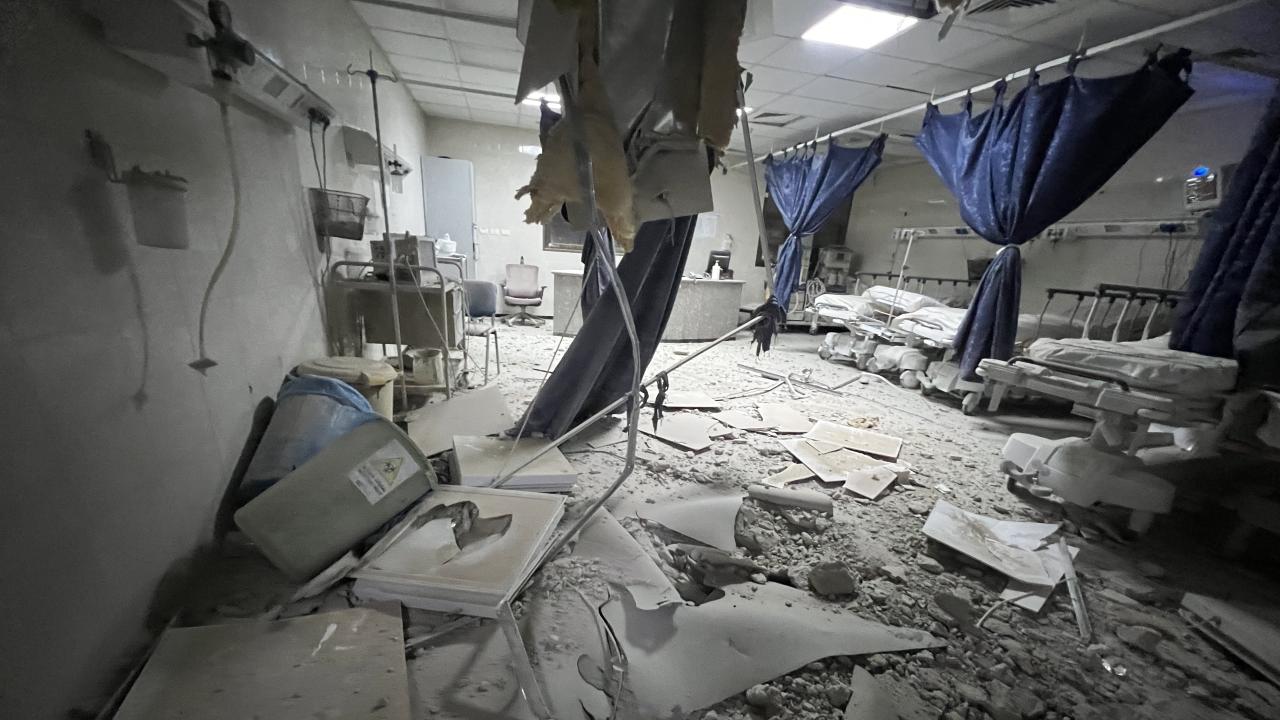
Foreign ministers from 18 countries, including Turkey, have issued a joint statement condemning the airstrike carried out by Israel on Nasser Hospital, located in the city of Khan Younis in the southern Gaza Strip. This attack, which blatantly disregarded the fundamental principles of international humanitarian law, has accelerated the collapse of the region's healthcare infrastructure and triggered a global diplomatic outcry. Turkey, through its active and proactive diplomacy, has led this joint declaration, emphasizing the sanctity of hospitals and civilian residential areas while condemning Israel's military approach that targets civilians.
The attack is viewed not merely as a military operation but as a humanitarian tragedy that has wounded the conscience of the international community. Nasser Hospital served as the last bastion for thousands of wounded individuals, operating under extremely limited medical resources. By targeting this facility, the goal appeared to be the total paralysis of the healthcare system in Gaza. Turkey and the 17 other nations defined this act as an 'unacceptable war crime,' citing the Geneva Conventions to underscore that hospitals must be protected and that Israel is systematically violating international law through these strikes.
Background of the Development
Since the onset of the ongoing conflict in Gaza, healthcare facilities have become primary targets for the Israeli military. Nasser Hospital, as the largest and most equipped health institution in the Khan Younis region, served as a shelter for thousands of displaced civilians. Historically, the targeting of hospitals during periods of intense conflict has been a defining factor that deepens the humanitarian crisis in the region.
Since the beginning of the crisis, Turkey has been one of the most vocal advocates for the protection of hospitals and the uninterrupted delivery of humanitarian aid. Previous attacks on facilities like Al-Shifa Hospital and the Indonesian Hospital had entered a phase of 'normalization' due to the indifference of the international community. However, this latest attack on Nasser Hospital has paved the way for 18 countries to form a diplomatic bloc. This development is seen as a reflection of Turkey's 'humanitarian diplomacy' vision.
From an institutional perspective, reports from the United Nations and the World Health Organization (WHO) have repeatedly confirmed that the healthcare system in Gaza has completely collapsed. Israel's justification of targeting hospitals under the guise of 'military necessity' is a defense mechanism that lacks legitimacy under international law. The joint reaction of these 18 countries aims to fill this legal vacuum and increase diplomatic pressure on Israel.
Expert and Industry Insights
International relations experts and humanitarian organizations state that this joint statement has the potential to establish a legal foundation, beyond its symbolic value. Industry representatives argue that attacks on hospitals should be prosecuted under the scope of 'war crimes.'
- The protection of hospitals is a red line in international humanitarian law.
- The attacks have completely eliminated the safety of medical personnel and patients.
- The joint statement is a critical step toward forming a global diplomatic front against Israel.
- Targeting health infrastructure makes post-conflict reconstruction of the region impossible.
- Such documents serve as evidence for proceedings before the International Court of Justice.
Experts emphasize that this attack is not just physical destruction but an assault on the right to life of the people of Gaza. From an industry perspective, it is stated that an international protective shield is essential for the sustainability of health services. Turkey's initiative has the potential to create a 'diplomatic domino effect' that could mobilize other actors in the region.
Economic and Social Implications
The social implications of the attack are directly linked to the deepening societal trauma in Gaza. Rendering hospitals dysfunctional means that not only the wounded but also chronic patients and pregnant women are left to die. This situation leads to the total disintegration of the social fabric in the region, while multiplying the waves of migration and the need for humanitarian aid.
Economically, the destruction of health infrastructure zeroes out the region's future development potential. Rebuilding these hospitals would require billions of dollars and a process spanning many years. The reaction from Turkey and other countries is not just a condemnation but a message that this cost and responsibility must be borne by Israel. There is ongoing discussion in markets and the international arena that Israel's aggressive stance could trigger long-term economic sanctions.
Future Projections and Outlook
In the coming period, it is expected that Turkey and the partner nations will bring this declaration to the UN Security Council. Increasing diplomatic pressure on Israel could create a new negotiation topic to declare hospitals as 'protected zones' in ceasefire talks. The risks remain high; if Israel continues its military operations, it seems difficult for this diplomatic initiative to yield concrete results in the short term.
However, this bloc led by Turkey could ensure Israel's isolation in the international public eye. In the coming months, it is likely that these 18 countries will expand into a larger coalition and accelerate the legal proceedings against Israel in international courts. Turkey will continue to be the voice of the global conscience with its strategy that places humanitarian diplomacy at its core.
💬 Yorumlar 0
Henüz yorum yapılmamış. İlk yorumu siz yazın!