Turkey to Announce Two Major Initiatives at COP31: A New Era in Climate Diplomacy
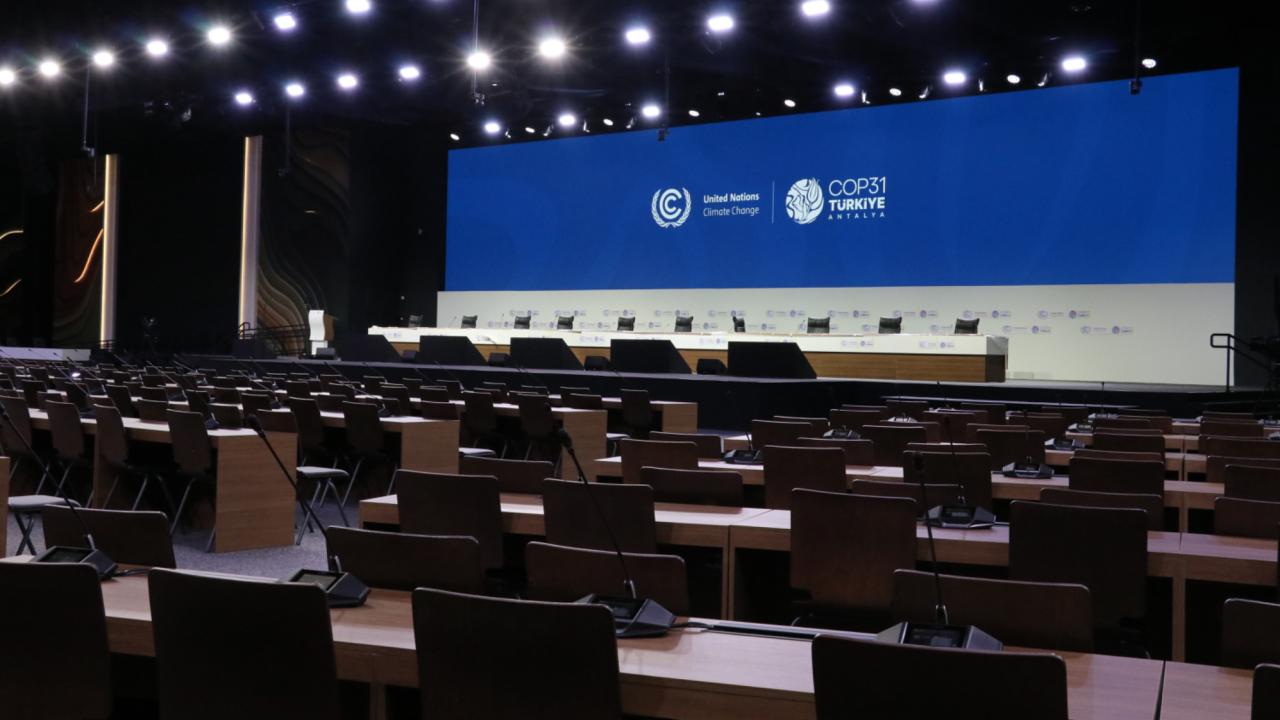
The 31st Conference of the Parties (COP31) to the United Nations Framework Convention on Climate Change, the world's most comprehensive climate summit, will be held in Antalya, Turkey, from November 9 to 20. Taking place at a time when the global climate crisis is deepening, this summit aims to solidify Turkey's leadership role in climate diplomacy. Prof. Dr. Hasar, Head of Climate Change at the Ministry of Environment, Urbanization and Climate Change, emphasized in a pre-summit statement that Turkey is determined to take concrete steps in the fight against climate change.
One of the focal points of the summit will be the Zero Waste movement, which Turkey has branded on a global scale. Prof. Dr. Hasar stated that Zero Waste has been made a separate theme of the COP31 Action Agenda, noting that methane gas management, circular economy, and sustainable consumption models will be addressed under this umbrella. The summit venue in Antalya, itself a certified zero-waste center, aims to demonstrate Turkey's commitment to this issue to the world with a concrete example.
Background of the Development
Turkey's fight against climate change has accelerated in recent years through a process of institutional transformation. With the implementation of the Zero Waste project, waste management has evolved beyond being merely an environmental policy into an economic asset. Turkey's recovery rates are a testament to the success of this strategic approach; data shows that the recovery rate has risen from 13 percent to 37.53 percent. This success is supported by a vision to reach a 60 percent target by 2035.
Historically, the impact of waste sites on methane emissions is recognized as a critical threshold in the fight against climate change. As emphasized by Prof. Dr. Hasar, methane gas from waste is 80 times more potent than carbon dioxide in the short term. Therefore, Turkey's decision to place waste management at the center of the climate struggle at COP31 stands out as a global climate strategy, not just a local one.
COP31 in Antalya will also host discussions on climate justice between the Global North and South. The appointment of two ministers—one from a developed and one from a developing country—to oversee seven key topics in the negotiations reflects Turkey's effort to balance the interests of the parties and bring them to a common ground.
Expert and Industry Insights
Industry representatives and climate experts describe Turkey's approach at COP31 as "pragmatic and results-oriented." Experts state that waste management is not just an environmental necessity but also an opportunity for a circular economy. COP31 is expected to bridge the gap between climate finance and mitigation targets.
- The impact of waste management on methane emissions is one of the fastest ways to achieve results in the fight against climate change.
- Circular economy models increase economic resilience by reducing dependence on raw materials.
- The Zero Waste approach ensures the dissemination of sustainable production and consumption habits across society.
- Strengthening the North-South dialogue is critical for the equitable distribution of climate finance.
- The summit in Antalya provides an opportunity to test Turkey's effectiveness in climate diplomacy on a global platform.
Experts argue that Turkey's motto, "waste is not a cost, but a resource when managed correctly," is a model that could set an example for developing countries. This model makes it possible to both reduce greenhouse gas emissions and create economic value through the modernization of waste sites and investment in recycling technologies.
Economic and Social Implications
One of the greatest gains for Turkey from COP31 will be access to green finance and technology transfer. The global expansion of the Zero Waste project will facilitate the compliance of Turkish companies with international sustainability standards. This is considered a factor that will directly affect Turkey's export capacity and competitiveness.
At the social level, the increasing awareness of Zero Waste is creating public awareness regarding resource efficiency. The increased involvement of local governments in waste management processes makes cities more resilient to climate change. Hosting this summit in Antalya also has an effect that strengthens the city's tourism and environmental vision.
In terms of market balance, investments in the waste management sector are expected to increase. Initiatives by the private sector in this field create new employment areas while contributing to Turkey's goals of reducing its carbon footprint. This process is shown as one of the most successful examples of public-private sector cooperation.
Future Projections and Outlook
Turkey's influence in climate diplomacy is expected to increase following COP31. The goal of raising the recovery rate to 60 percent by 2035 is an indicator of Turkey's determination in the fight against climate change. In this process, an increase in international cooperation and an acceleration in technology transfers are foreseen.
In the coming period, Turkey is expected to support its commitments regarding methane reduction with more concrete projects. COP31 will not only be a summit but also a platform where Turkey's roadmap for fighting climate change is shared with the world. While uncertainties in global climate finance remain among the risks, Turkey's proactive approach aims to minimize these risks.
In conclusion, COP31 in Antalya is poised to be a turning point where Turkey combines "ambition with finance" in the fight against climate change. By aligning its domestic policies with global climate goals, Turkey is taking on a pioneering role for a sustainable future.
💬 Yorumlar 0
Henüz yorum yapılmamış. İlk yorumu siz yazın!





